Pradhan backs Kanyaratna Sambardhana event in Angul, Debagarh
Synopsis
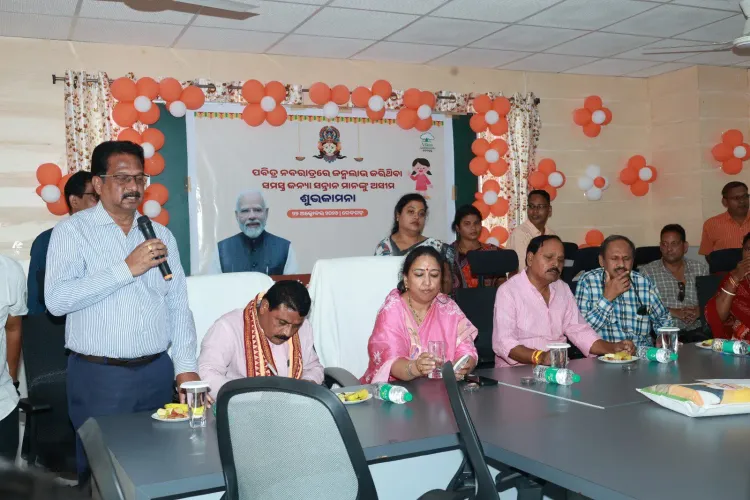
Union Education Minister Dharmendra Pradhan on Navaratri backed the 'Kanyaratna Sambardhana Samaroha' in Odisha's Angul and Debagarh districts, calling it a vehicle to promote awareness and women's empowerment through girl-child nutrition, education and healthcare.
Key Takeaways
Dharmendra Pradhan extended wishes to all girl children born in Angul and Debagarh districts on Navaratri, 22 October 2026 .
The Kanyaratna Sambardhana Samaroha is a local Odisha programme honouring newborn girls with a focus on nutrition, education and health .
Pradhan expressed confidence the programme will raise social awareness and promote women's empowerment .
The initiative operates within the broader policy arc of the national Beti Bachao Beti Padhao scheme launched in 2015 .
Festival timing aligns with a wider government practice of using Navaratri to amplify gender-equity messaging.
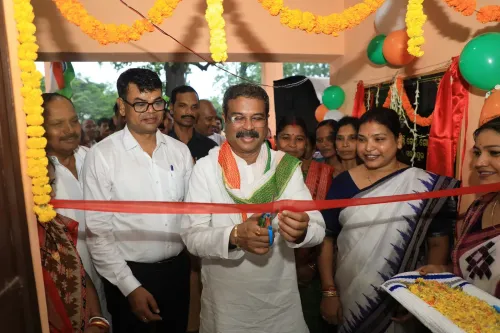
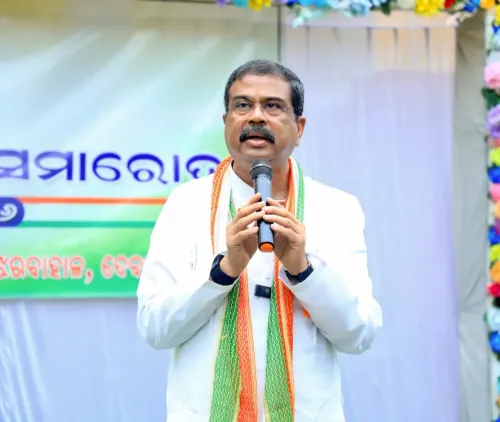
On the auspicious ninth of Navaratri, Union Education Minister Dharmendra Pradhan extended warm wishes to every girl child born in Angul and Debagarh districts of Odisha on Thursday, 22 October 2026 — and used the moment to champion a grassroots programme quietly doing meaningful work for the state's daughters.
Pradhan expressed his heartfelt wishes — 'ହାର୍ଦ୍ଦିକ ଶୁଭକାମନା' ['heartfelt good wishes'] — to all newborn girls in the two districts, and voiced strong confidence that the 'Kanyaratna Sambardhana Samaroha' will promote awareness in society while encouraging women's empowerment. The programme is designed to honour newborn girls and ensure their proper nutrition, education, and healthcare.
What the Kanyaratna programme sets out to do
The Kanyaratna Sambardhana Samaroha — roughly translated as the 'Honouring the Gem of a Daughter' ceremony — is a local initiative in Angul and Debagarh districts focused on publicly celebrating the birth of girl children and committing community resources to their well-being. Its three pillars — nutrition, education, and health — mirror the architecture of national programmes aimed at reversing deep-rooted son-preference biases.
Angul, a heavily industrialised district in western Odisha known for coal and aluminium operations, and Debagarh, a neighbouring district with a significant tribal population, are both areas where targeted social-welfare messaging carries particular weight. Pradhan, who represents Odisha's interests at the Cabinet level and has long been the state's most prominent BJP face, lending his public voice to this district-level drive gives it immediate visibility.
Festival timing and the larger Beti Bachao arc
The timing is deliberate and well-worn. Navaratri — nine nights of worship of the goddess Durga and her forms — has become a recurring vehicle for state and central governments to push gender-equity messaging, the symbolism of celebrating divine feminine energy mapped directly onto campaigns for the girl child's survival and dignity.
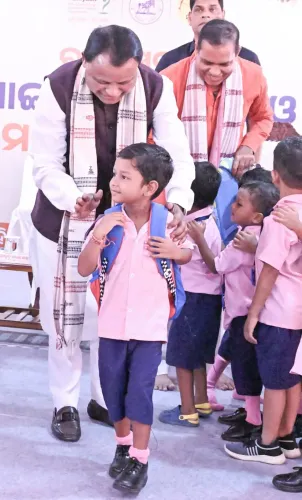
At the national level, the Beti Bachao Beti Padhao scheme, launched in 2015, set the template: combine cash incentives, awareness drives, and service delivery in health and education to improve the child sex ratio and keep girls in school. District-level programmes like Kanyaratna operate within that broader ecosystem, translating national intent into community action — a felicitation stage, a local official, a newborn girl placed centre-frame for once.
India's struggle with skewed sex ratios and girls' dropout rates remains a live challenge, and the political signal from a Union Cabinet minister endorsing even a district-level event is not incidental. It tells local administrators, families, and communities which way the wind blows.
If the Kanyaratna model demonstrates results in Angul and Debagarh, the pressure — and the opportunity — to scale it across Odisha's remaining districts will only grow.
Point of View
He reinforces the BJP's long-running pitch as the steward of women's welfare — a message with particular resonance in tribal and industrial belts where sex-ratio concerns persist. The Navaratri timing is not accidental: it converts religious sentiment into social commitment, a formula the government has deployed since the Beti Bachao Beti Padhao launch in 2015. Whether the programme is scaled or formally linked to central schemes will be the real test of whether this is a one-day gesture or the start of a wider Odisha rollout.
NationPress
22 Oct 2026
Frequently Asked Questions
What is the Kanyaratna Sambardhana Samaroha?
The Kanyaratna Sambardhana Samaroha is a local welfare programme in Odisha's Angul and Debagarh districts that honours newborn girl children and focuses on ensuring their proper nutrition, education, and healthcare.
Why did Dharmendra Pradhan post about girl children on Navaratri?
Pradhan extended wishes to newborn girls in Angul and Debagarh on Navaratri — a Hindu festival celebrating the divine feminine — aligning the occasion's symbolism with social messaging on girl-child welfare, a common government practice.
Which districts in Odisha does the Kanyaratna programme cover?
As per the post, the programme currently covers Angul and Debagarh (also spelled Deogarh) districts in western Odisha.
How does Kanyaratna relate to Beti Bachao Beti Padhao?
Kanyaratna operates at the district level but shares the same three pillars — nutrition, education, and health — as the national Beti Bachao Beti Padhao scheme launched in 2015, functioning as a community-level extension of that broader policy.
What is Dharmendra Pradhan's connection to Odisha?
Dharmendra Pradhan is a senior BJP leader from Odisha and currently serves as Union Minister of Education. He is the state's most prominent figure at the central Cabinet level and regularly champions Odisha-focused welfare initiatives.