CM Majhi Honours Anganwadi Workers at Odisha Poshan Maah Event
Synopsis
Odisha CM Mohan Charan Majhi felicitated Anganwadi and ASHA workers at a Bhubaneswar event marking the 9th National Poshan Maah, highlighted Odisha's claimed national top rank in Aadhaar seeding, and urged family-wide responsibility for child nutrition in the first 1,000 days.
Key Takeaways
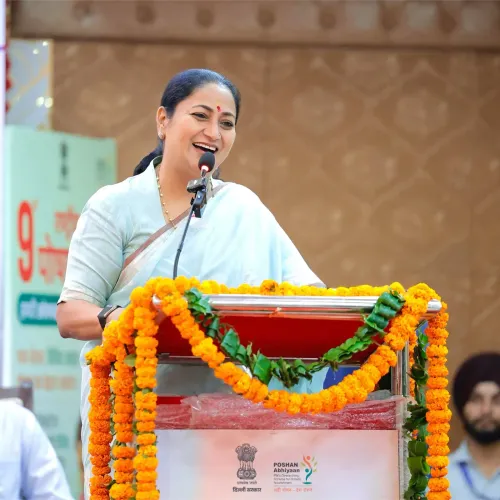
Odisha Chief Minister Mohan Charan Majhi attended the state-level Angan Ka Utsav and 9th National Poshan Maah event in Bhubaneswar on 29 September 2026 .
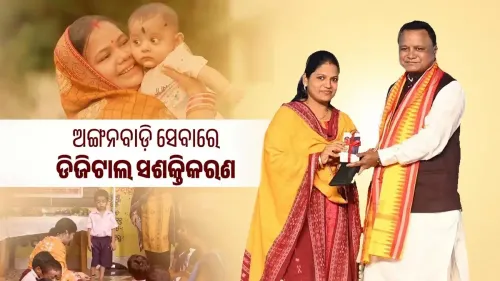
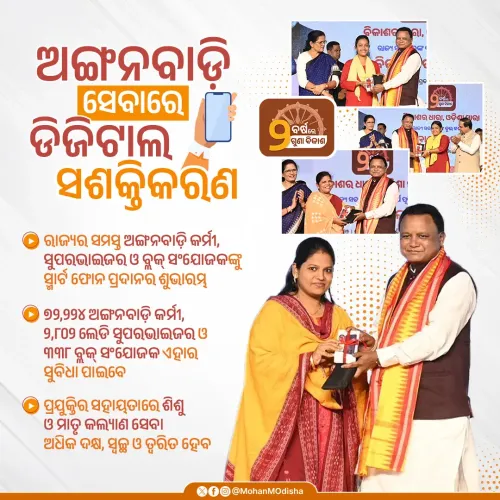
Anganwadi workers, helpers, and ASHA volunteers were formally felicitated for grassroots nutrition delivery work.
Majhi claimed Odisha ranked first nationally in Aadhaar verification under Poshan Abhiyan , attributing it to frontline worker dedication.
He stressed that the first 1,000 days of a child's life require shared nutrition responsibility from fathers and all family members, not mothers alone.
The CM called for reducing children's screen time in favour of reading, outdoor play, grandparent engagement, and a balanced Tiranga Thali diet.
Programmes 'Poshan Bhi Padhai Bhi' and 'Sukhad Lalan Palan' were highlighted as priorities for holistic early childhood development across Odisha.
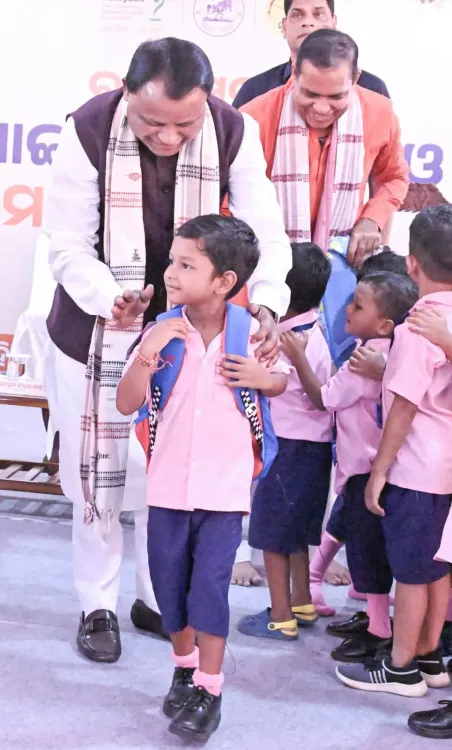
At a state-level celebration in Bhubaneswar on 29 September 2026, Odisha Chief Minister Mohan Charan Majhi stepped off the dais and into the crowd — felicitating the Anganwadi workers, helpers, and ASHA sisters whose daily, unglamorous work underpins the state's nutrition machinery, and pausing to interact warmly with the toddlers who had come along for the Angan Ka Utsav ('Festival of the Courtyard').
Odisha's Aadhaar-seeding claim and what it signals
The occasion was the state-level observance of the 9th National Poshan Maah — the annual September campaign, running since 2018, that mobilises every tier of India's nutrition delivery chain. Chief Minister Majhi used the platform to highlight a significant claim: that Odisha has ranked first across India in Aadhaar verification under Poshan Abhiyan — a metric that tracks how completely frontline workers have seeded beneficiary records to eliminate duplicates and improve targeting. The post frames this as direct proof of the dedication of 'karmayogi sisters' at the grassroots.
Aadhaar seeding is one of the key performance indicators on the national Poshan Tracker dashboard, and states have competed sharply on it since the dashboard was rolled out as part of the National Nutrition Mission launched in 2018. A top ranking on this metric signals administrative rigour — every child and pregnant woman counted, no ghost beneficiary, no gap in the data chain.
The first 1,000 days — and why fathers are now in the picture
CM Majhi's remarks went beyond ceremony. He emphasised that the first 1,000 days of a child's life — from conception to the second birthday — are the single most consequential window for nutrition and cognitive development, a position backed by global health consensus. Crucially, he called out that responsibility for care in this window must be shared not just by mothers but by fathers and every family member — a nudge toward the behavioural-change dimension that Poshan Abhiyan has increasingly prioritised beyond food supplementation alone.
He also sounded a note on screen time: in the digital age, he argued, it is a collective moral duty to pull children away from mobile screens and toward grandparents' stories, outdoor play, reading, and a balanced 'Tiranga Thali' — a tricolour plate representing the three food groups. The image is a recurring Poshan Abhiyan communication device designed to make dietary diversity visually intuitive for families.
'Poshan Bhi Padhai Bhi' and the next phase of delivery
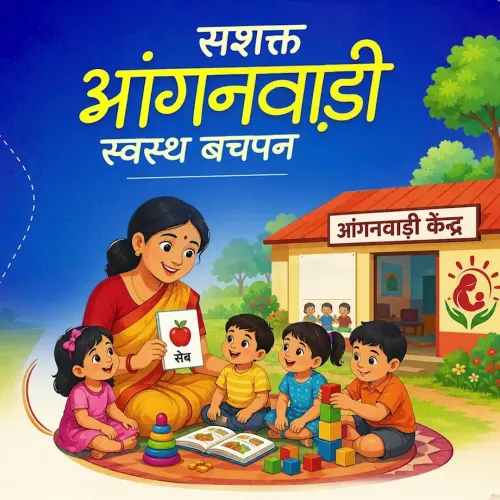
The Chief Minister spotlighted two central programme themes: 'Poshan Bhi Padhai Bhi' ('Nutrition as well as Learning') — which integrates early stimulation and pre-school learning into Anganwadi service delivery — and 'Sukhad Lalan Palan' ('Joyful Nurturing'), focused on positive parenting practices. Both represent the national shift from treating Anganwadis purely as feeding centres to positioning them as holistic early-childhood development hubs.
Anganwadi workers and ASHA volunteers, the two cadres honoured at the event, are the human infrastructure on which all of this rests. Anganwadis have operated under the Integrated Child Development Services scheme since 1975; ASHA workers were introduced under the National Health Mission to extend community health outreach, particularly for maternal and child health. Recognising them publicly — and on a state-level stage — is a deliberate signal that implementation depends on retaining and motivating this workforce.
Odisha's next test will be whether the Aadhaar-seeding lead translates into measurable improvements on outcome indicators — stunting rates, anaemia prevalence, and low birth weight — in the state's upcoming Poshan Tracker reports. The frontline sisters were celebrated today. The numbers will do the talking next.
Point of View
CM Majhi is deploying a well-worn but effective political playbook: converting a central-government nutrition campaign into a state-level showcase of administrative performance. The Aadhaar-seeding ranking claim, if borne out by national data, gives Odisha a concrete metric to distinguish itself in a field where most states compete on the same programme architecture. The emphasis on paternal and family responsibility — rather than placing the burden solely on mothers and frontline women workers — reflects a genuine evolution in Poshan Abhiyan's communication strategy, and Majhi's public endorsement gives it political weight at the state level. The real measure of this event's impact will be whether it accelerates district-level rollout of 'Poshan Bhi Padhai Bhi' or remains a ceremonial moment in the annual September mobilisation cycle.
NationPress
29 Sept 2026
Frequently Asked Questions
What is National Poshan Maah and when is it observed?
National Poshan Maah is an annual September campaign launched in 2018 under Poshan Abhiyan to drive mass awareness and community mobilisation against malnutrition across India. States organise events, competitions, and outreach drives throughout the month.
Why did Odisha CM Majhi felicitate Anganwadi and ASHA workers?
Chief Minister Mohan Charan Majhi honoured Anganwadi workers, helpers, and ASHA volunteers at the state-level Angan Ka Utsav in Bhubaneswar to recognise their grassroots role in delivering nutrition services and achieving what he described as a national top rank in Aadhaar seeding under Poshan Abhiyan.
What is Aadhaar seeding in Poshan Abhiyan and why does it matter?
Aadhaar seeding links beneficiary records — children, pregnant women, lactating mothers — to their Aadhaar numbers in the Poshan Tracker system. It eliminates duplicate entries, improves targeting of nutrition services, and is a key performance metric on which states are ranked nationally.
What does 'first 1,000 days' mean in child nutrition?
The 'first 1,000 days' refers to the period from conception to a child's second birthday, widely recognised as the most critical window for nutrition, brain development, and long-term health outcomes. Interventions during this window have the highest impact on reducing stunting and cognitive deficits.
What is 'Poshan Bhi Padhai Bhi'?
'Poshan Bhi Padhai Bhi' — meaning 'Nutrition as well as Learning' — is a programme component under Poshan Abhiyan that integrates early stimulation and pre-school learning activities into Anganwadi centres, repositioning them as holistic early childhood development hubs rather than only food distribution points.