CM Majhi joins 9th Poshan Maah, serves meals to children
Synopsis
Chief Minister Mohan Charan Majhi attended Odisha's state-level 9th Poshan Maah and Angan Ka Utsav at a Baramunda Anganwadi centre in Bhubaneswar on 29 September 2026, serving nutritious meals to children, distributing school kits, and honouring frontline health workers.
Key Takeaways
CM Mohan Charan Majhi personally attended the state-level 9th National Nutrition Month event at the Baramunda Anganwadi centre, Bhubaneswar on 29 September 2026 .
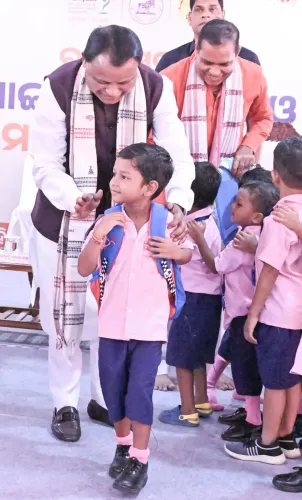
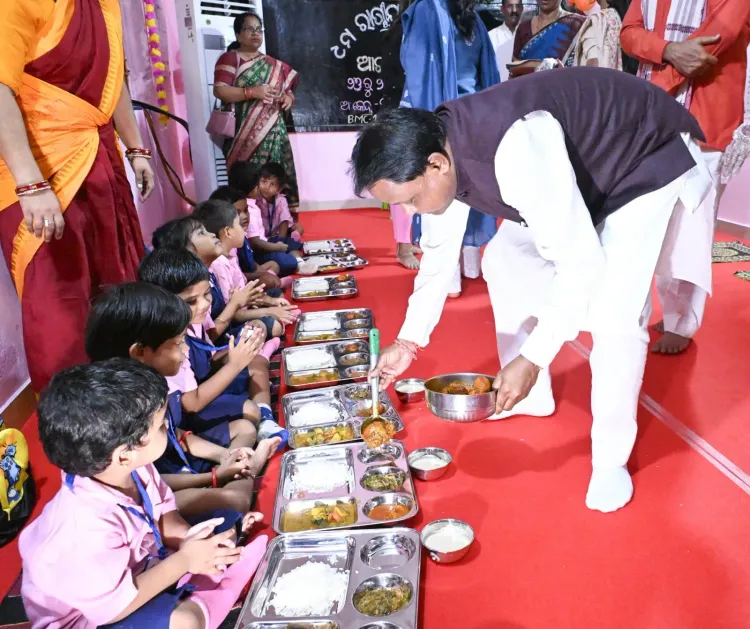
The Chief Minister served nutritious food to children with his own hands and distributed school kits at the event.
He praised the contributions of Anganwadi workers, helpers, ANMs, and ASHA workers in reducing child and maternal mortality and boosting immunisation.
POSHAN Maah has been observed every September since 2018 as part of the national POSHAN Abhiyaan nutrition mission.
Odisha's Mamata conditional cash-transfer scheme, active since 2011 , complements ICDS services for pregnant and lactating women in the state.
At a sunlit Anganwadi centre in Baramunda, Bhubaneswar, Chief Minister Mohan Charan Majhi sat with toddlers, served them nutritious food with his own hands, and distributed school kits — a deliberate, human gesture at the heart of a national nutrition push. The Chief Minister's Office of Odisha announced on Tuesday, 29 September 2026 that CM Majhi participated in the state-level 'Angan Ka Utsav' ['Festival of the Anganwadi'] and the 9th National Nutrition Month observance hosted at the Baramunda Anganwadi centre.
What happened at Baramunda — and why it matters
The event was more than a ceremonial appearance. CM Majhi spent time with young children, personally distributed school kits, and served nutritionally balanced meals — signalling the state government's hands-on commitment to early childhood development. He also renewed the government's pledge to build a 'well-nourished and developed Odisha.'
At the gathering, the Chief Minister publicly praised the 'remarkable and selfless contributions' of Anganwadi workers, helpers, ANMs (Auxiliary Nurse Midwives) and ASHA workers in reducing child and maternal mortality, expanding universal immunisation, and increasing institutional deliveries across the state.
The architecture behind Poshan Maah
POSHAN Maah — observed every September since 2018 — is the annual community-mobilisation arm of the POSHAN Abhiyaan, India's flagship national nutrition mission launched that same year to systematically reduce stunting, undernutrition, and anaemia among children and women. Anganwadi centres, the frontline delivery points of the Integrated Child Development Services (ICDS) scheme running since 1975, remain the backbone of this architecture.
Odisha has layered its own interventions on top of this national framework. The state's Mamata conditional cash-transfer scheme, running since 2011, provides direct financial support to pregnant and lactating women — complementing the nutrition and health services delivered through Anganwadi centres.
Frontline workers at the centre of the story
The Chief Minister's explicit recognition of Anganwadi workers, ASHA workers, and ANMs is significant. These largely women-led cadres operate at the last mile — conducting home visits, tracking immunisation schedules, facilitating institutional deliveries, and flagging malnourished children. Their work is the connective tissue between government policy and household-level outcomes.
Central and state governments have consistently credited this frontline network with measurable gains in immunisation coverage and reductions in maternal and infant mortality. Public events like Angan Ka Utsav serve a dual purpose: mobilising communities around nutrition behaviour and visibly honouring the workers who make the system run.
With the next round of national or state-level health survey data on Odisha's malnutrition and mortality trends still awaited, today's event plants a political and programmatic marker — a Chief Minister at an Anganwadi, serving food, making a promise. The real measure will come in the numbers.
Point of View
Hands-on participation in a grassroots Anganwadi event — rather than a high-table policy address — reflects a deliberate political optics choice: proximity to the last-mile welfare apparatus signals continuity with the BJP's national nutrition agenda while building a distinct state-level identity. Publicly honouring frontline workers at a time when Anganwadi and ASHA cadres have periodically pressed for better pay and recognition adds a conciliatory dimension. The broader arc here is one of competitive welfare politics in Odisha, where the new BJP government is working to establish ownership over social schemes long associated with the previous BJD administration. The real test of intent will be whether the state budget translates this ceremonial commitment into expanded infrastructure or improved worker incentives.
NationPress
29 Sept 2026
Frequently Asked Questions
What is Poshan Maah and when is it observed?
Poshan Maah (National Nutrition Month) is observed every September across India since 2018 as part of the POSHAN Abhiyaan , India's national nutrition mission aimed at reducing stunting, undernutrition, and anaemia in children and women.
What did CM Mohan Charan Majhi do at the Poshan Maah event in Bhubaneswar?
CM Majhi attended the state-level event at the Baramunda Anganwadi centre in Bhubaneswar on 29 September 2026 , where he spent time with young children, served them nutritious food, distributed school kits, and praised the work of Anganwadi and ASHA workers.
What is Angan Ka Utsav?
Angan Ka Utsav ('Festival of the Anganwadi') is a celebratory event held at Anganwadi centres to mark Poshan Maah , bringing together children, mothers, and frontline workers to promote nutrition awareness and early childhood development.
What is the role of Anganwadi workers in Odisha's nutrition programme?
Anganwadi workers are frontline functionaries who deliver supplementary nutrition, preschool education, immunisation support, and maternal health services through the ICDS network. In Odisha, they work alongside ASHA workers and ANMs to reduce child and maternal mortality and increase institutional deliveries.
What is Odisha's Mamata scheme?
The Mamata scheme is Odisha's conditional cash-transfer programme, running since 2011 , that provides direct financial support to pregnant and lactating women to encourage institutional delivery and improve maternal and child nutrition outcomes.