Vaishnaw: India Building Full TBM Ecosystem Domestically
Synopsis
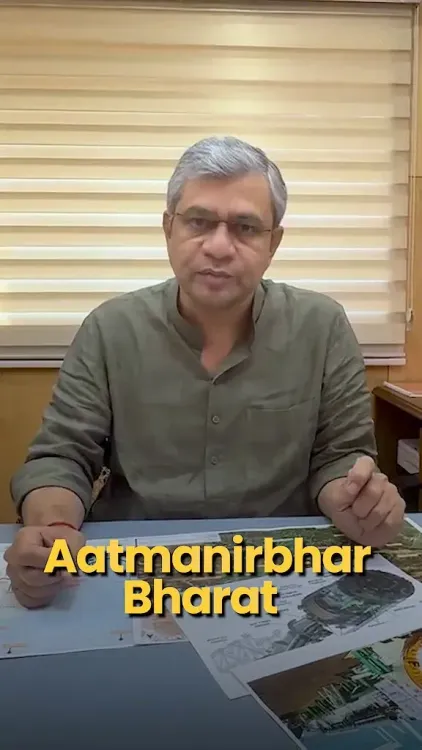
Union Minister Ashwini Vaishnaw announced on 22 October 2026 that India is building a full domestic ecosystem for Tunnel Boring Machines — covering design, manufacturing, and maintenance — marking a significant leap in the Aatmanirbhar Bharat self-reliance drive.
Key Takeaways
Union Minister Ashwini Vaishnaw announced India is developing a complete domestic Tunnel Boring Machine ecosystem on 22 October 2026 .
The ecosystem covers all three stages: design, manufacturing, and maintenance — not just assembly.
TBMs were historically imported from Germany and China , making Indian infrastructure projects dependent on foreign supply chains.
The push aligns with the Aatmanirbhar Bharat initiative launched in May 2020 by PM Narendra Modi.
Indian Railways and urban metro networks across the country are major consumers of TBMs for tunneling projects.
Indigenous TBM capability reduces foreign-exchange outflows and seeds domestic heavy-engineering expertise.
From imported machinery to homegrown engineering — India is now building the entire lifecycle of Tunnel Boring Machines within its own borders. Union Minister Ashwini Vaishnaw declared on Thursday, 22 October 2026 that the complete TBM ecosystem — design, manufacturing, and maintenance — is taking shape in India, calling it a milestone for Aatmanirbhar Bharat.
From Germany and China to Made-in-India
For decades, Tunnel Boring Machines were almost entirely sourced from overseas — principally Germany and China — making every metro line, railway tunnel, and highway bore dependent on foreign supply chains, foreign spare parts, and foreign engineers. The machines are not small purchases: a single TBM can cost tens of millions of dollars, and downtime for maintenance compounds project delays into years.
Vaishnaw's post lays out a three-stage arc — Design ➡️ Manufacturing ➡️ Maintenance — that signals India is not merely assembling imported components but building indigenous capability at every link in the chain. That distinction matters enormously for long-term infrastructure economics.
Why TBMs Are Central to India's Infrastructure Ambition
Indian Railways alone is executing tunneling works across mountainous corridors in the Northeast, Jammu & Kashmir, and the Western Ghats. Urban metro networks in cities like Mumbai, Delhi, Bangalore, and Hyderabad are drilling deeper and longer routes than ever before. Each of these projects runs on TBMs — and historically, every breakdown meant waiting on a foreign OEM.
Bringing design and manufacturing onshore directly reduces project timelines and foreign-exchange outflows. It also seeds a domestic heavy-engineering workforce — technicians, metallurgists, and precision machinists — whose skills compound across other capital-goods sectors.
Aatmanirbhar Bharat's Heavy-Engineering Frontier
The Aatmanirbhar Bharat initiative, launched in May 2020 by Prime Minister Narendra Modi, set out to reduce import dependence across strategic sectors. Early wins came in defence and semiconductors. TBMs represent a harder frontier — complex, bespoke machines where global supply is dominated by a handful of European and East Asian players.
Indigenising TBMs would place India in a rare club. It also strengthens India's negotiating position in infrastructure diplomacy, particularly as it exports engineering expertise to neighbouring and Global South countries.
India's tunneling ambition is no longer just about digging through mountains — it is about who builds the machine that does it. That shift is what Vaishnaw is pointing to, and it has consequences that outlast any single project.
Point of View
It could meaningfully cut project costs and timelines for India's ambitious tunneling pipeline. It also marks a strategic hedge: reducing dependence on Chinese and European OEMs for equipment that is literally foundational to national connectivity. The watch now is whether announced manufacturing facilities translate into first domestic deployments on live railway or metro tunnel projects.
NationPress
22 Oct 2026
Frequently Asked Questions
What is a Tunnel Boring Machine and why does India need them?
A Tunnel Boring Machine (TBM) is specialised heavy equipment used to excavate tunnels for metros, railways, and highways. India needs large numbers of TBMs for its expanding rail and urban transport network, particularly in mountainous and congested urban terrain.
Was India importing TBMs before this development?
Yes. India historically imported Tunnel Boring Machines primarily from Germany and China, making infrastructure projects dependent on foreign supply chains for both equipment and maintenance support.
What does the Aatmanirbhar Bharat initiative mean for heavy engineering?
Aatmanirbhar Bharat, launched in May 2020, aims to reduce India's import dependence across strategic sectors. Extending it to TBMs marks an effort to indigenise complex capital goods, not just consumer or defence products.
What did Ashwini Vaishnaw say about TBMs?
Union Minister Ashwini Vaishnaw posted that India is building a complete TBM ecosystem domestically, covering design, manufacturing, and maintenance — framing it as a concrete achievement of Aatmanirbhar Bharat.
Which Indian infrastructure projects use Tunnel Boring Machines?
Indian Railways tunneling projects in the Northeast, Jammu and Kashmir, and the Western Ghats, as well as metro rail networks in cities like Mumbai, Delhi, Bangalore, and Hyderabad, are major users of TBMs.