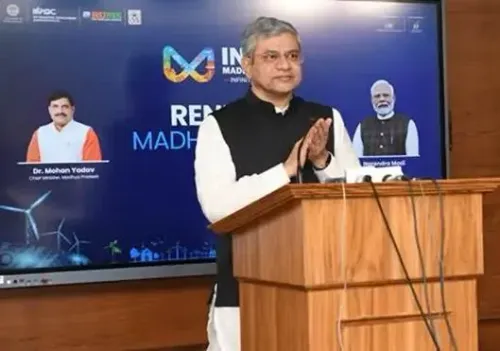
Vaishnaw: India's 4th Semiconductor Plant Online by December

Synopsis
Union Minister Ashwini Vaishnaw announced from Ranjangaon, Pune that two semiconductor plants are already in commercial production, a third will be inaugurated in July 2026, and a fourth will be fully functional by December 2026, advancing India's bid to become a global chip manufacturing hub.
Key Takeaways
Two semiconductor plants in India have already commenced commercial production as of June 2026.
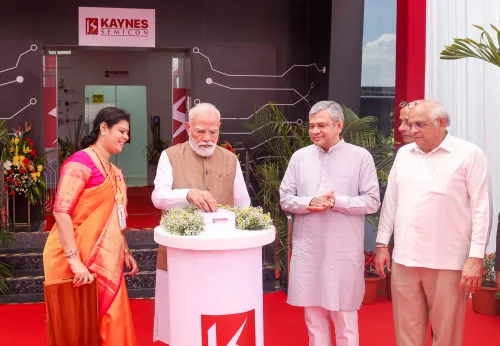
The third plant is scheduled for inauguration in July 2026 , according to Union Minister Ashwini Vaishnaw.
The fourth plant is expected to be fully functional by December 2026 .
The milestone is linked to the India Semiconductor Mission , launched with a Rs 76,000 crore outlay in December 2021.
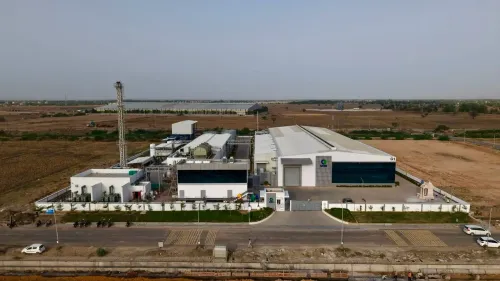
The announcement was made from Ranjangaon, Pune , an emerging industrial hub in Maharashtra.
The push is part of India's broader Atmanirbhar Bharat strategy to reduce dependence on imported chips.
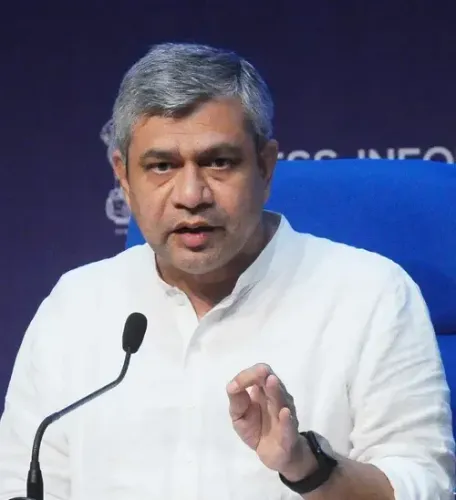
Union Minister Ashwini Vaishnaw announced on Wednesday, June 17, 2026, that India is on track to have four semiconductor manufacturing plants operational by the end of the year, with two already in commercial production and two more to follow in the coming months. The announcement, made from Ranjangaon, Pune, underscores the government's push to transform India into a global semiconductor manufacturing hub.
Context
In his post, Vaishnaw stated that the third semiconductor plant will be inaugurated in July 2026, while the fourth plant will be fully functional by December 2026. He credited the progress to 'visionary leadership and focused execution of PM Shri Narendra Modi.' The minister's visit to Ranjangaon, an industrial belt near Pune in Maharashtra, signals the region's growing role in India's chip manufacturing ambitions.
The two plants already in commercial production mark a significant milestone for a country that has historically depended almost entirely on imported semiconductors to power its electronics, automotive, and defence sectors.
Policy Backdrop
The progress is rooted in the India Semiconductor Mission (ISM), approved by the Union Cabinet in December 2021 with a fiscal outlay of Rs 76,000 crore. The mission was conceived as a cornerstone of the broader Atmanirbhar Bharat initiative, aimed at building domestic capacity in fabrication, assembly, testing, and packaging of semiconductor chips.
The policy framework offered substantial central fiscal support — covering up to 50 per cent of project costs for eligible units — alongside complementary incentives from state governments in the form of land, power, and infrastructure. Maharashtra, with its established industrial corridors, emerged as one of the key beneficiary states under this architecture.
India's semiconductor drive also aligns with a global realignment of chip supply chains following disruptions caused by the COVID-19 pandemic and subsequent geopolitical tensions, with major economies actively courting chipmakers to diversify production away from a handful of concentrated geographies.
Stakeholders and Impact
The commissioning of domestic semiconductor plants has direct implications for electronics manufacturers, automotive OEMs, defence contractors, and consumer goods producers across India, all of whom have faced supply-chain vulnerabilities tied to import dependence. A functional domestic supply base could reduce lead times and currency-exposure risks for these industries.
For semiconductor investors and global chipmakers scouting South Asian production bases, the operational track record of the first two plants — and the credibility of the July and December timelines — will be a critical proof of concept. Multiple state governments have been competing to attract follow-on investment proposals under the ISM framework.
Workers and ancillary industries around Ranjangaon, Pune stand to benefit from the high-skill employment and vendor ecosystem that large-scale semiconductor facilities typically generate over time.
What's Next
The immediate milestone to watch is the inauguration of the third plant in July 2026, which will provide the first concrete signal of whether the government's commissioning schedule is holding. Capacity utilisation figures from the two already-operational plants are expected to attract scrutiny from industry analysts assessing the commercial viability of India's chip manufacturing model.
Longer term, follow-up investment proposals under the India Semiconductor Mission in the coming quarters will determine whether the current four-plant pipeline represents the beginning of a sustained build-out or a first wave that requires additional policy support to scale. India's ability to meet its self-stated ambition of becoming a global semiconductor hub will hinge on sustaining this execution momentum well beyond 2026.
Point of View
If it holds, would represent the most tangible deliverable yet from the India Semiconductor Mission, a scheme that has faced persistent questions about execution speed since its 2021 approval. The framing around 'PM Modi's visionary leadership' also situates semiconductor progress squarely within the ruling party's broader Atmanirbhar Bharat narrative ahead of an election cycle. Whether the July inauguration and December operationalisation dates are met will be a credibility test that industry observers and opposition alike are likely to track closely.
NationPress
19 Sept 2026
Frequently Asked Questions
How many semiconductor plants are operational in India in 2026?
As of June 2026, two semiconductor plants in India have begun commercial production, according to Union Minister Ashwini Vaishnaw. A third is set for inauguration in July and a fourth is expected to be fully functional by December 2026.
Where is India's semiconductor plant located in Pune?
The semiconductor facility referenced by Minister Vaishnaw is located in Ranjangaon , an industrial area near Pune in Maharashtra, which has emerged as a key node in India's chip manufacturing push.
What is the India Semiconductor Mission?
The India Semiconductor Mission (ISM) is a central government scheme approved in December 2021 with an outlay of Rs 76,000 crore . It aims to build domestic capacity in semiconductor fabrication, assembly, testing, and packaging as part of the Atmanirbhar Bharat initiative.
When will India's fourth semiconductor plant be ready?
Union Minister Ashwini Vaishnaw stated on June 17, 2026, that India's fourth semiconductor plant will be fully functional by December 2026 .
Why is India building semiconductor plants?
India is building semiconductor plants to reduce its near-total dependence on imported chips, strengthen domestic electronics and defence supply chains, and position itself as an alternative manufacturing hub amid global supply-chain diversification efforts.