Vaishnaw Highlights Modi's Semiconductor Push: 0 to 10+ Units

Synopsis
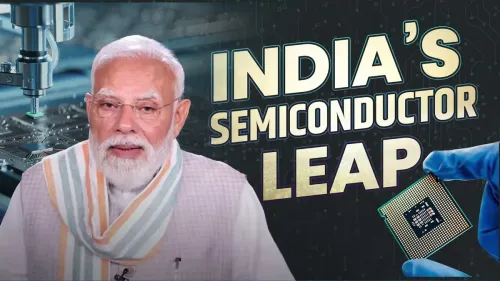
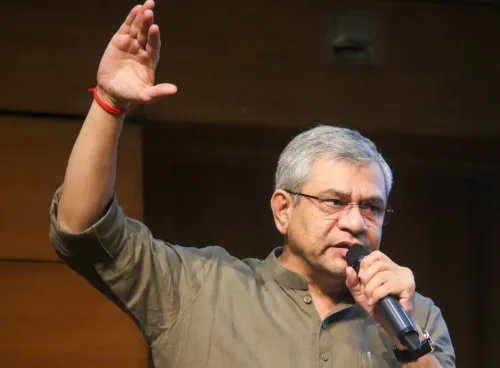
Union Minister Ashwini Vaishnaw has shared a quote from PM Modi marking India's shift from zero semiconductor units in 2014 to more than ten units currently being built, spotlighting the Rs 76,000 crore India Semiconductor Mission as a flagship technology governance achievement.
Key Takeaways
Union Minister Ashwini Vaishnaw on June 11, 2026 shared a quote from PM Narendra Modi on India's semiconductor growth.
PM Modi stated India had zero semiconductor units in 2014 ; today more than 10 units are being built.
The India Semiconductor Mission , approved in December 2021 , carries an outlay of Rs 76,000 crore to build a domestic chip ecosystem.
The mission is part of the Atmanirbhar Bharat push launched in 2020 to reduce import dependence on critical components.
The PLI scheme for electronics , notified in April 2020 , provided early policy scaffolding for the semiconductor drive.
The post was shared under #LongestServingElectedPMModi , framing the milestone within PM Modi's governance record.
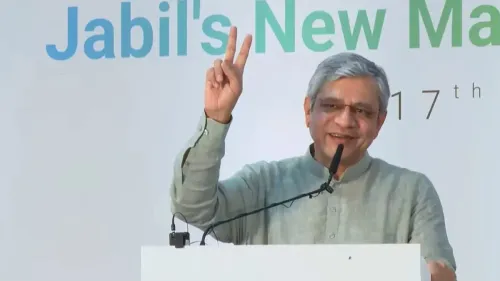
Union Minister Ashwini Vaishnaw on Thursday, June 11, 2026, shared a quote attributed to Prime Minister Narendra Modi highlighting India's semiconductor manufacturing transformation, underlining that the country has gone from having no domestic semiconductor units in 2014 to over ten units currently under development.
Context
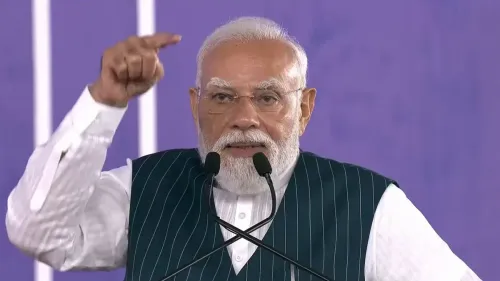
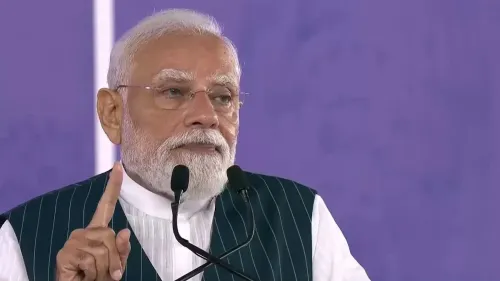
The post quotes Prime Minister Modi as saying: '2014 mein desh mein ek bhi semiconductor unit nahin thi. Aaj desh mein ban rahi 10 se zyada semiconductor units Bharat ko aadhunikta ki taraf le ja rahi hain.' [In 2014, there was not a single semiconductor unit in the country. Today, more than 10 semiconductor units being built in India are taking the nation towards modernity.] The remark was shared under the hashtag #LongestServingElectedPMModi, framing the milestone as part of Prime Minister Modi's governance record.
Vaishnaw, who holds the portfolio of Electronics and Information Technology alongside Railways and Information and Broadcasting, is the minister directly responsible for executing India's semiconductor strategy, making his amplification of this quote notable.
Policy Backdrop
India's semiconductor ambitions took formal shape when the Cabinet approved the India Semiconductor Mission in December 2021, backed by an outlay of Rs 76,000 crore. The mission was designed to attract global chip fabrication and assembly investments and reduce the country's near-total dependence on imported semiconductors.
This effort sits within the broader Atmanirbhar Bharat framework launched in 2020, which sought to build domestic capacity in critical components following global supply chain disruptions and a post-pandemic reassessment of technology sourcing. The Production Linked Incentive (PLI) scheme for electronics manufacturing, notified in April 2020, laid earlier groundwork for attracting capital into the sector.
Multiple memoranda of understanding with international firms have been signed under this framework, spanning chip fabrication, assembly, testing, marking, and packaging facilities across several Indian states.
Stakeholders and Impact
The primary beneficiaries of a maturing domestic semiconductor ecosystem include electronics manufacturers who currently depend on imported chips, and technology investors seeking to position India as an alternative to established East Asian supply chains. A domestic chip supply base would also have downstream implications for sectors from consumer electronics to defence and automotive.
For ordinary consumers and industry alike, the strategic significance lies in supply security: India's electronics sector has historically been vulnerable to global chip shortages, as the 2020-22 supply crunch demonstrated. Establishing local production capacity is intended to buffer against such disruptions in the future.
What's Next
Attention will now turn to the operational milestones of the approved semiconductor projects — specifically, which units move from groundbreaking to production-ready status and on what timeline. Any fresh project approvals or additional budget allocations in forthcoming policy announcements will be closely watched by industry and investors as indicators of whether the mission's momentum is being sustained.
With Prime Minister Modi's tenure record being invoked alongside this milestone, the semiconductor story is likely to remain a centrepiece of the ruling party's technology governance narrative in the months ahead.
Point of View
Using a direct PM quote to anchor a technology milestone to the ruling party's governance record. The hashtag context makes clear this is as much about legacy-building as policy information. The semiconductor narrative is one of the BJP government's most credible technology stories — the Rs 76,000 crore mission and signed MoUs provide substantive backing — making it a strong plank for the 'modern India' messaging that has defined the Modi administration's self-presentation. The broader arc here is India's attempt to insert itself into the global chip supply chain at a moment of geopolitical realignment, and the government is clearly intent on owning that story politically.
NationPress
26 Oct 2026
Frequently Asked Questions
How many semiconductor units are being built in India in 2026?
According to a quote shared by Union Minister Ashwini Vaishnaw, PM Modi has stated that more than 10 semiconductor units are currently being built in India, compared to zero in 2014.
What is the India Semiconductor Mission?
The India Semiconductor Mission is a government scheme approved by the Cabinet in December 2021 with an outlay of Rs 76,000 crore to develop domestic chip fabrication, assembly, and packaging capabilities and reduce import dependence.
What was India's semiconductor status in 2014?
PM Modi, as quoted by Minister Vaishnaw, stated that in 2014 there was not a single semiconductor unit in India. Note that this is a claim made in the post; the precise 2014 baseline is a post-specific assertion.
What is Atmanirbhar Bharat's role in India's chip push?
Atmanirbhar Bharat, launched in 2020, is the overarching self-reliance framework under which India's semiconductor policy sits. It aims to reduce dependence on imported critical components, including chips, by building domestic manufacturing capacity.
What is Ashwini Vaishnaw's role in India's semiconductor policy?
Ashwini Vaishnaw is the Union Minister for Electronics and Information Technology, the portfolio directly responsible for implementing India's semiconductor strategy, including the India Semiconductor Mission.