Vaishnaw Shares Modi's Vision for 10 Semiconductor Units
Synopsis
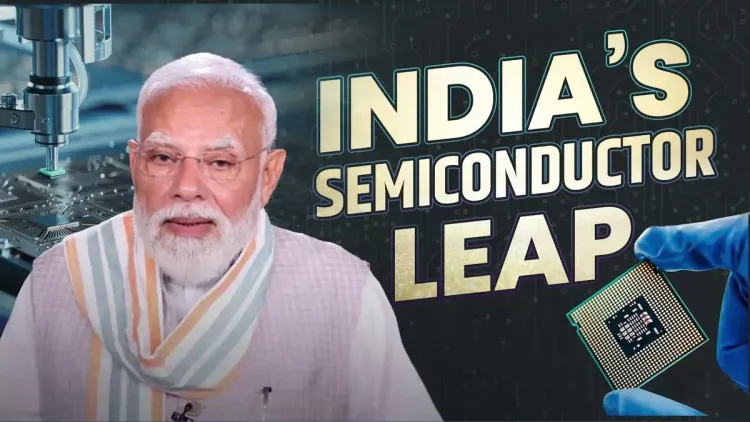
Union Minister Ashwini Vaishnaw has shared PM Narendra Modi's projection that 10 large Indian semiconductor units will achieve global stature, with Indian youth driving the capacity. The statement reinforces India's Rs 76,000 crore semiconductor mission push.
Key Takeaways
Union Minister Ashwini Vaishnaw shared a statement by PM Narendra Modi on 23 May 2026 projecting global prominence for 10 big Indian semiconductor units .
PM Modi emphasised that a large number of Indian youth will drive the capability behind these units.
The India Semiconductor Mission , notified in December 2021 , underpins this ambition with a Rs 76,000 crore outlay.
India's strategy combines domestic fiscal incentives with technology partnerships involving firms from the US, Taiwan, and Japan .
Progress on approved fabrication and OSAT projects will serve as near-term milestones for the broader semiconductor roadmap.
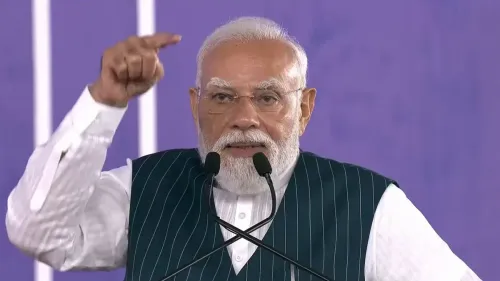
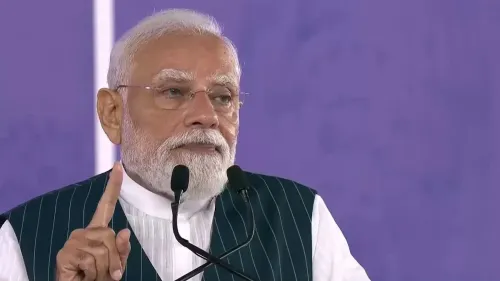
Union Minister Ashwini Vaishnaw on Saturday, 23 May 2026, shared a statement by Prime Minister Narendra Modi projecting that 10 large semiconductor units from India will establish a global presence in the years ahead, with Indian youth forming the backbone of that industrial capacity.
Context
The post quotes Prime Minister Modi directly: 'Aane wale samay mein Bharat ki 10 badi semiconductor units duniya mein apna parcham lahraengi' — 'In the coming time, India's 10 big semiconductor units will hoist their flag across the world.' The Prime Minister added that a large number of India's youth will power this transformation.
Minister Vaishnaw, who holds the Electronics and Information Technology portfolio, amplified the statement, underscoring the government's continued emphasis on semiconductor self-reliance as a national priority.
Policy Backdrop
India's semiconductor push is anchored in the India Semiconductor Mission (ISM), notified in December 2021 under the Ministry of Electronics and Information Technology with an outlay of Rs 76,000 crore. The mission was designed to attract fabrication, assembly, testing, marking, and packaging investments to build an end-to-end semiconductor ecosystem on Indian soil.
The broader Atmanirbhar Bharat manufacturing framework has sought to reduce India's dependence on semiconductor imports concentrated in East Asia, pursuing technology partnerships with firms and governments in the United States, Taiwan, and Japan to diversify supply chains and transfer know-how.
Stakeholders and Impact
Indian youth are positioned centrally in the government's semiconductor narrative — both as a skilled-workforce dividend and as a long-term employment pipeline. Electronics manufacturing, chip design, and semiconductor assembly are seen as high-value sectors capable of absorbing engineering graduates at scale.
The electronics manufacturing sector at large stands to benefit from upstream semiconductor capacity, reducing import bills and enabling deeper localisation of devices assembled in India. Global supply-chain diversification pressures following recent disruptions have added urgency to these investments.
What's Next
Analysts and industry stakeholders will watch closely for concrete milestones on approved fabrication and OSAT (Outsourced Semiconductor Assembly and Test) projects already in the pipeline under ISM. Any revisions to the semiconductor incentive framework in upcoming Union Budget deliberations or cabinet meetings will be closely tracked.
PM Modi's projection of 10 major semiconductor units raising India's global profile sets a public benchmark against which progress on approved and forthcoming projects will be measured in the months ahead.
Point of View
Which is unusual for aspirational statements and suggests the government is confident in a pipeline of approved or near-approved projects. Whether that pipeline translates into operational fabs and OSAT facilities on schedule will determine how this vision is ultimately judged.
NationPress
7 Oct 2026
Frequently Asked Questions
What did PM Modi say about India's semiconductor units?
PM Modi projected that 10 large semiconductor units from India will establish a global presence in the coming years, with Indian youth forming the core of that industrial strength.
What is the India Semiconductor Mission?
The India Semiconductor Mission is a central government scheme notified in December 2021 under MeitY with an outlay of Rs 76,000 crore, aimed at building a full semiconductor and display manufacturing ecosystem in India.
Why is India investing in semiconductor manufacturing?
India is investing in semiconductors to reduce dependence on East Asian imports, capitalise on global supply-chain diversification trends, and create high-value employment for its engineering workforce.
What is Ashwini Vaishnaw's role in semiconductor policy?
As Union Minister for Electronics and Information Technology, Ashwini Vaishnaw oversees the India Semiconductor Mission and is the cabinet-level authority responsible for implementing semiconductor policy.
What are OSAT projects in the context of India's semiconductor push?
OSAT stands for Outsourced Semiconductor Assembly and Test — facilities that handle the packaging and testing of chips. India has approved OSAT investments as part of its semiconductor mission to build an end-to-end domestic ecosystem.