Shekhawat backs PM Modi's vision for India as semiconductor hub

Synopsis
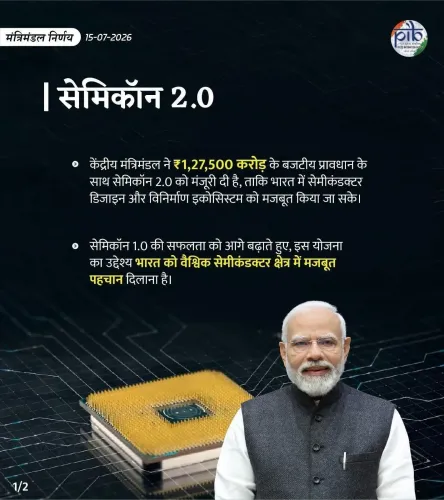
Union Minister Gajendra Singh Shekhawat amplified PM Modi's semiconductor ambition on 23 May 2026, declaring India's chip sector will achieve global stature on the strength of its youth, as the Rs 76,000-crore India Semiconductor Mission drives the country's Atmanirbhar Bharat industrial push.
Key Takeaways
Union Minister Gajendra Singh Shekhawat publicly backed PM Modi's semiconductor vision on 23 May 2026 .
The minister credited Indian youth — their capability, intellect, and commitment — as the central force behind the envisioned semiconductor rise.
The India Semiconductor Mission , approved in 2021 with a Rs 76,000 crore outlay, is the government's primary policy vehicle for building a domestic chip ecosystem.
India's semiconductor push is part of the broader Atmanirbhar Bharat strategy to reduce import dependence on chips.
The Production Linked Incentive (PLI) scheme for IT hardware, launched in 2020 , complements the mission by incentivising domestic electronics manufacturing.
Global chip supply disruptions and moves like the US CHIPS Act have reinforced New Delhi's urgency to build indigenous semiconductor capacity.
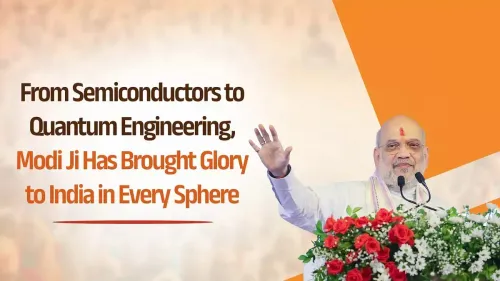
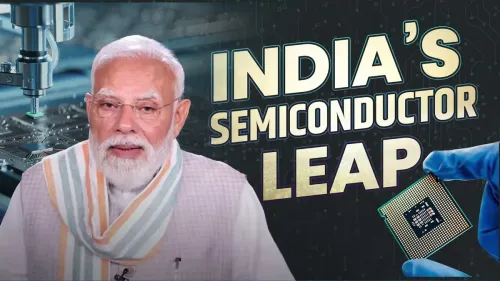
Union Culture and Tourism Minister Gajendra Singh Shekhawat on Saturday, 23 May 2026, voiced strong support for Prime Minister Narendra Modi's ambition to establish India as a global semiconductor manufacturing powerhouse, asserting that the country's youth will be the driving force behind this transformation.
Posting in Hindi on X, Shekhawat declared: 'सेमीकंडक्टर सेक्टर में चमकेगा भारत का नाम!' ('India's name will shine in the semiconductor sector!'). He highlighted what he described as PM Modi's 'big vision' — that India's semiconductor units will 'hoist their flag across the world' in the years ahead, powered by the capability, strength, intellect, and commitment of Indian youth.
Context
The post comes as India's semiconductor policy agenda has gained significant momentum under the Atmanirbhar Bharat framework. The government has positioned chip manufacturing as a strategic priority, citing the vulnerabilities exposed by global supply disruptions in recent years. Senior leaders across portfolios have increasingly amplified this messaging, reflecting a whole-of-government push to build public and investor confidence.
Policy Backdrop
The India Semiconductor Mission (ISM), approved by the Cabinet in 2021 with an outlay of Rs 76,000 crore, forms the backbone of this effort. The scheme is designed to attract investment in semiconductor fabrication, display manufacturing, and the broader chip design ecosystem. It runs alongside the Production Linked Incentive (PLI) scheme for IT hardware and electronics, announced in 2020, which incentivises domestic manufacturing to reduce import dependence.
India's semiconductor push mirrors parallel moves globally, most notably the US CHIPS Act, as nations compete to secure domestic chip supply chains. Reducing dependence on imported semiconductors — which underpin everything from mobile phones to automobiles — has become a core industrial policy objective for New Delhi.
Stakeholders and Impact
Indian youth feature centrally in Shekhawat's framing, with the minister emphasising their 'capability, strength, intellect, and commitment' as the engine of the envisioned semiconductor surge. The electronics manufacturing sector stands to benefit significantly if fabrication projects under ISM reach full operational scale, generating skilled employment and anchoring deeper industrial value chains within India.
For the broader economy, a mature domestic semiconductor ecosystem would reduce the foreign exchange outflow associated with chip imports and strengthen India's position in global technology supply chains — a priority that has bipartisan resonance in New Delhi's policy circles.
What's Next
Attention will now focus on the rollout milestones of fabrication projects already approved under the India Semiconductor Mission, as well as any fresh skill-development programmes targeting semiconductor engineering talent. The government's ability to translate stated vision into operational chip plants will be the key metric by which this ambition is judged — both domestically and by global investors scouting Asia-Pacific manufacturing destinations.
Point of View
Projecting a unified government brand around Atmanirbhar Bharat. The emphasis on youth as the engine of semiconductor growth is deliberate political messaging, linking a complex industrial policy to an aspirational demographic. However, the gap between vision and verified on-ground progress at fabrication sites remains the critical test; ministerial enthusiasm has consistently outpaced publicly confirmed project milestones under the India Semiconductor Mission. The broader pattern suggests New Delhi is as focused on shaping the semiconductor narrative as it is on accelerating the supply-side policy machinery.
NationPress
7 Oct 2026
Frequently Asked Questions
What is India's semiconductor mission and how much has the government invested?
The India Semiconductor Mission (ISM) was approved by the Cabinet in 2021 with an outlay of Rs 76,000 crore to build a domestic semiconductor and display fabrication ecosystem and reduce India's dependence on chip imports.
Why is Gajendra Singh Shekhawat talking about semiconductors when he is Culture Minister?
Senior ministers across portfolios routinely amplify the government's flagship industrial and technology policies on social media as part of a coordinated whole-of-government communications strategy, even when the subject falls outside their direct ministerial responsibility.
What is PM Modi's vision for India in the semiconductor sector?
PM Modi has articulated a vision of India becoming a global semiconductor manufacturing destination, anchored by the India Semiconductor Mission, PLI schemes for electronics, and a skilled youth workforce capable of competing with established chip-making nations.
How does India's semiconductor push relate to Atmanirbhar Bharat?
Semiconductor self-reliance is a core pillar of Atmanirbhar Bharat, the government's initiative to reduce import dependence across strategic sectors. Chips underpin virtually all modern electronics, making domestic fabrication capacity a national security and economic priority.
What are the next milestones to watch in India's semiconductor programme?
Key milestones include the operational progress of fabrication projects approved under the India Semiconductor Mission and the launch of skill-development programmes to build a pipeline of semiconductor engineers and technicians.