Giriraj Singh Hails Sanand Semiconductor Unit Launch
Synopsis
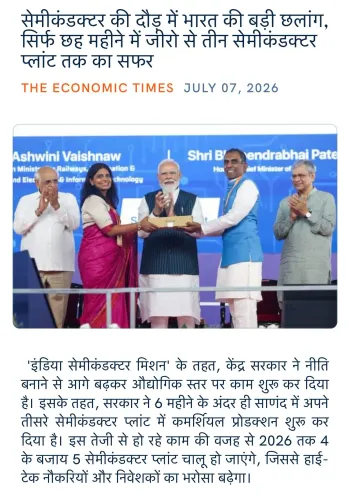
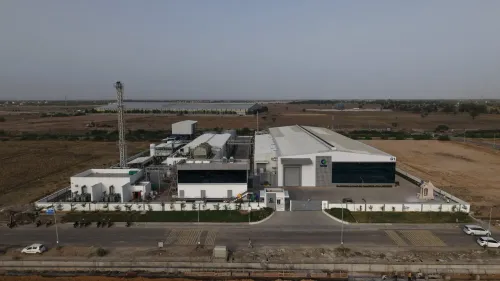
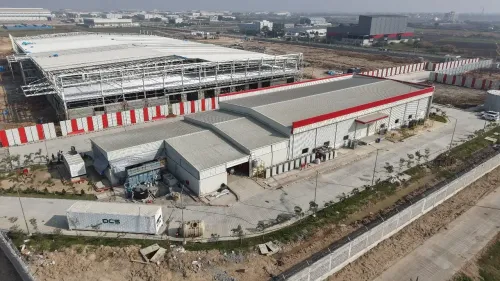
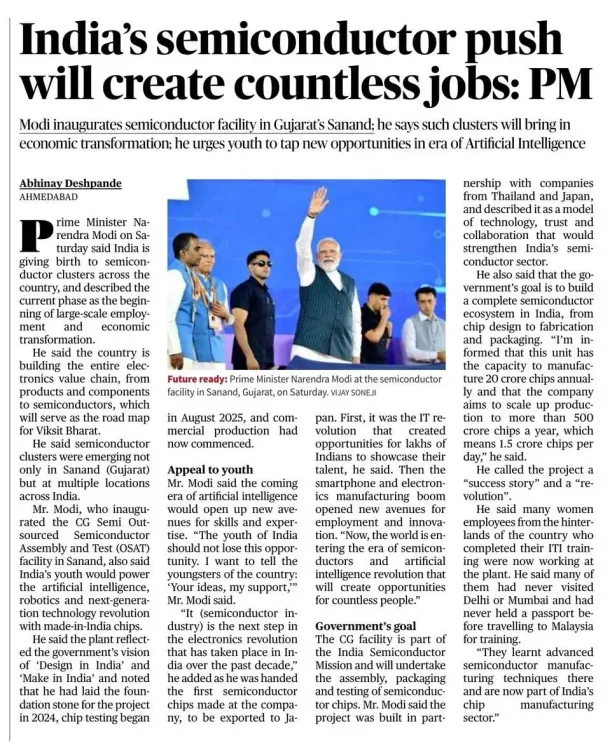
Union Textiles Minister Giriraj Singh on 5 July 2026 hailed the inauguration of a semiconductor unit in Sanand, Gujarat, framing it as a landmark advance under PM Modi's Atmanirbhar Bharat and Make in India programmes backed by a Rs 76,000 crore national semiconductor mission.
Key Takeaways
Union Textiles Minister Giriraj Singh publicly welcomed the launch of a new semiconductor manufacturing unit in Sanand, Gujarat on 5 July 2026 .
Singh linked the inauguration to PM Narendra Modi 's Atmanirbhar Bharat and Make in India agendas, calling it a step toward self-reliant technology power.
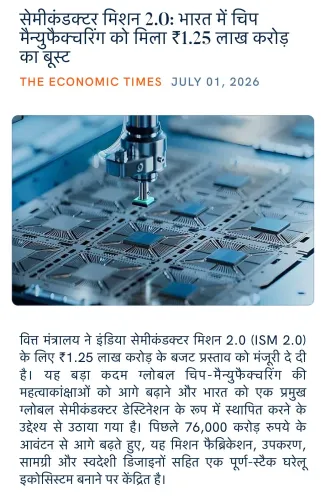
The India Semiconductor Mission , approved in December 2021 , carries an outlay of Rs 76,000 crore to build domestic chip fabrication, assembly, and design capacity.
Sanand, Gujarat has been prioritised for high-value manufacturing investments due to its industrial infrastructure and state-level incentives.
The move is part of a broader global supply-chain diversification trend, with India positioning itself alongside the US, EU, and Japan in building domestic semiconductor ecosystems.
Further project approvals under the India Semiconductor Mission and potential new incentives in the next Union Budget are the key developments to watch.
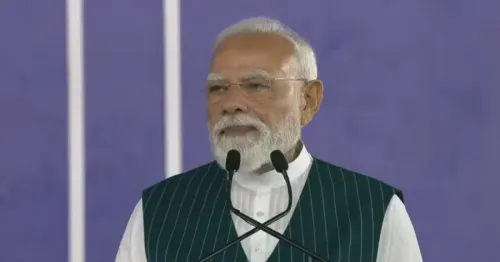
Union Textiles Minister Giriraj Singh on Sunday, 5 July 2026, welcomed the inauguration of a new semiconductor manufacturing unit in Sanand, Gujarat, calling it a decisive step toward making India a self-reliant technology power under Prime Minister Narendra Modi.
Context
Posting on X in Hindi, Singh wrote: 'Bharat semiconductor nirman ke kshetra mein tezi se aage badh raha hai' ('India is moving rapidly forward in the field of semiconductor manufacturing'). He described the launch of the new unit at Sanand as a move that would open fresh avenues for technology, innovation, and employment across the country. The minister invoked the hashtags #MakeInIndia, #ViksitBharat, and #AtmanirbharBharat, situating the event squarely within the government's flagship economic agenda.
Policy Backdrop
India's push into semiconductor manufacturing gained formal shape with the India Semiconductor Mission, approved in December 2021 with an outlay of Rs 76,000 crore to support fabrication, assembly, testing, marking, and packaging units as well as chip design. The mission sits alongside the Production Linked Incentive (PLI) scheme for electronics and IT hardware, introduced in 2020, which has been instrumental in attracting semiconductor-adjacent investments to India. Together, these programmes aim to reduce the country's dependence on chip imports that are critical for consumer electronics, automobiles, and defence systems.
Sanand, in Gujarat, has emerged as a preferred destination for high-value manufacturing, backed by existing industrial infrastructure and state-level incentives. The location mirrors the broader strategy of clustering technology investments in zones that already possess logistics, power, and skilled-labour advantages. India's approach echoes mission-mode semiconductor programmes launched by the United States, the European Union, and Japan after global chip shortages exposed supply-chain vulnerabilities concentrated in East Asia.
Stakeholders and Impact
The semiconductor sector directly affects electronics manufacturers, automobile original equipment manufacturers, and defence procurement agencies that currently rely heavily on imported chips. A domestic fabrication and assembly ecosystem in Gujarat is expected to generate skilled employment for engineers and technicians while creating ancillary opportunities in packaging, logistics, and component supply. Make in India, launched in 2014, and Atmanirbhar Bharat, announced in 2020, together form the policy canopy under which such investments are being promoted and incentivised.
Global supply-chain diversification away from concentrated East Asian production has accelerated since 2020, and India has positioned itself as an alternative destination. State governments, particularly Gujarat, have responded with land, utility, and fiscal support to attract anchor investors whose presence can catalyse wider semiconductor ecosystems.
What's Next
Analysts and industry observers will watch for further project approvals and disbursements under the India Semiconductor Mission, as well as any new incentive announcements in the next Union Budget or a revised national electronics policy. The pace at which approved units move from groundbreaking to commercial production will be the key metric for assessing whether India's semiconductor ambitions translate into durable industrial capacity. Singh's public endorsement, though from the Textiles Ministry, signals broad Cabinet-level political investment in the mission's success.
Point of View
And broad ministerial chorus signals that the administration is keen to project unified momentum on chip self-reliance. The Sanand choice is itself politically legible: Gujarat remains the BJP's model-state showcase, and anchoring a semiconductor milestone there deepens that narrative. The real test, however, will be whether mission disbursements and commercial production timelines keep pace with the political enthusiasm.
NationPress
5 Oct 2026
Frequently Asked Questions
What semiconductor unit was inaugurated in Sanand Gujarat in July 2026?
A new semiconductor manufacturing unit was launched in Sanand, Gujarat, welcomed by Union Minister Giriraj Singh on 5 July 2026 as part of India's push for domestic chip production under the India Semiconductor Mission.
What is the India Semiconductor Mission and how much money is allocated?
The India Semiconductor Mission is a central government programme approved in December 2021 with an outlay of Rs 76,000 crore to develop semiconductor fabrication, assembly, testing, and design capacity within India.
Why is Sanand Gujarat chosen for semiconductor manufacturing?
Sanand in Gujarat is preferred for high-value manufacturing because of its well-developed industrial infrastructure, existing logistics networks, reliable power supply, and strong state-level fiscal and land incentives.
What is Atmanirbhar Bharat and how does it relate to semiconductors?
Atmanirbhar Bharat, announced in 2020, is PM Modi's self-reliance initiative that emphasises building indigenous capabilities in strategic sectors; semiconductors are a priority area because chip imports are critical for electronics, automobiles, and defence.
What should I watch for next in India's semiconductor policy?
Key developments to track include further project approvals and fund disbursements under the India Semiconductor Mission, any new semiconductor incentives in the next Union Budget, and the timeline for approved units reaching commercial production.