CM Patel: Third Semiconductor Plant Begins Production in Sanand
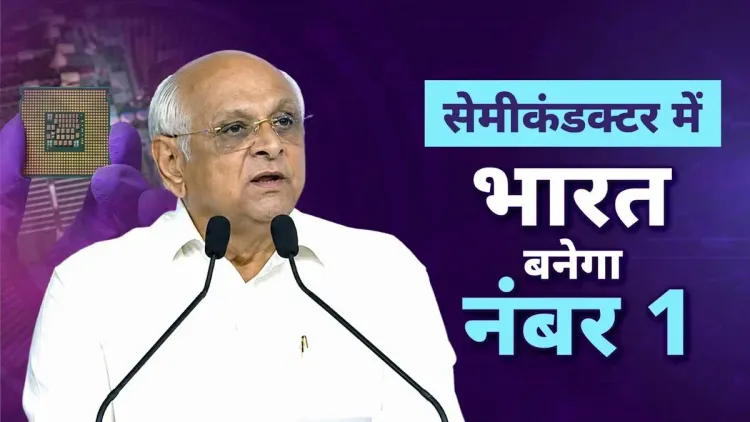
Synopsis
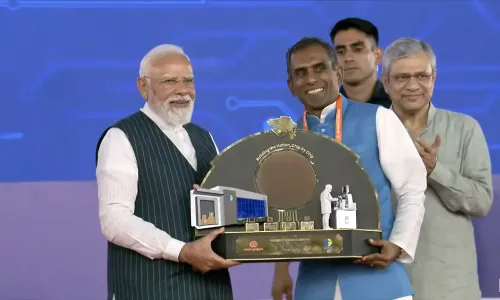
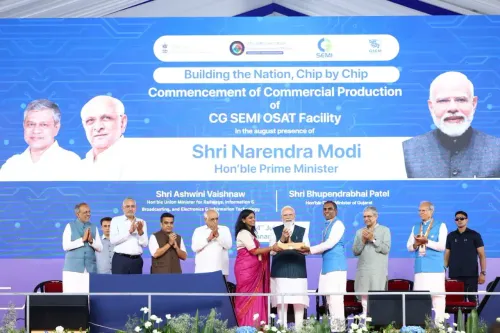
Gujarat Chief Minister Bhupendra Patel announced that PM Modi inaugurated commercial production at Sanand's third semiconductor plant on 4 July 2026, just five months after the project began — marking a significant milestone for India's domestic chip manufacturing push under the India Semiconductor Mission.
Key Takeaways
Commercial production has commenced at a third semiconductor plant in Sanand, Gujarat , inaugurated by Prime Minister Narendra Modi on 4 July 2026 .
Gujarat CM Bhupendra Patel stated the milestone was achieved in just five months .
Sanand , near Ahmedabad, is being developed as a dedicated semiconductor and electronics manufacturing cluster.
The development is part of the India Semiconductor Mission , backed by a Rs 76,000 crore central government outlay announced in 2021 .
The Production Linked Incentive scheme for semiconductors, expanded in 2022 , has supported the attraction of global firms to assembly and testing operations in India.
The Sanand cluster is part of a broader multi-state semiconductor strategy aimed at reducing India's dependence on imported chips.
Gujarat Chief Minister Bhupendra Patel announced on Saturday, 4 July 2026 that commercial production has commenced at a third semiconductor plant in Sanand, Gujarat, with Prime Minister Narendra Modi formally inaugurating the facility. Patel noted that the milestone was achieved within just five months, underscoring the pace at which India's semiconductor manufacturing ambitions are being realised on the ground.
Context
Patel's post, shared in Hindi, stated: 'केवल 5 महीने की अवधि में ही आज साणंद में माननीय प्रधानमंत्री जी के करकमलों से तीसरे सेमीकंडक्टर प्लांट में कमर्शियल प्रोडक्शन का प्रारंभ हुआ है' — meaning, 'In just five months, commercial production at the third semiconductor plant in Sanand has today been launched by the honourable Prime Minister.' The Chief Minister tagged Prime Minister Modi and used the hashtags #SemiconHubBharat and #PMinSanand, signalling the event's national significance.
Sanand, an industrial township near Ahmedabad, has undergone a significant transformation in recent years. Once known as the site of Tata Motors' Nano car plant, it is now being developed as a dedicated semiconductor and electronics manufacturing cluster, making it a centrepiece of Gujarat's industrial reinvention.
Policy Backdrop
The commissioning is a direct outcome of India's India Semiconductor Mission (ISM), launched in 2021 with an outlay of Rs 76,000 crore to build domestic chip fabrication, assembly, testing, and packaging capacity. The mission provides fiscal support to qualifying units and is designed to reduce India's near-total dependence on imported semiconductors, which are critical to everything from smartphones to defence systems.
The Production Linked Incentive (PLI) scheme for semiconductors, expanded in 2022, further broadened the incentive net to attract global firms for assembly and testing operations. Gujarat has been an active participant, with state-level infrastructure support — including land allocation and utilities — complementing central government subsidies to make the Sanand cluster viable for investors.
Stakeholders and Impact
The Sanand facility's commercial launch carries implications for Gujarat's industrial workforce, electronics manufacturers across India, and firms embedded in the broader semiconductor supply chain. A domestic production base reduces lead times and currency-risk exposure for Indian electronics assemblers who currently source chips almost entirely from abroad.
India's semiconductor strategy is explicitly multi-state, with Gujarat forming one node alongside proposed facilities in other regions. The Sanand cluster's progress is being watched as a test case for whether India can move from policy announcement to factory-floor reality at scale and speed.
What's Next
Attention will now turn to the commissioning timelines for other approved semiconductor units under the India Semiconductor Mission, as well as the disbursement of design-linked incentives that are meant to build India's upstream chip-design ecosystem. Gujarat is also expected to ramp up skill-development programmes to supply trained technicians to the growing cluster at Sanand.
If the Sanand cluster continues to attract investment and meet production milestones, it could serve as a replicable model for other states seeking to position themselves within global electronics value chains — a goal that sits at the heart of the Atmanirbhar Bharat technology agenda.
Point of View
Offering a tangible, factory-floor proof point for the Atmanirbhar Bharat technology narrative ahead of a period of intense scrutiny over India's chip ambitions. CM Patel's framing — crediting PM Modi's personal presence at the launch — is consistent with the BJP's practice of anchoring industrial achievements to the Prime Minister's leadership. The speed of commissioning, if sustained, would distinguish India's semiconductor push from earlier industrial policy efforts that struggled to translate incentive packages into operational capacity. The broader question is whether the Sanand model can be replicated at the scale and speed needed to meaningfully shift India's position in global semiconductor supply chains.
NationPress
3 Oct 2026
Frequently Asked Questions
What is the Sanand semiconductor plant and who inaugurated it?
The Sanand semiconductor plant is one of several chip manufacturing facilities being set up in Gujarat's Sanand industrial cluster. Prime Minister Narendra Modi inaugurated commercial production at the third such plant on 4 July 2026, as announced by Gujarat Chief Minister Bhupendra Patel.
What is the India Semiconductor Mission?
The India Semiconductor Mission is a central government programme launched in 2021 with an outlay of Rs 76,000 crore to build domestic semiconductor fabrication, assembly, testing, and packaging capacity and reduce India's dependence on imported chips.
Why is Sanand important for India's semiconductor industry?
Sanand, near Ahmedabad in Gujarat, is being developed as a dedicated semiconductor and electronics manufacturing cluster. It benefits from state-level infrastructure support combined with central government incentives, making it a key node in India's broader multi-state chip manufacturing strategy.
How quickly was the third Sanand semiconductor plant commissioned?
According to Gujarat Chief Minister Bhupendra Patel, commercial production at the third semiconductor plant in Sanand began within just five months, reflecting the accelerated pace of India's semiconductor manufacturing rollout.
What comes next for India's semiconductor manufacturing push?
Key milestones to watch include the commissioning of other approved semiconductor units under the India Semiconductor Mission, disbursement of design-linked incentives, and the expansion of skill-development programmes in Gujarat and other states to support the growing chip manufacturing sector.