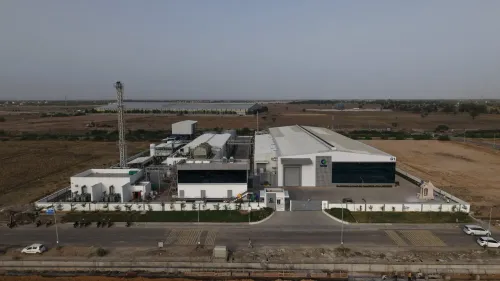
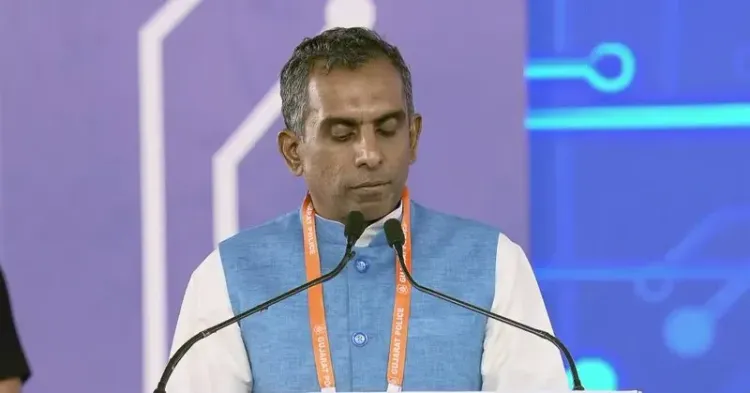
CM Patel at CG Semi OSAT Launch in Sanand by PM Modi
Synopsis
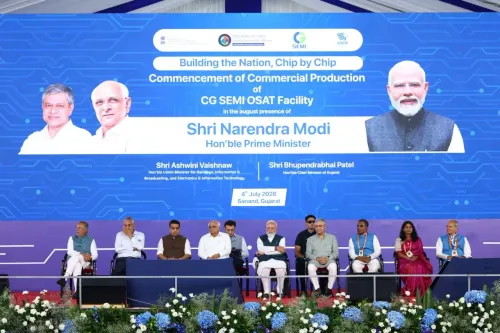
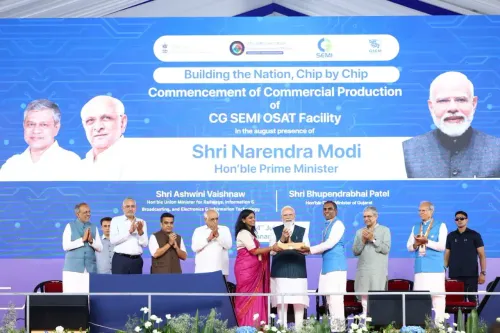
Prime Minister Narendra Modi inaugurated commercial production at CG Semi's OSAT semiconductor facility in Sanand, Gujarat on 4 July 2026. Gujarat CM Bhupendra Patel attended the launch, a milestone under India's Semiconductor Mission to build domestic chip assembly and testing capacity.
Key Takeaways
CG Semi's OSAT facility at Sanand, Gujarat commenced commercial production on 4 July 2026 .
The launch was inaugurated by Prime Minister Narendra Modi , with Gujarat CM Bhupendra Patel in attendance.
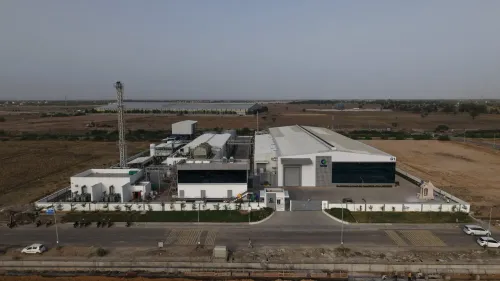
The facility handles semiconductor packaging, assembly, and testing — critical back-end stages of chip manufacturing.
The project is backed by the India Semiconductor Mission , approved by the Union Cabinet in December 2021 .
Sanand is emerging as a key node in India's semiconductor and electronics manufacturing ecosystem.
The launch advances India's goal of reducing dependence on imported chips and building domestic supply-chain capacity.
Gujarat Chief Minister Bhupendra Patel on Saturday, 4 July 2026, joined Prime Minister Narendra Modi at Sanand for the commercial production launch of CG Semi's OSAT (Outsourced Semiconductor Assembly and Testing) facility, marking a significant milestone in India's semiconductor manufacturing push.
Context
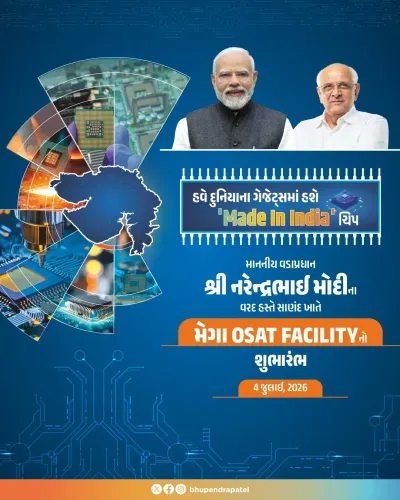
Chief Minister Patel shared the live event on X, writing in Gujarati: 'LIVE: માનનીય વડાપ્રધાન શ્રી નરેન્દ્રભાઈ મોદીના વરદ્હસ્તે સાણંદ ખાતે CG Semi કંપનીની OSAT સુવિધાના કોમર્શીયલ પ્રોડક્શનનો શુભારંભ.' — translated: 'LIVE: Commercial production of CG Semi Company's OSAT facility inaugurated at Sanand by the honourable Prime Minister Shri Narendra Modi.' The post carried the hashtags #SemiconHubBharat and #PMinSanand, signalling the event's national significance.
An OSAT facility handles the back-end stages of chip manufacturing — packaging, assembly, and testing — which are critical links in the global semiconductor supply chain. Sanand, located in Ahmedabad district, Gujarat, has steadily emerged as a preferred destination for electronics and semiconductor investment over the past several years.
Policy Backdrop
The launch is rooted in the India Semiconductor Mission (ISM), approved by the Union Cabinet in December 2021, which provides fiscal support for semiconductor fabrication, assembly, and design units across the country. The mission is administered by the Ministry of Electronics and Information Technology and aims to reduce India's heavy dependence on imported chips.
Since 2021, India has pursued aggressive supply-chain diversification through production-linked incentives and state-level facilitation. Gujarat has positioned itself at the centre of this effort, with multiple OSAT and fabrication projects announced in the state as part of a broader national strategy to build a domestic semiconductor ecosystem.
The commencement of commercial production at CG Semi's Sanand facility represents a transition from project announcement to operational output — a stage that has often been the hardest to reach in India's industrialisation journey.
Stakeholders and Impact
The primary beneficiaries of an operational OSAT facility include domestic electronics manufacturers who currently rely on overseas assembly and testing services, adding cost and lead time to their supply chains. A home-grown OSAT capability reduces that dependency and strengthens India's position in global chip supply networks.
The Gujarat electronics cluster, anchored around Sanand and neighbouring industrial zones, stands to gain from the jobs, ancillary investment, and technology transfer that a functioning semiconductor unit typically brings. Semiconductor firms already present in the region may also benefit from proximity to a local testing and packaging partner.
For CG Semi, commencing commercial production signals readiness to serve both domestic clients and potentially export markets, reinforcing India's credentials as a reliable node in the global semiconductor value chain.
What's Next
Attention will now shift to the commissioning of additional semiconductor units approved under the India Semiconductor Mission, as well as periodic reviews of ISM targets by the Ministry of Electronics and IT. The government has framed each operational milestone — from groundbreaking to commercial production — as a proof point for its broader industrial policy narrative.
With Sanand now hosting an active OSAT facility, Gujarat's claim to being India's emerging #SemiconHubBharat gains tangible backing. The pace at which further approved projects reach production-readiness will determine how quickly India can meaningfully reshape its semiconductor import profile.
Point of View
Each operational OSAT unit strengthens the narrative that production-linked incentives can compress the gap between announcement and output. The real test, however, will be whether this momentum extends to the more complex and capital-intensive fabrication units still in earlier stages of development.
NationPress
3 Oct 2026
Frequently Asked Questions
What is the CG Semi OSAT facility in Sanand?
CG Semi's OSAT (Outsourced Semiconductor Assembly and Testing) facility in Sanand, Gujarat, is a plant dedicated to the back-end stages of semiconductor manufacturing — packaging, assembling, and testing chips. It commenced commercial production on 4 July 2026, inaugurated by Prime Minister Narendra Modi.
What is India's Semiconductor Mission?
The India Semiconductor Mission is a Union Cabinet-approved programme launched in December 2021 that provides fiscal incentives for setting up semiconductor fabrication, assembly, and design units in India, aiming to reduce the country's reliance on imported chips.
Why is Sanand important for semiconductors?
Sanand in Ahmedabad district, Gujarat, has emerged as a major electronics and semiconductor investment destination due to its industrial infrastructure, state government support, and proximity to logistics networks, making it central to India's semiconductor hub ambitions.
What does OSAT mean in semiconductor manufacturing?
OSAT stands for Outsourced Semiconductor Assembly and Testing. These facilities handle the final stages of chip production after wafer fabrication, including packaging and quality testing, and are a critical part of the global semiconductor supply chain.
How does the CG Semi launch affect India's chip import dependence?
An operational domestic OSAT facility allows Indian electronics manufacturers to assemble and test chips locally rather than sending them abroad, reducing costs, lead times, and India's overall dependence on imported semiconductor components.