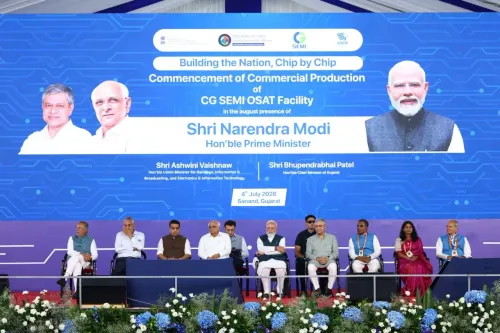
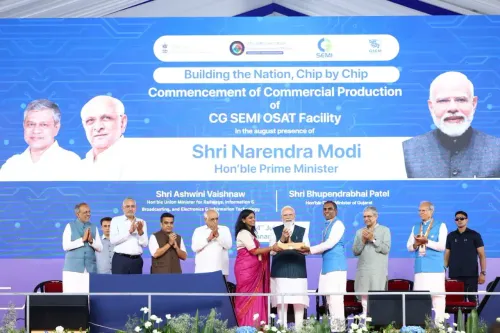
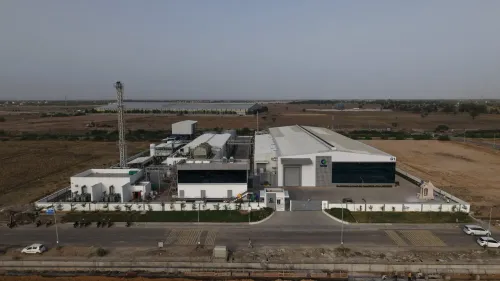
CM Bhupendra Patel Inaugurates CG Semi OSAT Facility in Sanand
Synopsis
Gujarat Chief Minister Bhupendra Patel inaugurated CG Semi's OSAT facility in Sanand on 4 July 2026, strengthening India's semiconductor ecosystem for automotive, telecom, 5G, and IoT sectors under the Rs 76,000 crore India Semiconductor Mission.
Key Takeaways
CG Semi 's OSAT (assembly, testing, and packaging) facility was inaugurated at Sanand, Gujarat on 4 July 2026 .
The facility will produce chips for automotive, telecom, 5G, and IoT sectors.
The project advances the India Semiconductor Mission , backed by a Rs 76,000 crore Union Cabinet outlay approved in 2021 .
Gujarat is designated a key state hub in India's national semiconductor strategy.
The OSAT segment bridges chip fabrication and end-product integration, reducing import dependence for downstream packaging.
Further commissioning milestones and policy incentives for semiconductor units across India remain to be watched.
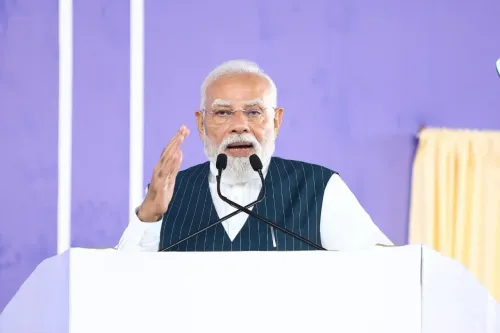
Gujarat Chief Minister Bhupendra Patel on Saturday, 4 July 2026, announced the inauguration of CG Semi's OSAT (Outsourced Semiconductor Assembly and Test) facility at Sanand, marking a significant step in India's drive toward semiconductor self-reliance under Prime Minister Narendra Modi.
Context
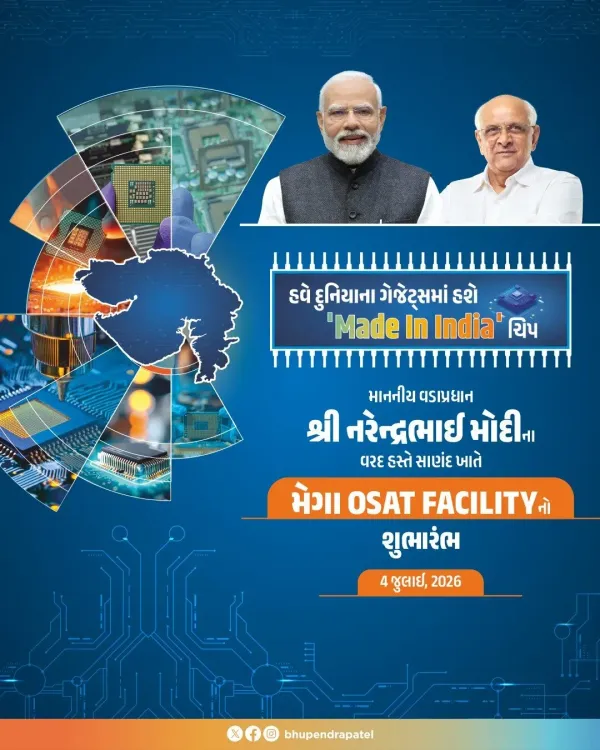
Posting in Gujarati on X, CM Patel wrote that India is advancing rapidly toward self-reliance in the semiconductor sector under the 'far-sighted leadership' of Prime Minister Narendra Modi. He stated: 'આજે સાણંદ ખાતે CG Semi કંપનીની OSAT Facilityના લોકાર્પણ સાથે ગુજરાત ભારતની સેમિકન્ડક્ટર ઇકોસિસ્ટમને વધુ મજબૂત બનાવશે' — 'With the inauguration of CG Semi's OSAT facility at Sanand today, Gujarat will further strengthen India's semiconductor ecosystem.' He added that chip production for advanced sectors such as automotive, telecom, 5G, and IoT will receive new momentum, and that Gujarat will remain at the forefront of building India's technology-driven future.
Policy Backdrop
The inauguration sits within the framework of the India Semiconductor Mission, approved by the Union Cabinet in 2021 with an outlay of Rs 76,000 crore to build domestic fabrication, assembly, and design capacity. The mission was conceived to reduce India's heavy dependence on imported chips — a vulnerability exposed sharply during the global semiconductor shortage of 2020–21 — and to integrate Indian industry into global technology supply chains.
Gujarat has been designated a key hub within this national strategy, with coordinated central and state policies channelling assembly and testing investments to industrial clusters such as Sanand. The approach aligns with wider global efforts by multiple countries to build resilient, diversified semiconductor manufacturing bases.
Stakeholders and Impact
CG Semi's OSAT facility at Sanand focuses on the assembly, testing, and packaging of semiconductors — the downstream segment of chip manufacturing that bridges fabrication and end-product integration. Sectors that stand to benefit directly include the domestic automotive industry, which depends heavily on chips for modern vehicle electronics, as well as telecom and 5G infrastructure rollout and the fast-growing IoT device market.
Semiconductor manufacturers, component suppliers, and original equipment manufacturers across these sectors are the primary stakeholders. A domestic OSAT capability reduces lead times and foreign-exchange costs associated with sending chips abroad for packaging and testing before they re-enter Indian supply chains.
What's Next
Attention will now turn to commissioning timelines and production commencement at this and other approved semiconductor units across Gujarat and other states. Analysts and industry watchers will also track whether the India Semiconductor Mission announces further policy incentives or enhanced outlay in upcoming Union or state budgets to accelerate the pipeline of projects beyond the OSAT segment into wafer fabrication. Gujarat's positioning as a semiconductor hub will be tested by how quickly these facilities move from inauguration to full-scale output.
Point of View
With Gujarat repeatedly cast as the model state for industrial execution. By publicly anchoring the event to Prime Minister Modi's leadership, CM Patel reinforces the Centre-state alignment that has been central to Gujarat's pitch to investors. The OSAT segment — packaging and testing rather than wafer fabrication — is an entry-level but strategically important link in the chip supply chain, and its commissioning signals that India's semiconductor ambitions are moving from policy to physical infrastructure. Whether the pipeline can scale to higher-value fabrication will be the real test of the mission's long-term credibility.
NationPress
2 Oct 2026
Frequently Asked Questions
What is the CG Semi OSAT facility in Sanand?
The CG Semi OSAT (Outsourced Semiconductor Assembly and Test) facility in Sanand, Gujarat is a plant dedicated to the assembly, packaging, and testing of semiconductor chips, serving sectors such as automotive, telecom, 5G, and IoT.
What is the India Semiconductor Mission?
The India Semiconductor Mission is a central government programme approved in 2021 with a Rs 76,000 crore outlay to develop domestic semiconductor fabrication, assembly, testing, and design capacity and reduce India's reliance on imported chips.
Why is Sanand important for India's semiconductor plans?
Sanand in Gujarat has been developed as a key industrial hub under coordinated central and state policies, attracting semiconductor assembly and testing investments as part of India's broader chip ecosystem strategy.
What sectors will benefit from the CG Semi Sanand facility?
The facility is expected to benefit the automotive , telecom , 5G , and IoT sectors by providing domestically assembled and tested chips, reducing dependence on overseas packaging and shortening supply chains.
What did Gujarat CM Bhupendra Patel say about the semiconductor facility?
CM Bhupendra Patel said the inauguration of the CG Semi OSAT facility at Sanand will further strengthen India's semiconductor ecosystem and that Gujarat will remain at the forefront of building India's technology-driven future.