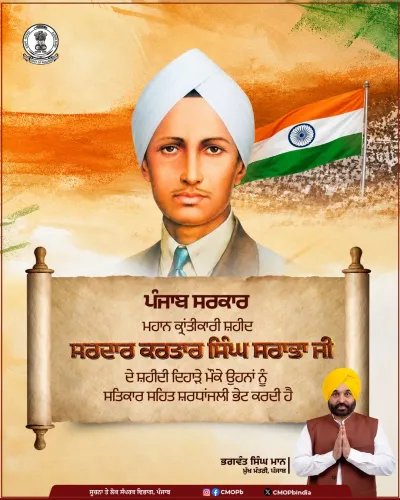
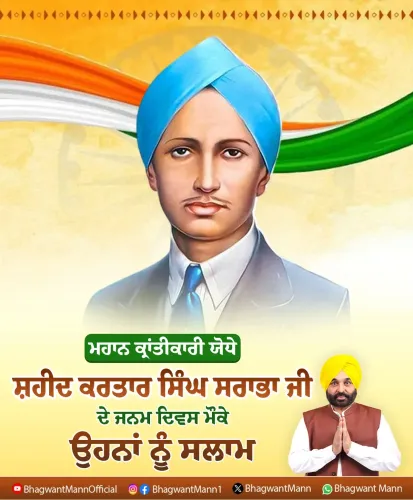
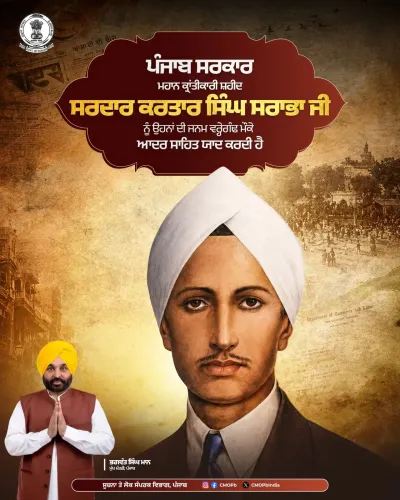
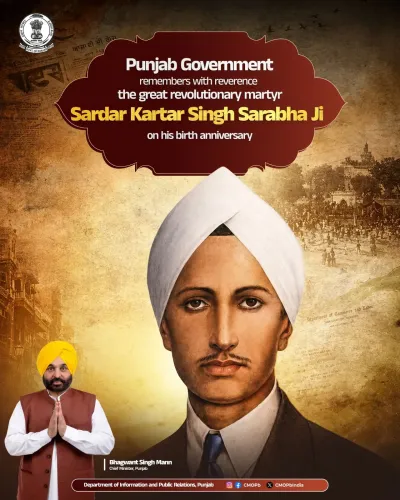
CM Bhagwant Mann Pays Tribute at Sarabha's 111th Shaheedi Diwas
Synopsis
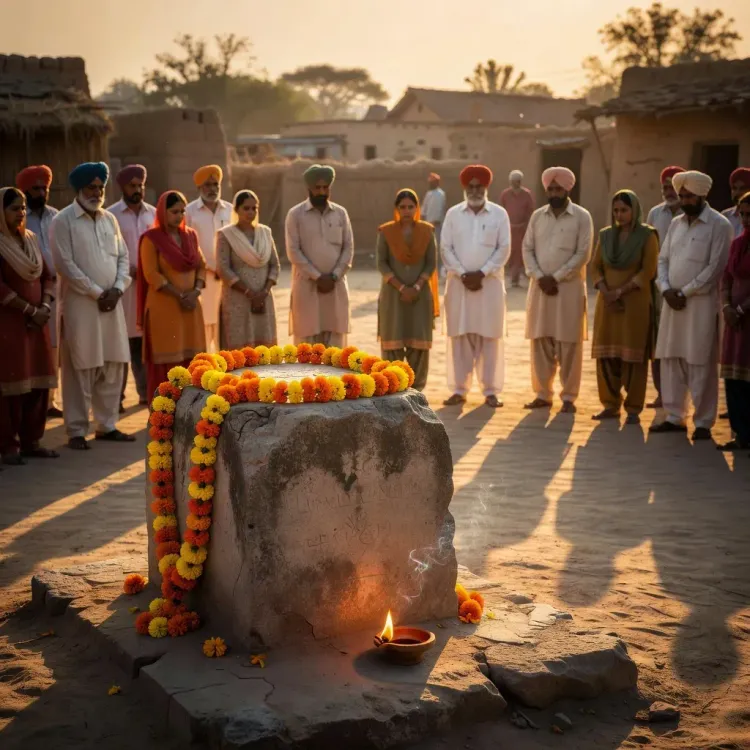
Chief Minister Bhagwant Mann marked Ghadar Party martyr Kartar Singh Sarabha's 111th Shaheedi Diwas at his native village on 16 November 2026, pledging a drug-free, just Punjab, dedicating a new Aam Aadmi Clinic, and handing over a ₹51 lakh grant to the village sports club.
Key Takeaways
CM Bhagwant Mann attended the 111th Shaheedi Diwas of Kartar Singh Sarabha at Sarabha's native village on 16 November 2026 .
Sarabha was a Ghadar Party revolutionary executed by British authorities on 16 November 1915 at age 19 .
Mann pledged to fulfil Sarabha's vision of a Punjab free from drugs, unemployment, and injustice .
A new Aam Aadmi Clinic was dedicated to the village, extending the AAP government's flagship primary-health programme.
A ₹51 lakh grant was handed over to the village sports club to support rural youth.
The CM invoked the concept of 'Rangla Punjab' — a vibrant, prosperous Punjab — as the collective goal aligned with the martyrs' dreams.
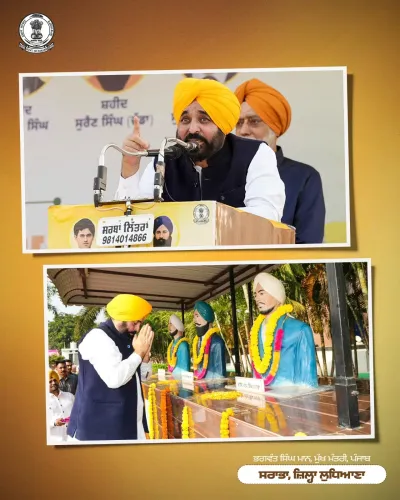
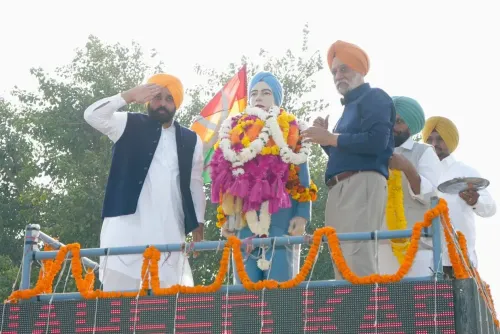
A 19-year-old who walked to the gallows in 1915 rather than abandon his fight for a free India — Kartar Singh Sarabha remains the conscience of Punjab's revolutionary heritage. On Monday, 16 November 2026, Chief Minister Bhagwant Mann travelled to Sarabha's native village to mark the martyr's 111th Shaheedi Diwas, turning a solemn anniversary into a pledge and a delivery.
A 111-year-old vow, renewed in Sarabha's own village
Bhagwant Mann paid heartfelt tributes to the Ghadar Party revolutionary, asserting that the truest honour to Sarabha's memory lies not in ceremony alone but in building a Punjab free from drugs, unemployment, and injustice — the very causes that animated the young revolutionary's short life. The Chief Minister reaffirmed the Punjab Government's commitment to connecting younger generations with the state's 'glorious heritage,' framing his administration's social programmes as a direct continuation of the martyrs' unfinished work.
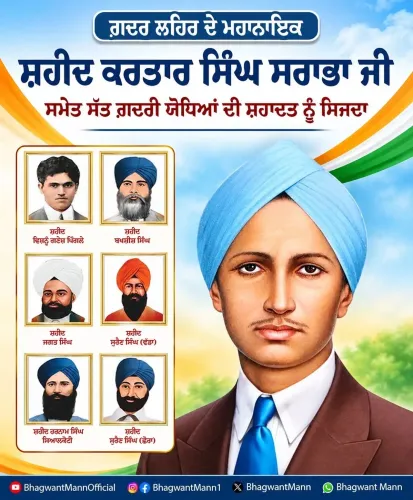
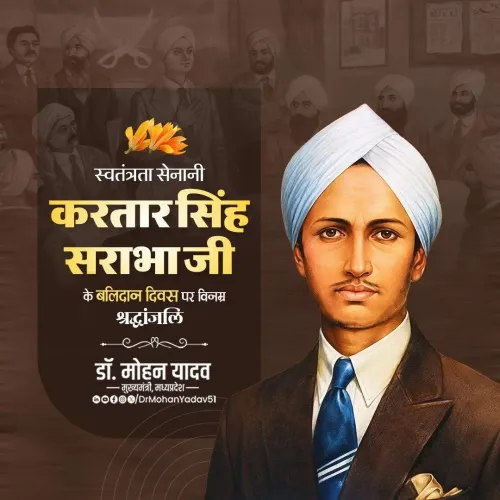
Kartar Singh Sarabha was executed by British colonial authorities on 16 November 1915, aged 19, for his role in organising an armed uprising as a key figure of the Ghadar Party — a movement of Indian diaspora revolutionaries headquartered in San Francisco that sought to trigger a mass mutiny against British rule. He was reportedly an inspiration to Bhagat Singh, who is said to have carried Sarabha's photograph. His youth and unflinching resolve have made him an enduring symbol in Punjab's political and cultural memory.
An Aam Aadmi Clinic and ₹51 lakh for the village sports club
The occasion was not purely commemorative. CM Mann dedicated a new Aam Aadmi Clinic to the village — adding another node to the AAP government's flagship primary-health programme, which has been rolling out free medicines and diagnostics across Punjab since 2022. He also handed over a ₹51 lakh grant to the village sports club, a gesture squarely aimed at the rural youth Sarabha himself once represented.
The pairing is deliberate. Punjab governments across administrations have long linked social-infrastructure announcements to Ghadar-era martyrs, grounding contemporary campaigns against drug abuse and joblessness in the moral authority of figures like Sarabha. The current government continues that tradition, but with the institutional weight of a clinic network and targeted sports funding.
Building the 'Rangla Punjab' the martyrs imagined
Mann called upon people to collectively build what he termed the 'Rangla Punjab' — a vibrant, prosperous Punjab — of the martyrs' dreams. The phrase carries cultural resonance: rangla (colourful, flourishing) evokes both folk tradition and an aspirational Punjab far removed from the crises of addiction and unemployment that the state has grappled with for decades.
The commitment to honouring martyrs while delivering ground-level services — a clinic here, a sports grant there — is the AAP government's consistent grammar at heritage events. Whether the expansion of Aam Aadmi Clinics and sports infrastructure to more heritage villages accelerates in the months ahead will be the measure of whether the pledge outlasts the anniversary.
Point of View
Bhagwant Mann positions his administration's social agenda within Punjab's deepest nationalist memory, lending it a legitimacy that transcends party lines. The 'Rangla Punjab' framing also signals an ongoing effort to offer a cultural counter-narrative to the state's association with the drug crisis. How consistently this symbolism is backed by measurable outcomes — clinic coverage, youth employment, drug-seizure data — will determine whether it resonates beyond the anniversary cycle.
NationPress
16 Nov 2026
Frequently Asked Questions
Who was Kartar Singh Sarabha?
Kartar Singh Sarabha was a Ghadar Party revolutionary executed by British colonial authorities on 16 November 1915 at the age of 19 for his role in organising an armed uprising against British rule in India. He is widely regarded as one of Punjab's most iconic freedom fighters and was reportedly an inspiration to Bhagat Singh.
What is Shaheedi Diwas?
Shaheedi Diwas means 'Martyrdom Day' in Punjabi and Hindi. It is observed annually to honour freedom fighters who sacrificed their lives during India's independence movement. Kartar Singh Sarabha's Shaheedi Diwas falls on 16 November each year.
What is an Aam Aadmi Clinic?
Aam Aadmi Clinics are primary health centres set up by the AAP government in Punjab since 2022, offering free consultations, medicines, and diagnostic tests to residents, particularly in rural and semi-urban areas.
What did CM Bhagwant Mann announce at Sarabha's village?
CM Bhagwant Mann dedicated a new Aam Aadmi Clinic to Sarabha's native village and handed over a ₹51 lakh grant to the village sports club during the 111th Shaheedi Diwas observance on 16 November 2026.
What does 'Rangla Punjab' mean?
'Rangla Punjab' translates roughly as 'vibrant' or 'colourful Punjab' and is used to describe an aspirational vision of a prosperous, culturally rich Punjab free from drugs, unemployment, and injustice — a concept CM Mann invoked in his address at Sarabha's native village.