Bhupender Yadav pitches India's just transition vision at COP31
Synopsis
Union Environment Minister Bhupender Yadav presented India's just transition stance at COP31 in Antalya on November 16, calling for a two-tier, Party-guided mechanism that respects national sovereignty and integrates transition goals into developing-country development planning.
Key Takeaways
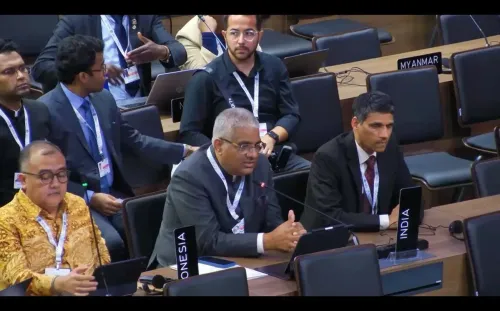
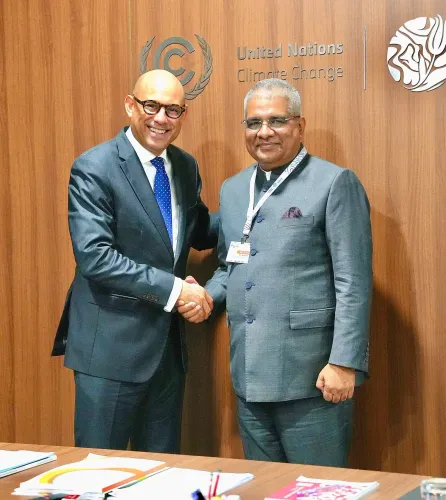
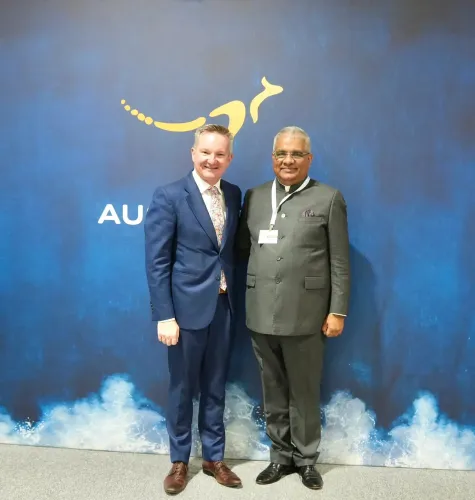
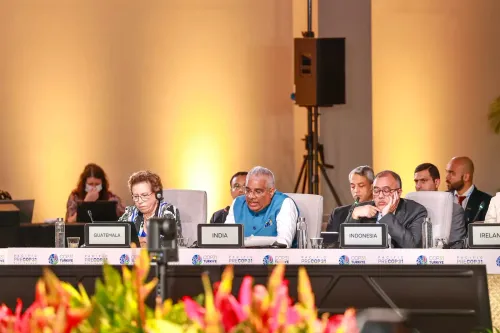
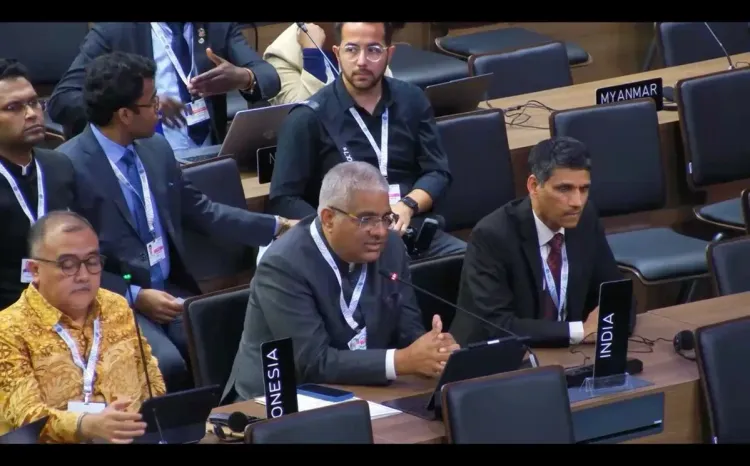
Union Environment Minister Bhupender Yadav spoke at the 4th Annual High-level Ministerial Roundtable on Just Transition at COP31 in Antalya, Türkiye on November 16, 2026 .
India called for operationalising a two-tier, Party-guided Mechanism that is responsive to developing-country needs and respects national sovereignty.
Yadav underlined the need to integrate just transition considerations across adaptation, livelihoods, and development planning .
India's position builds on its updated NDCs (2022–2023) and its COP26 Glasgow stance on equitable, nationally determined transition timelines.
India coordinates this position through the G77+China bloc and bilateral dialogues with the EU and United States.
Formal governance and funding decisions on the mechanism are expected to be a key battleground at COP32 .
At a global climate forum in Antalya, Türkiye, Union Environment Minister Bhupender Yadav stepped up to defend a principle that has become India's defining climate-diplomacy line: that the shift away from fossil fuels must be fair, nationally owned, and never imposed from above. Speaking at the 4th Annual High-level Ministerial Roundtable on Just Transition on the sidelines of COP31 on Monday, November 16, 2026, Yadav laid out a vision that is as much about sovereignty as it is about climate.
India's two-tier mechanism demand: what it means and why it matters
At the heart of Yadav's intervention was a call to operationalise a two-tier, Party-guided Mechanism — a governance structure India argues must be responsive to developing-country needs and respectful of national sovereignty and diverse national circumstances. The framing is deliberate. India wants a mechanism where developing nations have genuine agency over their own transition timelines and tools, not one where wealthy blocs dictate the pace through conditioned finance or prescriptive benchmarks.
India's updated Nationally Determined Contributions (NDCs), submitted between 2022 and 2023, already weave just transition explicitly into adaptation, livelihoods, and sustainable development planning — framing it not as a concession to international pressure but as a component of homegrown development strategy. Yadav underlined precisely this linkage at Antalya, calling for just transition considerations to be integrated across adaptation, livelihoods, and development planning.
A consistent Global South position, sharpened at COP31
India's stance did not emerge in a vacuum. At COP26 in Glasgow in 2021, India drew global attention — and some criticism — by pushing back on prescriptive coal phase-down language, insisting instead on a 'phase-down' rather than 'phase-out' formulation. That battle was about policy space. The argument at COP31 is its logical extension: that transition mechanisms designed in the Global North cannot simply be transplanted onto economies where fossil fuels still power livelihoods for millions of workers and anchor entire regional economies.
India has coordinated this position through the G77+China bloc and in bilateral climate dialogues with partners including the EU and the United States. The two-tier mechanism proposal fits squarely within that broader architecture — a multilateral structure, yes, but one that keeps sovereign governments, not technocratic bodies, in the driver's seat.
What COP32 negotiations will tell us
The ministerial roundtable at COP31 is a pressure valve, not a decision chamber. The real test comes at COP32, where negotiators are expected to work toward a formal governance structure and potentially a funding arrangement for the just transition mechanism. Whether developed countries accept a genuinely two-tiered model — one that cedes meaningful design authority to developing nations — or push back in favour of uniform global standards will define the mechanism's credibility and reach.
India's position is clear and on the record. The question is whether the international system is ready to meet it.
Point of View
Two-tier just transition mechanism is not merely a procedural ask — it is a structural argument about who controls the terms of the green economy transition. By anchoring just transition to adaptation and livelihoods rather than to energy phase-out timelines, India is effectively resisting the conflation of climate ambition with development conditionality. Yadav's COP31 intervention keeps India firmly within its post-Glasgow posture: ambitious on clean energy domestically, resistant to externally prescribed phase-out schedules. The real indicator of whether this strategy succeeds will come at COP32, where the two-tier mechanism either gains teeth or gets diluted into a consultative footnote.
NationPress
16 Nov 2026
Frequently Asked Questions
What is the just transition ministerial roundtable at COP?
The Annual High-level Ministerial Roundtable on Just Transition is a forum held on the sidelines of the UNFCCC Conference of the Parties where ministers discuss how to ensure the shift away from fossil fuels is fair and equitable. The 4th edition was held at COP31 in Antalya in 2026.
What is India's position on just transition at COP31?
India supports a two-tier, Party-guided mechanism for just transition that is responsive to developing-country needs, respects national sovereignty, and integrates transition planning into adaptation, livelihoods and development — rather than accepting prescriptive international timelines.
What is a two-tier just transition mechanism?
A two-tier mechanism, as proposed by India, would allow an overarching international framework while giving individual countries — especially developing ones — meaningful control over how they design and implement their own transition plans, rather than following a uniform global template.
What has India said about just transition since COP26?
Since COP26 in Glasgow in 2021, India has argued that just transition must be nationally determined, linked to development and livelihoods, and supported by climate finance and technology transfer from developed countries — not imposed through prescriptive phase-out language.
Where is COP31 being held in 2026?
COP31, the 31st Conference of the Parties to the UNFCCC, is being held in Antalya, Türkiye in 2026.