Rijiju: Attack BJP, but don't let foreigners mock Indian democracy
Synopsis
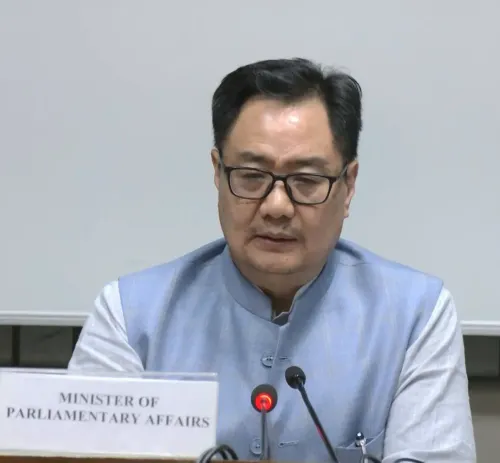
Union Parliamentary Affairs Minister Kiren Rijiju drew a sharp line on November 16, 2026, telling opponents they are free to attack the BJP but must never let foreigners ridicule Indian democracy — a pointed two-part message combining political openness with a firm sovereignty warning.
Key Takeaways
Kiren Rijiju , Union Minister of Parliamentary Affairs, posted the message on November 16, 2026 .
He explicitly acknowledged that attacking or criticising the BJP is legitimate — 'We are political opponents, not enemies.' His core warning: political rivalry must never extend to allowing foreign actors to 'ridicule Indian democracy.' Rijiju serves as the government's principal liaison with Parliament, lending institutional weight to his remarks.
The 'nation above party' framing has been a recurring motif in BJP political communication across multiple election cycles.
The statement signals the government's intent to draw a clear perimeter around international commentary on India's democratic institutions.
A line in the sand — and a pointed reminder about where political rivalry ends and national interest begins. Union Parliamentary Affairs Minister Kiren Rijiju posted a sharp message on Monday, November 16, 2026, drawing a firm distinction between legitimate domestic criticism of the BJP and what he called allowing foreigners to 'ridicule Indian democracy.'
Rijiju's words were direct: 'Attack, criticize BJP as much as you want to. We are political opponents not enemies, but never attack our nation and don't let foreigners ridicule Indian democracy.' The post, framed as a reply, signals that the minister is not shying away from debate — he is actively drawing the perimeter of it.
The line Rijiju is drawing — and why it matters now
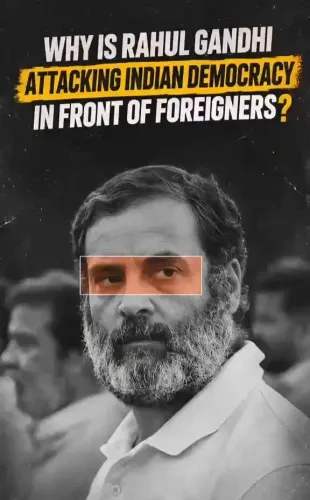
At its core, the message attempts a delicate separation: partisan contest is fair game, national dignity is not. This is a framing BJP leaders have deployed across election cycles and parliamentary sessions — the argument that opposition parties sometimes provide ammunition to foreign governments, foreign media, or international bodies who then use domestic political fights to pass judgment on India's democratic institutions.
Rijiju, as Union Minister of Parliamentary Affairs, sits at the precise intersection of party politics and institutional functioning. His portfolio makes him the government's principal liaison with Parliament — the very arena where these battles over democratic legitimacy are fought in real time. When he speaks about protecting Indian democracy, he is speaking from the room where that democracy is legislated.
A recurring fault line in Indian political discourse
The 'nation above party' appeal is not new to Indian politics — successive governments have invoked it, and successive oppositions have contested it. Critics from the opposition have often argued that labelling external commentary as 'ridicule' is a way to insulate the ruling party from accountability that crosses borders. Supporters of the framing counter that sovereign democracies should not have their electoral or parliamentary functioning adjudicated by outside voices.
What gives Rijiju's post its edge is its conciliatory opening. He explicitly acknowledges the legitimacy of opposing the BJP — 'We are political opponents, not enemies' — before pivoting to the harder ask. That two-part structure is deliberate: extend an olive branch with one hand, hold the line with the other.
With Parliament sessions approaching and international scrutiny of large democracies intensifying globally, Rijiju's message lands as both a political signal to domestic opponents and a statement of where the government expects the terms of engagement to sit. The fight for India's political future, he is saying, should be settled in India — by Indians.
Point of View
' he pre-empts the standard opposition riposte that such statements are designed to silence dissent. The timing, with Parliament sessions on the horizon, suggests this is as much a floor-management signal as it is a public communication. The real test will come if opposition parties demand specifics about which 'foreign' voices or which actions Rijiju has in mind.
NationPress
16 Nov 2026
Frequently Asked Questions
What did Kiren Rijiju say about criticising the BJP?
Rijiju said opposition parties are free to attack and criticise the BJP as much as they want, explicitly acknowledging them as 'political opponents, not enemies.'
What was Rijiju's warning about foreign interference in Indian democracy?
He warned that Indians must never allow foreigners to 'ridicule Indian democracy,' drawing a line between legitimate domestic political debate and external commentary that undermines national institutions.
Who is Kiren Rijiju?
Kiren Rijiju is a senior BJP leader from Arunachal Pradesh serving as Union Minister of Parliamentary Affairs and Minister of Minority Affairs in the central government.
Why is the 'nation above party' argument significant in Indian politics?
Successive governments have used this framing to argue that opposition attacks must not provide ammunition to foreign governments or international bodies to judge India's democratic functioning — though critics contend it can be used to deflect legitimate accountability.
What does the Union Minister of Parliamentary Affairs do?
The Union Minister of Parliamentary Affairs is the government's principal liaison with Parliament, responsible for managing legislative business, coordinating between the Cabinet and both Houses, and steering government bills through the parliamentary process.