Rijiju: Dissent Welcome, But Not Anti-India Elements

Synopsis
Union Minister Kiren Rijiju on June 2, 2026, affirmed India's democratic right to open debate and dissent, but drew a firm line at supporting elements that actively seek to undermine the country's sovereignty, internal stability, or economic growth.
Key Takeaways
Union Parliamentary Affairs Minister Kiren Rijiju posted the remark on X on June 2, 2026 , as part of a reply thread.
He affirmed that 'open debate and the right to dissent without fear of censorship' are core to Indian democracy.
He set one condition: dissent must not extend to supporting elements actively seeking to harm India's sovereignty, internal stability, or economic growth .
The framing aligns with Article 19(2) of the Constitution, which allows reasonable restrictions on free speech on grounds of sovereignty and public order.
The statement reflects a consistent BJP government position that has appeared across debates on security laws, protest movements, and digital regulation since 2014 .
Responses from opposition parties and civil society groups are anticipated, and the issue may surface in the next parliamentary session.
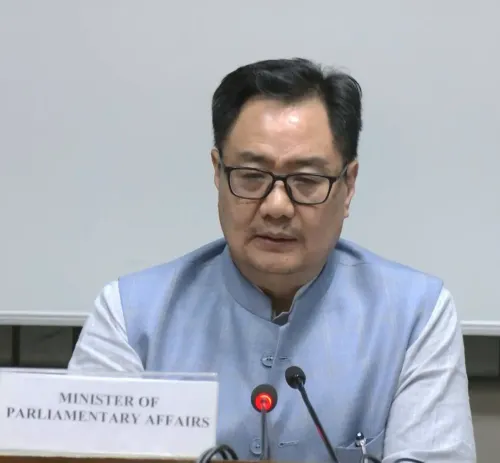
Union Parliamentary Affairs Minister Kiren Rijiju weighed in on the boundaries of democratic debate on Tuesday, June 2, 2026, asserting that while open discussion and dissent are fundamental to Indian democracy, they cannot extend to supporting forces that actively seek to harm the country's sovereignty, internal stability, or economic growth.
Context
Replying to his own handle @KirenRijiju on X, the minister stated: 'The beauty of our Indian democracy is open debate and the right to dissent without fear of censorship.' He immediately qualified this, adding that the 'only qualification is not to support those elements actively seeking to harm and undermine India's uncompromising Sovereignty, internal-stability, and our economic growth.'
The post is framed as a reply, suggesting it was part of a broader exchange or thread, though the specific trigger for the remark could not be independently verified at the time of publication.
Policy Backdrop
Rijiju's framing closely mirrors the constitutional framework that has governed free speech in India since the Constitution came into force in 1950. Article 19(1)(a) guarantees freedom of speech and expression, while Article 19(2) permits the state to impose reasonable restrictions on grounds including sovereignty and integrity of India, security of the state, and public order.
Senior ministers across the Bharatiya Janata Party-led government have consistently invoked this constitutional balance when addressing debates over protest movements, social media regulation, and internal security legislation. The framing — affirming dissent while drawing a hard line at what the government characterises as anti-national activity — has been a recurring feature of the ruling party's public communications since 2014.
Stakeholders and Impact
Opposition parties and civil society groups have long contested where precisely this line falls in practice, arguing that the 'sovereignty and stability' exception has at times been applied broadly enough to chill legitimate political criticism. Rights advocates point to debates over sedition provisions, the Unlawful Activities (Prevention) Act, and digital intermediary rules as arenas where this tension has played out.
For ordinary citizens and activists, a statement from a minister of Rijiju's seniority — he oversees the conduct of parliamentary business and minority affairs — carries institutional weight. His articulation signals the government's continued position that democratic freedoms and national security are complementary, not competing, values, provided citizens do not cross into active support for destabilising forces.
What's Next
The remark is likely to draw responses from opposition benches and civil liberties organisations, who may seek clarification on what conduct the government considers to fall within the prohibited category. With parliamentary sessions serving as the primary arena for such debates, the minister's statement could surface in Question Hour or during discussions on any upcoming legislation touching digital regulation or internal security.
As India navigates the intersection of an increasingly active digital public sphere and longstanding security concerns, statements by senior ministers that attempt to define the outer limits of permissible dissent will continue to shape the contours of democratic discourse.
Point of View
The minister pre-empts the charge of authoritarianism, while the qualifier about sovereignty and stability leaves significant interpretive room for the executive. This dual move is characteristic of how the BJP has navigated free-speech debates since 2014: affirming constitutional rights in principle while reserving discretion over their application in practice. The statement will likely intensify, rather than settle, the ongoing argument over where democratic criticism ends and actionable threat begins.
NationPress
18 Oct 2026
Frequently Asked Questions
What did Kiren Rijiju say about dissent in India?
On June 2, 2026, Rijiju said that open debate and the right to dissent without fear of censorship are central to Indian democracy, but that this right does not extend to supporting elements that actively seek to harm India's sovereignty, internal stability, or economic growth.
Who is Kiren Rijiju?
Kiren Rijiju is a senior BJP leader from Arunachal Pradesh who currently serves as Union Minister of Parliamentary Affairs and Minister of Minority Affairs in the Indian government.
Does the Indian Constitution allow restrictions on free speech?
Yes. Article 19(1)(a) of the Constitution guarantees freedom of speech and expression, but Article 19(2) permits the state to impose reasonable restrictions on grounds including the sovereignty and integrity of India, national security, and public order.
Why is the government's position on dissent controversial?
Opposition parties and civil liberties groups argue that invoking sovereignty and stability as limits on dissent has, in practice, been applied broadly enough to target legitimate political criticism, particularly in debates over security laws and digital regulation.
What could happen next after Rijiju's statement?
Opposition parties and civil society organisations are likely to respond; the issue may also be raised during Question Hour or legislative debates in the next parliamentary session, especially on matters related to digital regulation or internal security.