Rijiju Calls for Unity in Crisis, Sets Aside Political Rivalry
Synopsis
Union Parliamentary Affairs Minister Kiren Rijiju on June 11, 2026, posted in Urdu calling on all political parties to unite during national crises, even as they contest each other in the political arena. The appeal echoes India's tradition of all-party consultations during emergencies and signals potential cross-party engagement ahead.
Key Takeaways
Kiren Rijiju , Union Minister of Parliamentary Affairs, posted on X on June 11, 2026 , calling for political unity during national crises.
The post was written in Urdu and framed as a reply, indicating an ongoing public exchange on the platform.
Rijiju stated parties may 'fight each other politically' but 'must unite for the nation in times of crisis.' India has precedent for all-party meetings during emergencies, including after the 2019 Pulwama attack and during the 2020 COVID-19 pandemic .
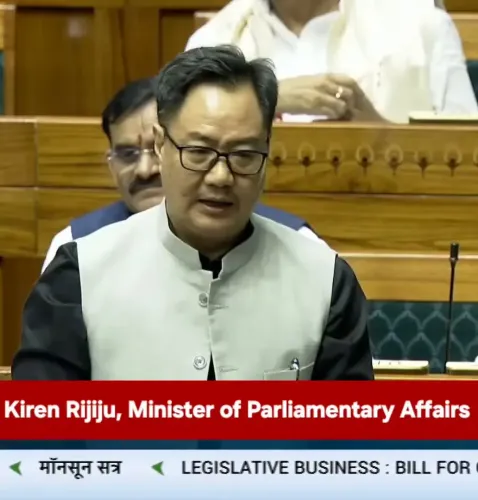
As Minister of Parliamentary Affairs , Rijiju is institutionally responsible for coordinating between the government and opposition parties in Parliament.
Opposition responses and any announcement of a formal all-party meeting will be closely watched in the coming days.
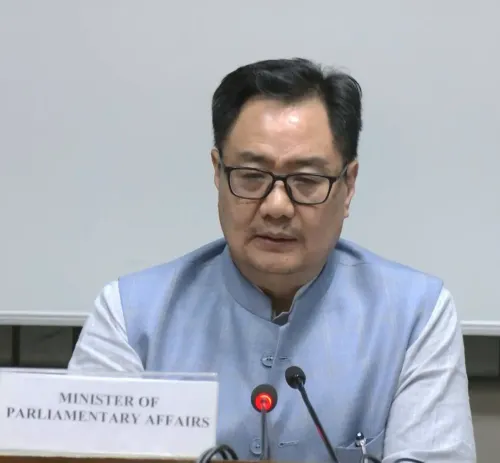
Union Parliamentary Affairs Minister Kiren Rijiju on Thursday, June 11, 2026, called for political unity during national crises, stressing that while parties may battle each other in the political arena, they must stand together when the nation faces adversity.
Posting in Urdu on X, Rijiju wrote: 'Hum siyasi taur par ek doosre se ladenge lekin hamein qaum ke liye buhran ke waqt muttahid hona chahiye' — 'We will fight each other politically, but we must unite for the nation in times of crisis.' The appeal, brief and unambiguous, underscores the minister's role as the government's chief parliamentary bridge-builder.
Context
Rijiju, who manages the government's legislative business and coordinates with opposition parties as Union Minister of Parliamentary Affairs, has consistently positioned himself as a voice for cross-party dialogue. His choice of Urdu — a language with wide reach across communities — signals an intent to address a broad audience beyond the ruling Bharatiya Janata Party's core constituency. The post is framed as a reply, indicating it was part of an ongoing exchange on the platform.
Policy Backdrop
India has a well-established tradition of all-party consultations during moments of national stress. After the 2019 Pulwama attack, Prime Minister Narendra Modi convened an all-party meeting to build consensus on national security. Similarly, during the 2020 COVID-19 pandemic, the government held multiple cross-party briefings to coordinate the national response. These precedents reflect a constitutional expectation that parliamentary democracy functions best when the opposition is kept informed and consulted during emergencies.
As Minister of Parliamentary Affairs, Rijiju is institutionally responsible for facilitating exactly this kind of legislative cooperation. His post echoes language that has historically preceded formal all-party meetings or joint statements on emerging national challenges.
Stakeholders and Impact
The statement is directed at all political parties represented in Indian Parliament, particularly the principal opposition blocs in both the Lok Sabha and the Rajya Sabha. For the ruling BJP, such an appeal serves to project statesmanship and national cohesion. For opposition parties, it presents both an opportunity and a test — whether to reciprocate the call for unity or to interrogate the specific crisis context that may have prompted it.
Civil society groups, policy analysts, and ordinary citizens who follow parliamentary functioning are also stakeholders, as the tone set between the government and opposition in moments of stress shapes the quality of democratic deliberation on critical legislation.
What's Next
Observers will watch for formal responses from opposition leaders and any announcement of a scheduled all-party meeting on an emerging national issue. If Rijiju's post precedes a government call for such a meeting, it would follow the established playbook of public appeals ahead of formal consultations. The next session of Parliament and the government's legislative calendar will be key indicators of whether this appeal translates into structured cross-party engagement.
Point of View
Choosing a script and language that carries resonance beyond the BJP's traditional base and signals inclusivity in a moment of apparent national stress. The framing — 'we will fight politically, but we must unite in crisis' — is a classic ministerial hedge: it acknowledges partisan reality while claiming the moral high ground of nationalism. Historically, such public statements from the Parliamentary Affairs Minister have preceded formal all-party consultations, making this post a possible signal of institutional moves to come. The appeal also places the burden of response on the opposition, which must now either endorse unity or risk being seen as obstructionist during a crisis.
NationPress
19 Sept 2026
Frequently Asked Questions
What did Kiren Rijiju say about political unity?
Kiren Rijiju said that while political parties will fight each other in the political arena, they must unite for the nation during times of crisis. He made this statement in Urdu on X on June 11, 2026.
Why did Rijiju post in Urdu?
The research does not confirm a specific verified reason, but posting in Urdu allows Rijiju to reach a broader audience across communities and signals an intent for inclusive national outreach beyond any single political constituency.
What is Kiren Rijiju's role in the Indian government?
Kiren Rijiju is the Union Minister of Parliamentary Affairs and Minister of Minority Affairs. He is responsible for managing the government's legislative business in Parliament and coordinating with opposition parties.
Has India held all-party meetings during national crises before?
Yes. India convened all-party meetings after the 2019 Pulwama attack to build consensus on national security, and held multiple cross-party briefings during the 2020 COVID-19 pandemic to coordinate the national response.
What happens after a minister calls for political unity in India?
Such public appeals have historically preceded formal all-party meetings convened by the government. Observers watch for opposition responses and official announcements of cross-party consultations in Parliament.