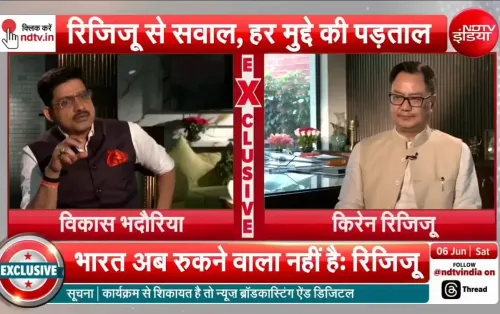
Rijiju: Attacking BJP Is Not Attacking Democracy
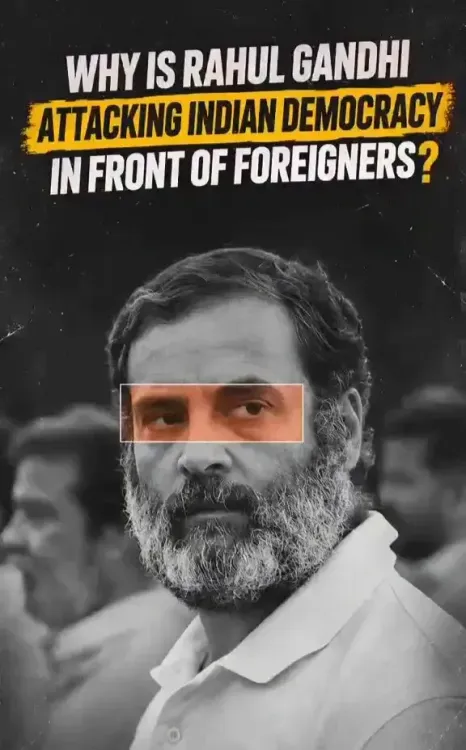
Synopsis
Union Parliamentary Affairs Minister Kiren Rijiju drew a sharp distinction between criticising the BJP and attacking Indian democracy, urging political opponents to respect the electoral mandate of the people.
Key Takeaways
Kiren Rijiju posted on 16 November 2026 that attacking the BJP is 'very different' from attacking Indian democracy.
He framed political rivals as 'opponents, not enemies,' urging mutual respect within the democratic framework.
Rijiju called on critics to 'respect the mandate of the people' — a pointed reference to electoral legitimacy.
The post accompanied a video, suggesting the remarks originated in a public address before being shared on social media.
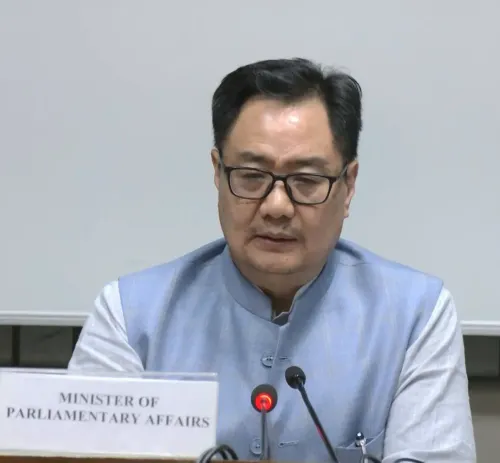
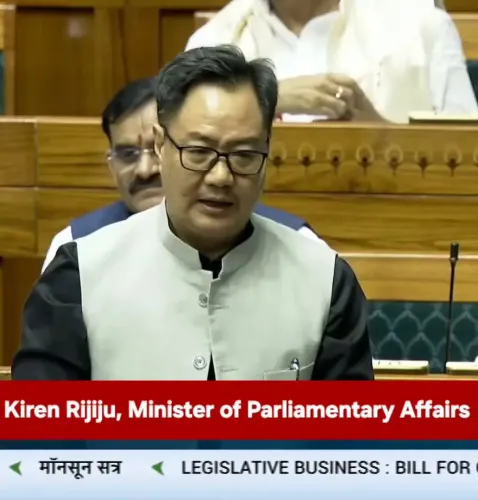
As Union Minister of Parliamentary Affairs , Rijiju manages government-opposition legislative relations in Parliament — lending institutional weight to the statement.
A line in Indian politics that gets blurred often — and loudly. Union Parliamentary Affairs Minister Kiren Rijiju drew it sharply on Monday, 16 November 2026, posting a pointed reminder that targeting a ruling party and targeting the republic are not the same act.
The line Rijiju is drawing
Rijiju's post is unambiguous: 'Attacking BJP is very different from attacking Indian democracy. We are political opponents not enemies. One must learn to respect the mandate of the people.' Three sentences, three distinct moves — a distinction, a de-escalation, and a rebuke, all in one breath.
The distinction matters constitutionally. Criticism of a ruling party is the oxygen of parliamentary democracy. Delegitimising an electoral verdict, or framing democratic institutions as captured simply because a party one opposes holds power — that is a categorically different act. Rijiju, who steers the government's legislative agenda as Parliamentary Affairs Minister, is signalling that the two should not be conflated.
A recurring fault line in Indian politics
This is not the first time the debate has surfaced. Indian political leaders across the spectrum have periodically had to untangle the two threads — robust opposition versus institutional delegitimisation. BJP spokespersons have frequently argued that segments of the opposition struggle to accept the scale of electoral mandates the party has won since 2014, and that frustration sometimes tips into rhetoric that questions the legitimacy of democracy itself rather than the choices of voters.
Opposition parties, in turn, argue that criticism of incumbents is precisely how accountability functions — and that labelling robust dissent as 'anti-democratic' is itself a tool to silence scrutiny. The fault line is real, the debate is perennial, and both sides have genuine stakes in where the line sits.
Why a Parliamentary Affairs Minister saying this carries weight
Rijiju is not merely a party spokesperson. As Union Minister of Parliamentary Affairs, he is the government's chief interlocutor with Parliament — the official whose job is to manage floor strategy, build cross-party consensus on legislative business, and keep the House functional. When he invokes the mandate of the people, he is speaking from the room where that mandate is exercised daily.
The post arrives with a video attached — context NationPress is awaiting — which suggests the remark may have been made in a larger public address before being amplified on social media. Watch for opposition responses in Parliament and any follow-up clarification on what specifically prompted the statement.
Opponents can be fierce. Elections can be contested hard. But the moment a party's victory is treated as proof of democracy's failure — that is where, Rijiju is arguing, the argument crosses a line that every stakeholder in Indian democracy should care about holding.
Point of View
' he is anchoring the BJP's authority in voter choice rather than party power alone — a subtle but important framing. The statement also serves a de-escalatory function, offering opponents the status of 'opponents, not enemies,' even while implicitly rebuking them. As Parliament's floor manager, Rijiju has a direct institutional interest in keeping political competition within norms that allow legislative business to function.
NationPress
16 Nov 2026
Frequently Asked Questions
What did Kiren Rijiju say about BJP and Indian democracy?
Rijiju posted that attacking the BJP is very different from attacking Indian democracy, and urged political opponents to respect the mandate of the people.
Who is Kiren Rijiju?
Kiren Rijiju is the Union Minister of Parliamentary Affairs and Minister of Minority Affairs, a senior BJP leader from Arunachal Pradesh who manages the government's legislative strategy in Parliament.
What is the difference between criticising the BJP and attacking Indian democracy?
Criticising a ruling party is a normal function of opposition politics. Attacking democracy typically refers to delegitimising electoral outcomes or undermining democratic institutions — Rijiju's post argues the two must not be conflated.
Why does Rijiju's statement matter coming from the Parliamentary Affairs Minister?
As Parliamentary Affairs Minister, Rijiju is the government's chief interlocutor with Parliament, making his remarks about democratic norms and electoral mandates carry institutional, not just political, weight.
How have opposition parties responded to Rijiju's post?
No formal opposition response had been issued at the time of publication; NationPress will update as reactions emerge from Parliament and party spokespersons.