Joshi, Singapore Minister Discuss Green Hydrogen, Maritime Clean Energy

Synopsis
Union Minister Pralhad Joshi met Singapore's Energy Minister Dr. Tan See Leng at the 4th Singapore India Hackathon 2026, discussing green hydrogen, maritime decarbonisation, offshore wind, and energy storage to build resilient clean energy value chains between the two nations.
Key Takeaways
Pralhad Joshi and Singapore's Dr.
Tan See Leng held bilateral energy talks on 16 November 2026 on the sidelines of the 4th Singapore India Hackathon 2026 .
Discussions covered green hydrogen , green fuels, maritime decarbonisation , offshore wind , energy storage, and battery manufacturing .
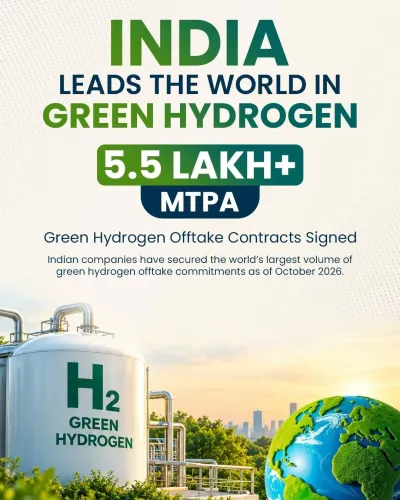
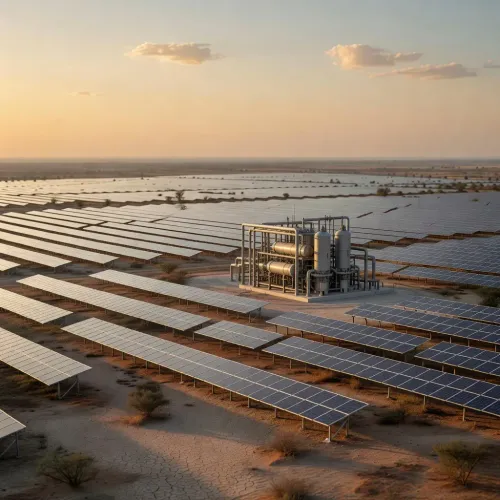
India's National Green Hydrogen Mission (2023) positions the country as a potential low-cost green fuel supplier for Singapore's bunkering industry.
India is targeting 500 GW non-fossil fuel capacity by 2030 and net-zero by 2070 , making Singapore partnerships strategically important.
Singapore's role as a global maritime and bunkering hub makes it a critical downstream partner for India's growing green energy production ecosystem.
No specific MoUs or formal outcomes from the meeting have been officially announced.
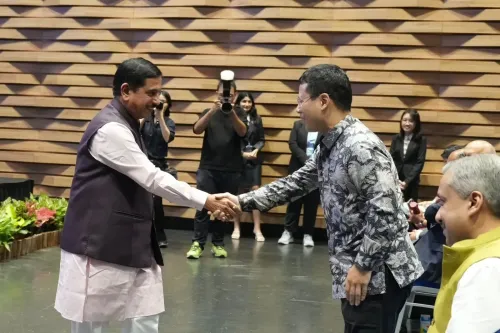
On the sidelines of a flagship bilateral tech event, Union Minister for New and Renewable Energy Pralhad Joshi sat down with Singapore's Minister for Energy, Trade and Industry Dr. Tan See Leng on Monday, 16 November 2026 to map out how two of Asia's most strategically complementary economies can build the clean energy supply chains the world's transition demands.
What the Singapore India Hackathon brought to the table
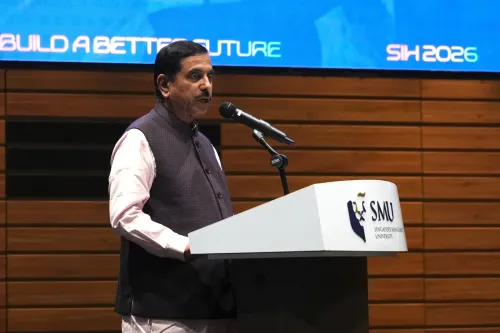
The meeting took place on the sidelines of the 4th Singapore India Hackathon 2026 (#SIH2026), the annual bilateral forum that has become a live wire for tech and innovation ties between the two countries. While the hackathon channels youth energy into competitive problem-solving, the ministerial conversation beside it carried the heavier cargo: green hydrogen, green fuels, offshore wind, energy storage, battery manufacturing, and — most pointedly — maritime decarbonisation.
That last item is where the two countries' interests snap into the sharpest focus. Singapore is one of the world's largest bunkering hubs, handling marine fuel for a staggering share of global shipping traffic. If that traffic is to run on green ammonia or green methanol rather than conventional bunker fuel, Singapore needs a large, low-cost green-energy producer upstream. India, increasingly, is building exactly that capacity.
India's green hydrogen ambition meets Singapore's bunkering clout
India's National Green Hydrogen Mission, launched in 2023, set the country on a course to become a global hub for the production, use, and export of green hydrogen. The mission targets cost-competitive domestic production and eventual exports — connecting naturally with markets like Singapore that need clean fuel imports to decarbonise hard-to-abate sectors like shipping.
Joshi's post underscored the structural logic: India brings 'scale, renewable energy resources and growing manufacturing ecosystem' — translation: a vast solar and wind resource base, a rapidly expanding green energy production capacity, and a government-backed drive to indigenise battery and electrolyser manufacturing. Singapore brings finance, shipping infrastructure, and technology — the downstream and transaction layer that turns raw energy potential into traded commodity.
Offshore wind and energy storage on the agenda
Beyond hydrogen, the ministers explored offshore wind, energy storage, and battery manufacturing investments — sectors where both countries are at different but mutually useful stages of development. India's coastline and improving regulatory environment for offshore wind open project pipelines; Singapore's investment funds and technology partners can accelerate them.
The bilateral energy relationship sits within the architecture of the India-Singapore Comprehensive Economic Cooperation Agreement, in place since 2005 and periodically updated. But the clean energy chapter is relatively new, gaining urgency as India pushes toward its 500 GW non-fossil fuel target by 2030 and its net-zero commitment by 2070.
Building resilient clean energy value chains
Joshi described the partnership as one that 'can play a significant role in building resilient clean energy value chains and accelerating the global energy transition' — language that signals India's intent to position itself not just as a domestic green-energy grower but as a node in global supply chains. For Singapore, locking in green fuel supply partnerships now is a strategic hedge as International Maritime Organization decarbonisation rules tighten.
No specific agreements or MoUs from the meeting have been officially announced. What is clear is that the conversation has moved well past pleasantries: offshore wind pilots, green hydrogen corridor studies, and cross-border battery investment are now live items on a bilateral energy agenda that is quietly becoming one of Asia's more consequential clean-energy dialogues.
India and Singapore are no longer just talking about the energy transition — they are carving out the value chain roles that will define who wins it.
Point of View
New Delhi is effectively pitching for a role in the International Maritime Organization's decarbonisation story — a market worth hundreds of billions as green ammonia and methanol replace bunker fuel. The Singapore India Hackathon as a venue is itself telling: India is using innovation diplomacy events to run parallel high-level policy tracks, compressing the gap between tech ideation and bilateral deal-making. Watch for whether green hydrogen corridor studies or offshore wind pilot frameworks follow this conversation into formal bilateral mechanisms.
NationPress
16 Nov 2026
Frequently Asked Questions
What did Pralhad Joshi and Singapore's minister discuss at SIH2026?
They discussed strengthening bilateral cooperation in renewable energy, green hydrogen, green fuels, maritime decarbonisation, offshore wind, energy storage, and battery manufacturing, connecting India's growing clean energy production capacity with Singapore's strengths in shipping, finance, and technology.
What is the Singapore India Hackathon 2026?
The Singapore India Hackathon 2026 is the fourth edition of an annual bilateral event that promotes technology and innovation ties between India and Singapore, with this year's edition providing the backdrop for high-level ministerial energy talks.
What is India's National Green Hydrogen Mission?
India's National Green Hydrogen Mission, launched in 2023, is a flagship programme aimed at scaling up domestic production, storage, and export of green hydrogen to make India a global clean fuel hub.
Why is Singapore important for India's green energy ambitions?
Singapore is one of the world's largest maritime bunkering hubs and brings strengths in shipping, finance, and technology that can help India convert its renewable energy production scale into traded clean fuels and investment-backed offshore projects.
What is India's renewable energy target by 2030?
India has set a target of achieving 500 GW of non-fossil fuel electricity capacity by 2030 and reaching net-zero emissions by 2070, making bilateral partnerships like the one with Singapore central to its clean energy strategy.