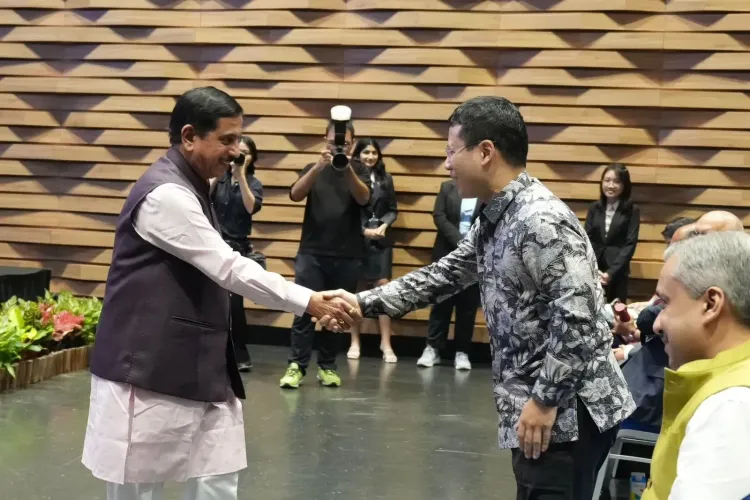
Pralhad Joshi holds bilateral with Singapore Education Minister at SMU
Synopsis
Union Minister Pralhad Joshi met Singapore's Education Minister Desmond Lee at SMU on November 15 following the 4th Singapore–India Hackathon, proposing Singaporean university campuses in India, a 2027 hackathon in India, AI and semiconductor collaboration, and a new bilateral higher education conference.
Key Takeaways
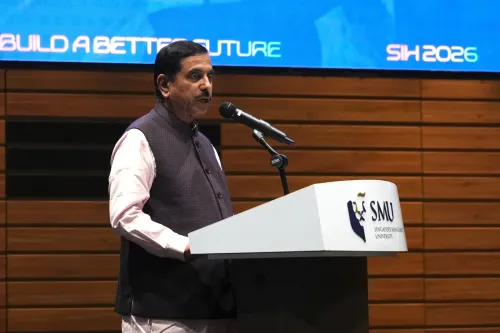
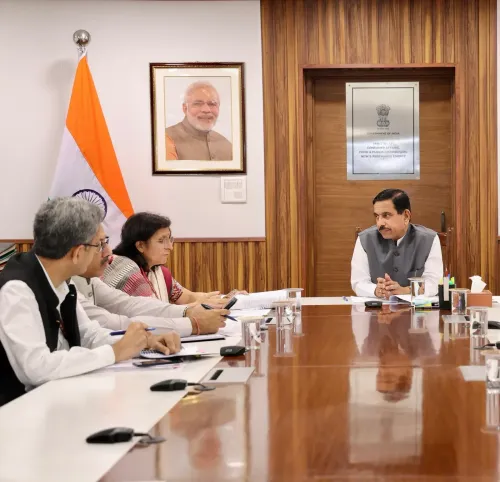
Pralhad Joshi met Singapore Education Minister Desmond Lee at Singapore Management University on November 15, 2026 , following the inauguration of the 4th Singapore–India Hackathon .
Joshi proposed hosting the 5th India–Singapore Hackathon in India in 2027 and creating a periodic India–Singapore Higher Education Institutions Conference .
India invited more Singaporean universities to establish campuses in India , drawing on the NUS University Town model for proposed Indian University Townships.
Discussions covered mutual recognition of qualifications , teacher and student exchanges, and joint capacity-building programmes.
Technology collaboration on AI in education, semiconductors, clean energy, fintech and support for deep-tech start-ups via Bharat Innovates was also tabled.
Joshi personally invited Minister Desmond Lee to visit India to advance shared education and innovation priorities.
India's education diplomacy got a significant push on Sunday, November 15, 2026, when Union Minister Pralhad Joshi met Singapore's Minister for Education, H.E. Desmond Lee, at Singapore Management University (SMU) — right on the heels of the inauguration of the 4th Singapore–India Hackathon. What followed was a wide-ranging conversation that stretched from classroom teacher exchanges to semiconductors and deep-tech start-ups.
From the hackathon floor to a bilateral table
The meeting was no coincidence of scheduling. The Singapore–India Hackathon, now in its fourth edition, has become a live demonstration of what joint innovation between the two countries can produce — and Joshi used that momentum to table a concrete ask: host the 5th edition in India in 2027. The proposal signals New Delhi's intent to bring the bilateral innovation conversation home and deepen its institutional roots.
Joshi also floated the creation of a periodic India–Singapore Higher Education Institutions Conference — a formal track that would keep university leaders, policymakers and industry connected beyond one-off summits. It is the kind of scaffolding that turns goodwill into durable architecture.
University Townships, the NUS model and a standing invitation
One of the most specific asks of the meeting was an invitation for more Singaporean universities to establish campuses in India — directly in line with the ambitions of India's National Education Policy 2020, which opened the door to foreign institutions. Joshi went further, seeking Singapore's expertise in designing India's proposed University Townships, explicitly drawing inspiration from the integrated NUS University Town model — a live-work-learn campus environment that has become a benchmark in Asia.
The two ministers also explored mutual recognition of qualifications, deeper teacher and student exchanges, and joint capacity-building — the unglamorous plumbing that determines whether a bilateral education partnership actually delivers opportunities or simply generates press releases.
AI, semiconductors, clean energy: the technology stack behind the classroom talk
Education was only half the conversation. Joshi and Lee discussed collaboration across AI in education, advanced materials, clean energy, fintech and semiconductors — sectors where India and Singapore already have parallel bilateral technology dialogues running. The mention of Bharat Innovates as a vehicle for supporting deep-tech start-ups and innovators adds an institutional name to what is otherwise an aspirational agenda, though its operational details remain to be worked out.
The breadth of the technology agenda reflects a broader pattern: the India–Singapore strategic partnership, anchored since the Comprehensive Economic Cooperation Agreement of 2005, is steadily widening its lane from trade and defence into the knowledge economy. Education and emerging technology are now explicit pillars, not footnotes.
What New Delhi wants next from Singapore
Joshi closed the meeting by personally inviting Minister Desmond Lee to visit India — a move that, if accepted, would likely accelerate decisions on university campuses and the Higher Education Institutions Conference. The three things to watch from here: whether a Singaporean university announces an India campus, whether the proposed conference gets a date, and whether New Delhi locks in 2027 as the year it brings the hackathon home.
India's education internationalisation drive has a new address — and it's on Orchard Road for now, but the ambition is firmly pointed eastward, back home.
Point of View
Joshi signals a shift from aspiration to deliverable-driven diplomacy. Singapore, with its compact but globally connected education system, is a natural partner for India's attempt to build credibility as a destination for foreign academic institutions. The technology stack — AI, semiconductors, clean energy — also tells a story: education diplomacy is now inseparable from India's industrial and strategic ambitions under the Act East framework.
NationPress
15 Nov 2026
Frequently Asked Questions
What was decided at the India–Singapore meeting at SMU in November 2026?
Union Minister Pralhad Joshi and Singapore's Education Minister Desmond Lee discussed mutual recognition of qualifications, teacher and student exchanges, joint capacity-building, AI and semiconductor collaboration, and proposed the 5th India–Singapore Hackathon in India in 2027.
What is the Singapore–India Hackathon?
The Singapore–India Hackathon is an annual bilateral innovation event between the two countries; its 4th edition was inaugurated at Singapore Management University in November 2026.
What is the NUS University Town model and why is India interested in it?
The NUS University Town at the National University of Singapore is an integrated live-work-learn campus environment. India cited it as a reference design for its proposed University Townships, which aim to create world-class academic hubs domestically.
What is Bharat Innovates?
Bharat Innovates was mentioned by Minister Joshi as a vehicle to support deep-tech start-ups and innovators through India–Singapore collaboration; its full operational details have not been officially confirmed.
Will Singapore universities open campuses in India?
Union Minister Joshi formally invited Singaporean universities to establish campuses in India during his bilateral meeting with Minister Desmond Lee on November 15, 2026, in line with India's NEP 2020 framework for foreign institutions.