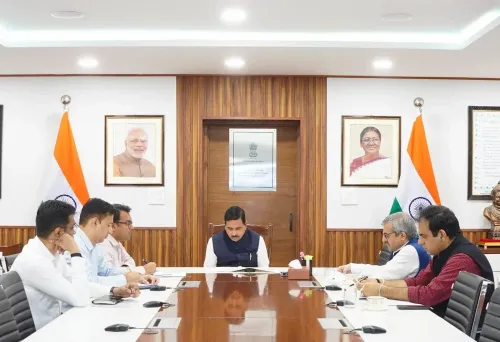
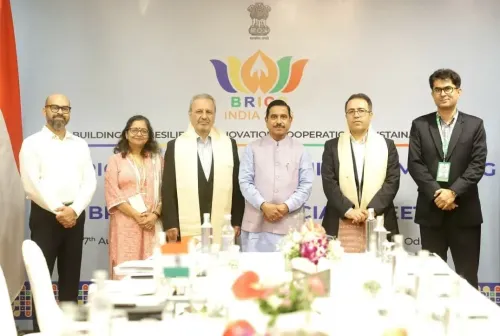
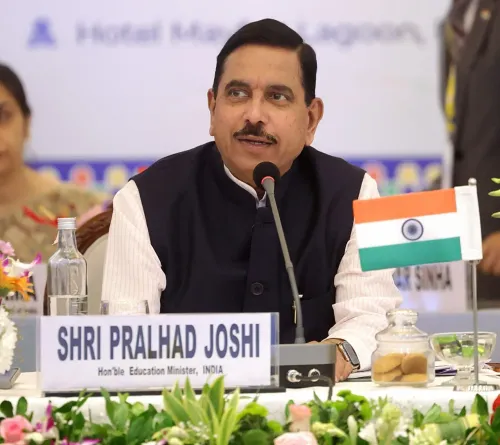
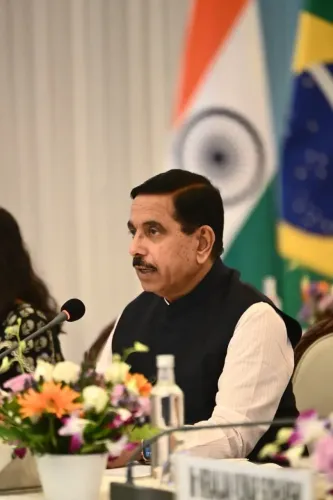
Pralhad Joshi briefs media after 13th BRICS Education Ministers' Meet
Synopsis
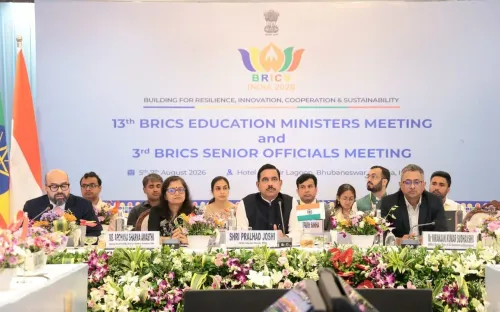
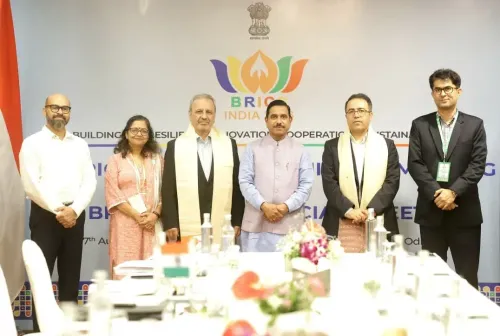
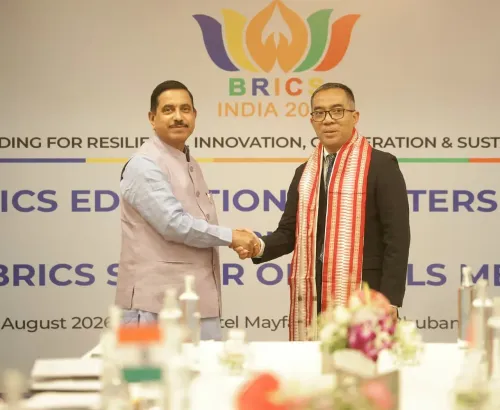
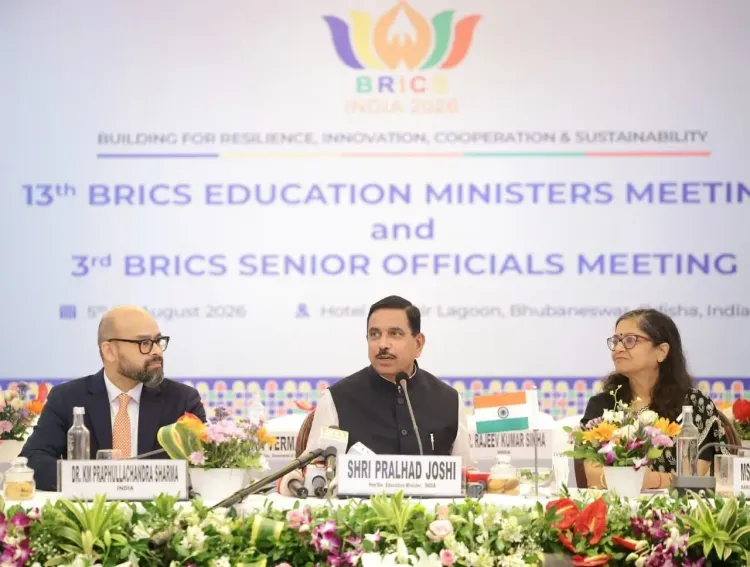
Union Minister Pralhad Joshi addressed the media after the 13th BRICS Education Ministers' Meeting in Bhubaneswar on 7 August 2026, sharing outcomes on education, research, innovation and digital learning cooperation among BRICS nations.
Key Takeaways
The 13th BRICS Education Ministers' Meeting concluded successfully in Bhubaneswar on 7 August 2026 .
Union Minister Pralhad Joshi represented India and briefed the media on key outcomes.
Deliberations covered four areas: education, research, innovation and digital learning .
BRICS education ministers have met periodically since at least 2014 , building frameworks on academic mobility and research collaboration.
Meetings typically produce non-binding declarations ; implementation of agreed partnerships is the critical next step.
India has consistently used BRICS education platforms to advance online learning and joint research network initiatives.
From the halls of Bhubaneswar, a multilateral conversation about the future of learning just wrapped — and Union Minister Pralhad Joshi stepped out to tell the world what was decided. On Friday, 7 August 2026, Joshi addressed the media following the successful conclusion of the 13th BRICS Education Ministers' Meeting, outlining the key outcomes of deliberations centred on strengthening cooperation in education, research, innovation and digital learning across BRICS nations.
What the ministers deliberated on in Bhubaneswar
The meeting brought together education ministers from the BRICS grouping — a bloc that has grown well beyond its original five members of Brazil, Russia, India, China and South Africa — to advance a shared agenda on academic collaboration. Joshi, representing India, shared that deliberations focused on four pillars: education, research, innovation and digital learning. The choice of Bhubaneswar, Odisha's capital, as the host city underlines India's intent to project its eastern cities as credible venues for high-profile multilateral diplomacy.BRICS education diplomacy: a decade in the making
BRICS education ministers have been convening periodically since at least 2014, building a track record on academic mobility, quality assurance frameworks and joint research collaboration. What began as an economic coordination grouping has steadily expanded its remit into education, science, technology and digital domains — and successive Indian governments have used these platforms to champion online learning initiatives and joint research networks. The meetings typically produce non-binding declarations rather than formal treaties, meaning the real test is always in follow-through.India's stake in the BRICS education agenda
For India, these ministerial gatherings are more than diplomatic ritual. With one of the world's largest higher education systems and a growing ambition to position itself as a global knowledge hub, New Delhi has consistently pushed for concrete mechanisms — joint degree programmes, shared digital infrastructure, mutual recognition of qualifications — that can give BRICS education cooperation real teeth. Whether the 13th meeting moved those needles will become clearer as implementation details emerge. The next milestone to watch: whether any agreed digital learning or research partnerships translate into funded programmes, and where the 14th BRICS Education Ministers' Meeting will be hosted.Point of View
Rather than Delhi, signals a deliberate effort to internationalise India's second-tier cities. For Joshi, a minister whose primary portfolios are consumer affairs and renewable energy, chairing an education ministers' meeting underscores the cross-cutting diplomatic role senior cabinet members play in BRICS engagements. The real political test will come in whether the declarations from Bhubaneswar translate into funded, trackable programmes before the next ministerial cycle.
NationPress
22 Sept 2026
Frequently Asked Questions
What was decided at the 13th BRICS Education Ministers' Meeting?
The meeting focused on strengthening cooperation in education, research, innovation and digital learning among BRICS nations. Union Minister Pralhad Joshi briefed the media on the key outcomes after the meeting concluded in Bhubaneswar on 7 August 2026.
Where was the 13th BRICS Education Ministers' Meeting held?
The meeting was held in Bhubaneswar , the capital of Odisha, India.
Who represented India at the BRICS Education Ministers' Meeting 2026?
Union Minister Pralhad Joshi , who holds the portfolios of Consumer Affairs, Food and Public Distribution and New and Renewable Energy, represented India and addressed the media after the meeting.
How often do BRICS Education Ministers meet?
BRICS education ministers have convened periodically since at least 2014 , typically producing joint declarations on academic mobility, quality assurance and research collaboration.
What is the significance of BRICS education cooperation for India?
India uses BRICS education platforms to advance initiatives in online learning, joint research networks and mutual recognition of qualifications, supporting its broader goal of becoming a global knowledge hub.