BRICS Education Ministers adopt declaration with 5 key priorities in Bhubaneswar
Synopsis
At the 13th BRICS Education Ministers' Meeting in Bhubaneswar, member nations unanimously adopted a declaration anchored in five priorities — from early childhood education to collaborative research and mutual qualification recognition. Held under India's BRICS chairship for the third time, the summit signals a concerted push to align education systems across an increasingly diverse bloc that now includes Indonesia, Iran, the UAE, and Ethiopia.
Key Takeaways
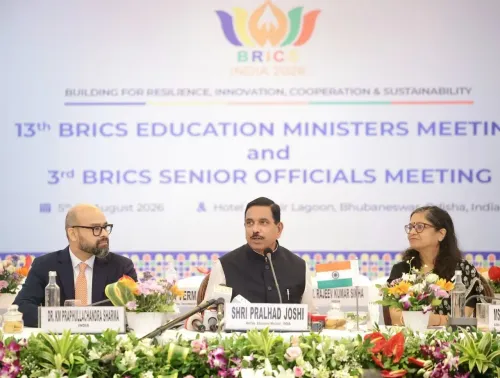
The 13th BRICS Education Ministers' Meeting was held in Bhubaneswar, Odisha on 7 August under India's BRICS chairship .
The BRICS Education Ministers' Declaration was unanimously adopted , marking a key milestone in multilateral education cooperation.
The declaration sets five priorities : early childhood education, skill development via BRICS TVET, mutual recognition of qualifications, collaborative research and start-ups, and academic leadership capacity building.
Education ministers and officials from Brazil, Russia, China, South Africa, Indonesia, Iran, UAE, and Ethiopia participated.
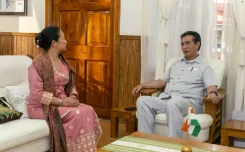
Minister Pralhad Joshi held bilateral meetings with ministers from Iran, Indonesia, and South Africa on higher education and research cooperation.
Detailed provisions of the declaration will be published on the Ministry of Education's website .
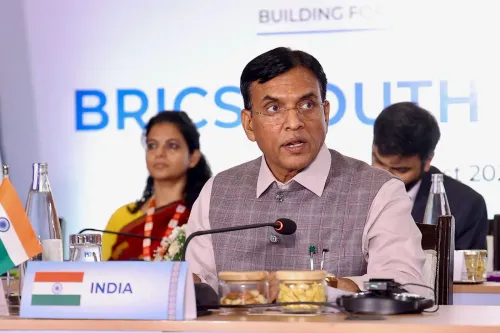
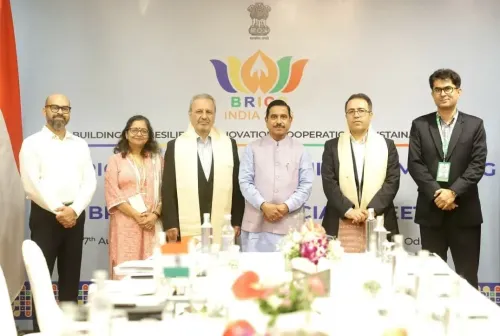
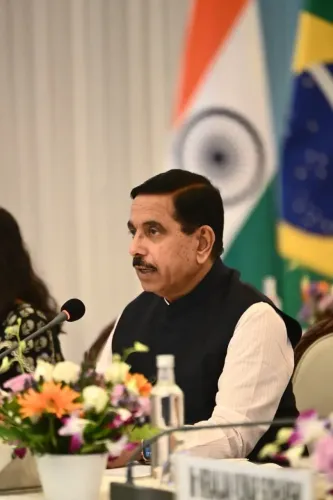
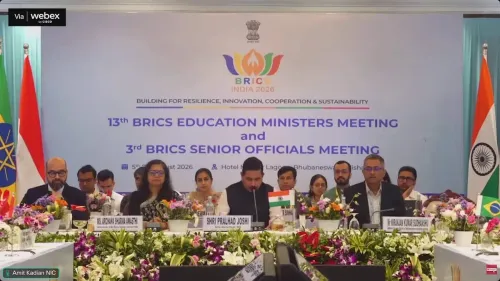
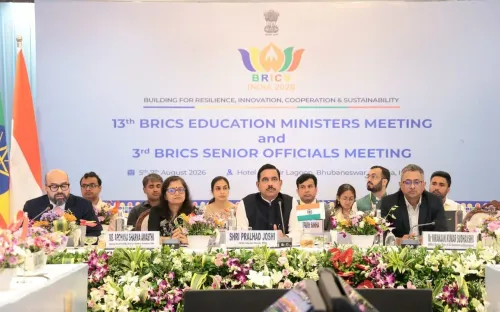
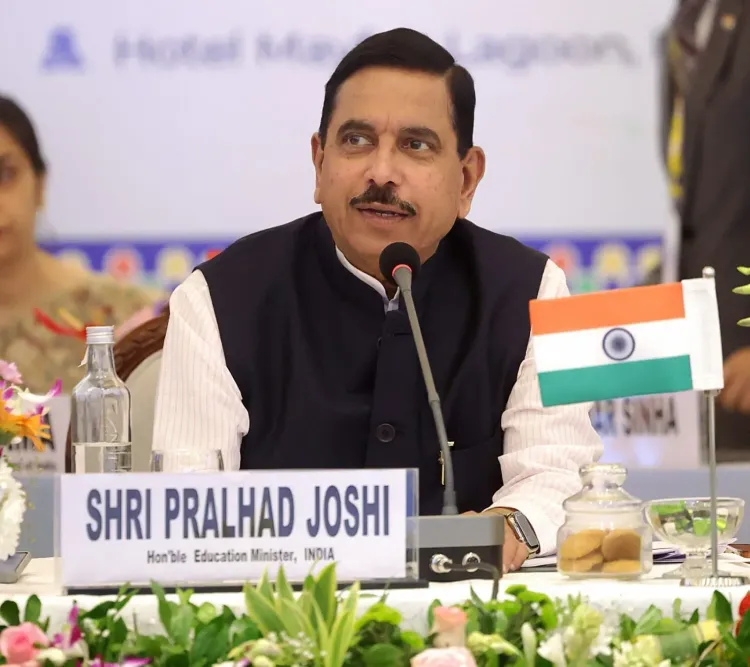
Union Education Minister Pralhad Joshi on Friday, 7 August announced that the 13th BRICS Education Ministers' Meeting, held in Bhubaneswar, Odisha, unanimously adopted the BRICS Education Ministers' Declaration — a milestone in multilateral education cooperation among member nations. The meeting, convened under India's BRICS chairship for the third time, brought together education ministers, delegates, and senior officials from Brazil, Russia, China, South Africa, Indonesia, Iran, the UAE, and Ethiopia.
Summit Overview and Theme
The proceedings began with the third BRICS Education Senior Officials' Meeting on 5 August before culminating in the ministerial session. This year's theme — 'Building Resilience and Innovation for Cooperation and Sustainability' — placed a strong emphasis on youth participation and people-to-people exchanges. Delegates exchanged perspectives and recommendations, reaffirming their shared commitment to building inclusive, resilient, and future-ready education systems through deeper institutional cooperation and knowledge exchange.
Five Key Priorities in the Declaration
According to Minister Joshi, the adopted declaration is structured around five core priorities:
1. Strengthening early childhood care and education — recognising foundational learning as a pillar of long-term national development.
2. Skill development and the BRICS TVET Cooperation Alliance — enhancing vocational and technical education linkages across member states.
3. Mutual recognition of qualifications — enabling smoother academic and professional mobility between BRICS nations.
4. Promotion of collaborative research, innovation, and start-ups — fostering joint knowledge creation and entrepreneurial ecosystems.
5. Capacity building for academic leadership — investing in institutional governance and faculty development across member countries.
Bilateral Meetings and Diplomatic Outreach
On the sidelines, Joshi held bilateral discussions with education ministers from Iran, Indonesia, and South Africa to explore avenues for cooperation in higher education, research, and innovation. These engagements signal India's intent to deepen bilateral academic ties within the BRICS framework beyond the multilateral declaration.
Model BRICS Initiative and Next Steps
The minister also highlighted the Model BRICS initiative, designed to familiarise young citizens with the BRICS process and strengthen their understanding of diplomacy and multilateral cooperation. Joshi confirmed that preliminary work on summit outcomes has already commenced, and expressed confidence that states across India — including Odisha — stand to benefit from the initiatives. Detailed provisions of the declaration are to be published on the Ministry of Education's website. The declaration's implementation will be closely watched as a test of whether BRICS education commitments translate into tangible cross-border academic programmes.
Point of View
But 'mutual recognition of qualifications' has been on BRICS agendas for years with limited operationalisation. The real test is whether the declaration produces binding bilateral agreements or remains aspirational text. With India's own higher education system under reform pressure, the domestic credibility of these commitments matters as much as the diplomatic optics.
NationPress
22 Sept 2026
Frequently Asked Questions
What was decided at the 13th BRICS Education Ministers' Meeting?
The 13th BRICS Education Ministers' Meeting, held in Bhubaneswar on 7 August, unanimously adopted the BRICS Education Ministers' Declaration, setting five key priorities for education cooperation among member nations. These include early childhood education, skill development, mutual recognition of qualifications, collaborative research, and academic leadership capacity building.
Where and when was the BRICS Education Ministers' Meeting held?
The meeting was held in Bhubaneswar, Odisha, with the Senior Officials' Meeting commencing on 5 August and the ministerial session concluding on 7 August 2025. It was convened under India's BRICS chairship for the third time.
Which countries participated in the BRICS Education Ministers' Meeting?
Education ministers, delegates, and senior officials from Brazil, Russia, China, South Africa, Indonesia, Iran, the UAE, and Ethiopia participated alongside the host nation India.
What is the BRICS TVET Cooperation Alliance?
The BRICS TVET (Technical and Vocational Education and Training) Cooperation Alliance is a multilateral framework aimed at enhancing skill development linkages and vocational education cooperation across BRICS member states. It was reaffirmed as a priority under the newly adopted declaration.
What is the Model BRICS initiative mentioned by Minister Joshi?
The Model BRICS initiative is a programme designed to familiarise young citizens with the BRICS process, helping them understand diplomacy and multilateral cooperation. It mirrors the concept of Model United Nations, applied to the BRICS framework.