Pralhad Joshi Reviews Education Priorities After BRICS Meet
Synopsis
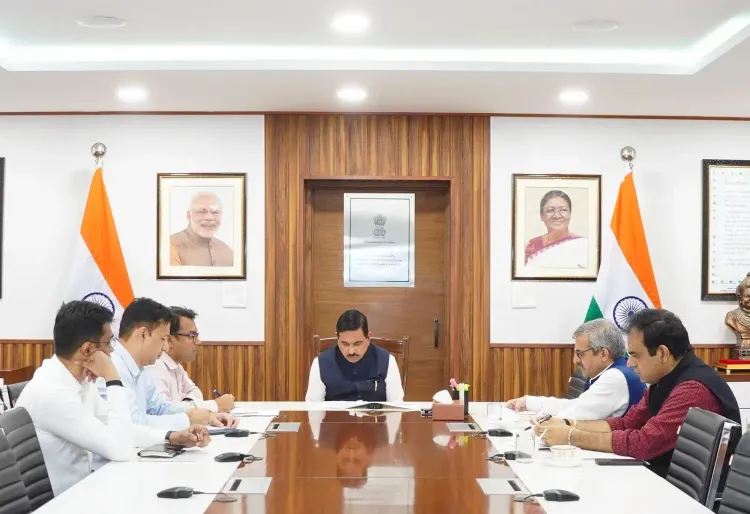
Union Minister Pralhad Joshi returned to New Delhi from the 13th BRICS Education Ministers' Meeting and immediately convened a late-night review with Ministry of Education officials, focusing on implementation priorities and aligning domestic programmes with the vision of an inclusive, globally competitive education system.
Key Takeaways
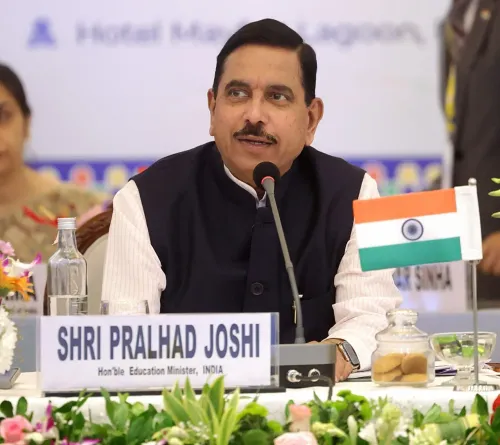
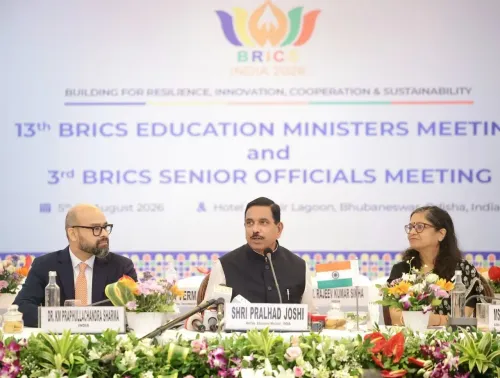
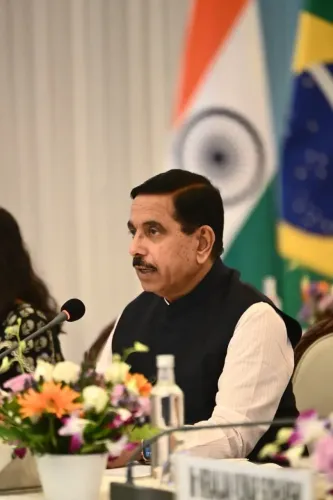
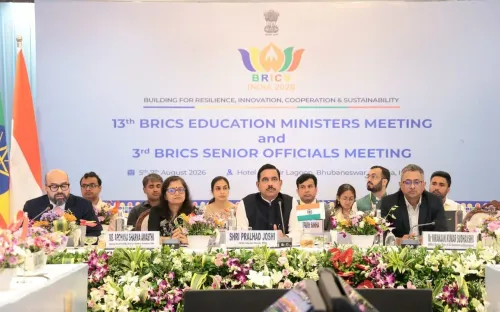
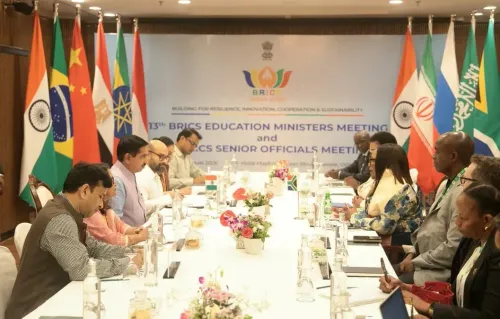
Pralhad Joshi attended the 13th BRICS Education Ministers' Meeting and held a same-night debrief with senior Ministry of Education officials upon returning to New Delhi .
The review covered ongoing ministry initiatives and implementation priorities for education programmes.
The minister reaffirmed commitment to 'timely and effective execution' of programmes strengthening India's education ecosystem.
The stated goal is an 'inclusive, future-ready and globally competitive education system' — language that aligns closely with the National Education Policy 2020 framework.
Specific outcomes of the BRICS meeting have not yet been formally disclosed.
Fresh off the 13th BRICS Education Ministers' Meeting, Union Minister Pralhad Joshi wasted no time: back in New Delhi, he convened a late-night session with senior officials of the Ministry of Education to translate international dialogue into domestic action.
From the BRICS table to the ministry corridor
The minister described the discussions as a review of 'ongoing initiatives, implementation priorities' and a reaffirmation of commitment to 'timely and effective execution of programmes.' The sequence matters — a multilateral ministerial forum followed within hours by an internal strategy meeting signals that the government intends to move quickly on whatever emerged from the BRICS discussions.
India has long used BRICS education forums as a mirror — benchmarking domestic reforms against practices from Brazil, Russia, China, South Africa and the grouping's newer members. The 13th edition of the ministers' meeting continued that tradition, though specific outcomes from the gathering remain to be formally disclosed.
NEP 2020 as the domestic anchor
The backdrop to any ministerial education conversation in 2026 is the National Education Policy 2020, which set the architecture for holistic, multidisciplinary and globally competitive schooling and higher education. Joshi's stated goal — 'an inclusive, future-ready and globally competitive education system' — maps directly onto NEP 2020's core language, suggesting the ministry is framing BRICS-level learnings within that existing policy scaffold.
The Ministry of Education is the nodal body for translating such frameworks into programme-level execution, and the minister's post-travel briefing with senior officials points to a deliberate effort to keep implementation momentum from slipping after the international travel window.
What the ministry's calendar now demands
The immediate watch-point is how decisions or exchanges from the BRICS Education Ministers' Meeting feed into the ministry's active programme pipeline — whether through revised implementation timelines, new bilateral education partnerships, or updated benchmarks for existing schemes. Joshi's note that the meeting 'provided an opportunity to align efforts' with a broader vision suggests the ministry is in active calibration mode, not just reporting back.
The real test, as always in education policy, is the distance between a minister's late-night debrief and a student's classroom experience.
Point of View
Not ceremonial obligations. Framing the follow-up around NEP 2020's language of 'globally competitive' education is a deliberate move to embed international benchmarks within an already-established reform architecture. The real political stakes are in execution: with NEP 2020 now six years old, the ministry faces growing scrutiny over the gap between policy ambition and on-ground delivery. Whether this BRICS meeting produces anything measurable in that gap is the question that will define its significance.
NationPress
22 Sept 2026
Frequently Asked Questions
What is the BRICS Education Ministers' Meeting?
The BRICS Education Ministers' Meeting is a multilateral forum where education ministers from BRICS member nations — Brazil, Russia, India, China, South Africa and expanded members — meet to exchange best practices on education access, quality and reform. The 13th edition was the most recent gathering attended by India's Union Minister Pralhad Joshi.
Why did Pralhad Joshi meet Ministry of Education officials after the BRICS meeting?
Joshi convened a late-night review with senior Ministry of Education officials immediately after returning to New Delhi to translate discussions from the BRICS forum into domestic action, reviewing ongoing initiatives and setting implementation priorities.
What is India's National Education Policy 2020?
The National Education Policy 2020 is a landmark framework that set out a vision for holistic, multidisciplinary and globally oriented education reform in India, covering school and higher education. It serves as the primary policy scaffold for the Ministry of Education's ongoing programmes.
What outcomes came out of the 13th BRICS Education Ministers' Meeting?
Specific outcomes of the 13th BRICS Education Ministers' Meeting have not yet been formally disclosed. Minister Joshi indicated that the meeting provided an opportunity to align efforts with the vision of building an inclusive, future-ready and globally competitive education system.
Who is Pralhad Joshi and what ministries does he head?
Pralhad Joshi is a senior BJP leader from Karnataka who serves as Union Minister of Consumer Affairs, Food and Public Distribution, and Minister of New and Renewable Energy. He attended the BRICS Education Ministers' Meeting in his capacity as a senior cabinet minister representing India.