Pralhad Joshi meets Iran's Science Minister at BRICS 2026
Synopsis
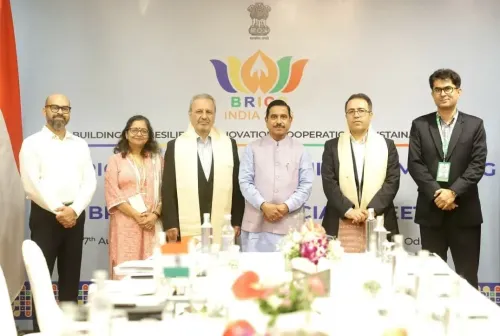
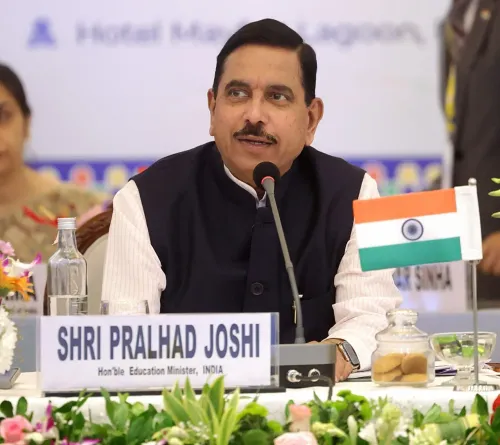
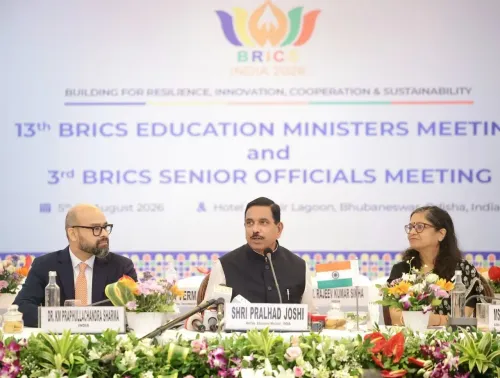
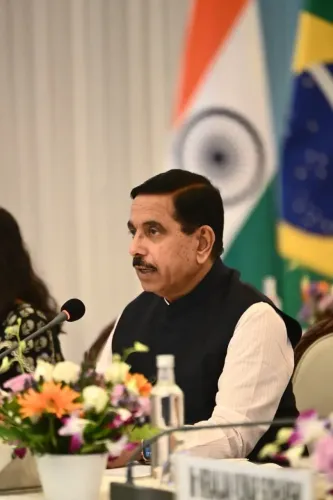
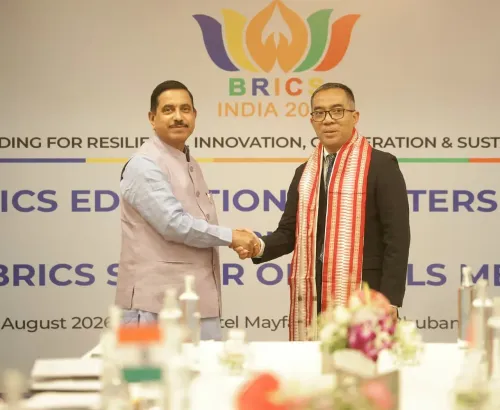
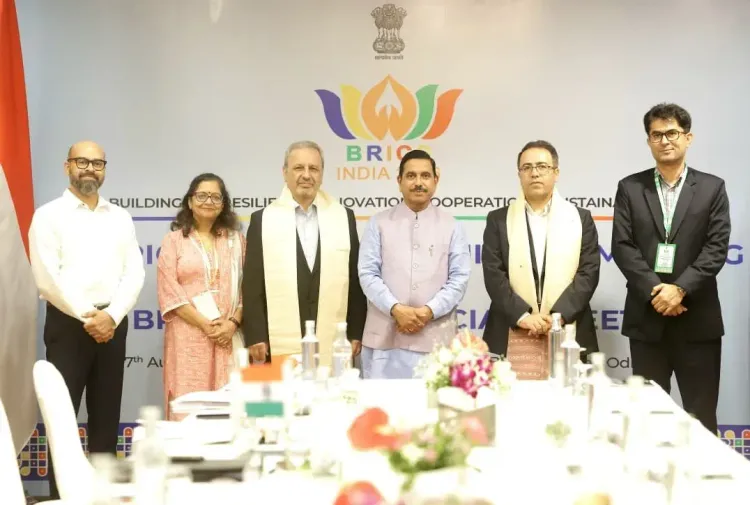
Union Minister Pralhad Joshi met Iran's Acting Science Minister Prof. Masood Shams-Bakhsh at the 13th BRICS Education Ministers' Meeting in Bhubaneswar on 6 August 2026, calling for stronger institutional, academic, and digital-education ties between India and Iran.
Key Takeaways
Pralhad Joshi held a bilateral meeting with Prof.
Masood Shams-Bakhsh , Iran's Acting Minister of Science, Research and Technology, on 6 August 2026 .
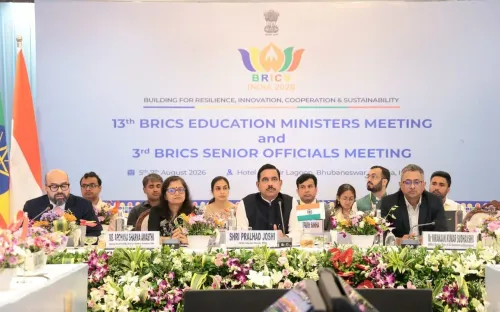
The meeting was on the sidelines of the 13th BRICS Education Ministers' Meeting in Bhubaneswar, Odisha .
Joshi cited India and Iran's 'enduring civilisational relationship' as the basis for a modern knowledge partnership.
Four priorities named: institutional linkages, academic collaboration, student and scholar opportunities, and digital education.
Both India and Iran are BRICS members, giving the grouping's sectoral meetings a new bilateral diplomatic utility.
No specific agreements or MoUs have been confirmed from the meeting yet.
On the sidelines of a landmark multilateral gathering in Bhubaneswar, Union Consumer Affairs Minister Pralhad Joshi sat down with H.E. Prof. Masood Shams-Bakhsh, Acting Minister of Science, Research and Technology of Iran — a meeting that placed an ancient civilisational bond squarely inside a 21st-century framework for knowledge and innovation.
The encounter took place on 6 August 2026 on the sidelines of the 13th BRICS Education Ministers' Meeting in Bhubaneswar, Odisha's capital. Joshi framed the exchange not as a diplomatic courtesy but as a strategic opening, pointing to the two countries' 'enduring civilisational relationship' as the foundation for a 'modern partnership in education, research, technology and innovation.'
Why Bhubaneswar, why now
BRICS education ministers have convened periodically since at least 2015, but the platform has grown considerably as the grouping itself has expanded. With both India and Iran now inside the BRICS tent, sectoral meetings like this one create a structured diplomatic channel that bilateral calendars alone rarely provide. Bhubaneswar's hosting of the 13th edition signals India's intent to anchor the grouping's educational agenda — and Joshi's bilateral pull-aside with Shams-Bakhsh was a visible expression of that ambition.Four pillars Joshi put on the table
Joshi was specific about what he wants to build. He named four concrete priorities: strengthening institutional linkages between universities and research bodies; fostering greater academic and research collaboration; expanding opportunities for students and scholars on both sides; and leveraging digital education to deepen the knowledge partnership. The framing — 'empower our youth and drive innovation-led growth' — positions the bilateral as a development tool, not merely a cultural one. India and Iran carry a long history of educational and cultural exchange that predates any multilateral forum. Persian literary and philosophical traditions shaped medieval Indian scholarship; Indian universities today host Iranian students, and vice versa. What Joshi's meeting signals is the ambition to institutionalise that organic relationship — through MoUs, exchange programmes, and digital platforms — rather than leave it to chance. The immediate watch-point is whether the Bhubaneswar meeting produces follow-up institutional agreements or student-exchange frameworks. No specific outcomes have been confirmed yet. But the ministerial-level signal has been sent — loudly, and in public. Two flags, one agenda: the next move belongs to the institutions.Point of View
Insulated from the geopolitical static around energy sanctions and regional security. The emphasis on digital education and youth empowerment also maps onto India's standard soft-power playbook, positioning New Delhi as a knowledge partner rather than just a trading one. If institutional MoUs follow, this sideline meeting will look like the quiet beginning of a structured bilateral framework.
NationPress
21 Sept 2026
Frequently Asked Questions
What happened at the BRICS Education Ministers' Meeting in Bhubaneswar 2026?
The 13th BRICS Education Ministers' Meeting was held in Bhubaneswar on 6 August 2026 . On the sidelines, Union Minister Pralhad Joshi met Iran's Acting Science Minister Prof. Masood Shams-Bakhsh to discuss academic, research, and digital-education cooperation.
Who is Prof. Masood Shams-Bakhsh?
Prof. Masood Shams-Bakhsh is the Acting Minister of Science, Research and Technology of Iran , and was representing Iran at the BRICS Education Ministers' Meeting in Bhubaneswar.
What did Pralhad Joshi propose for India-Iran education ties?
Joshi outlined four priorities: strengthening institutional linkages, fostering academic and research collaboration, expanding opportunities for students and scholars , and leveraging digital education to deepen the bilateral knowledge partnership.
Is Iran a member of BRICS?
Yes, Iran is a member of BRICS , which has expanded beyond its original members to include several new countries. Both India and Iran participate in BRICS sectoral ministerial meetings.
What is the significance of India-Iran civilisational ties in education?
India and Iran share centuries of literary, philosophical, and scholarly exchange predating modern diplomacy. Joshi invoked this 'enduring civilisational relationship' as the foundation for building a structured, modern partnership in research and innovation.