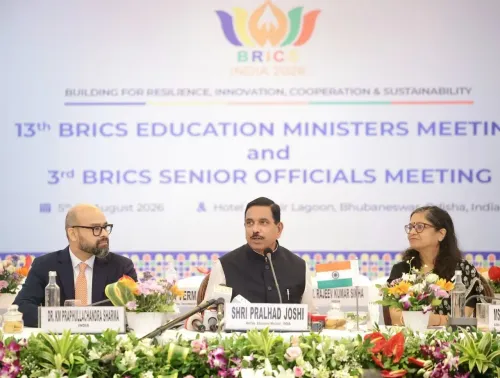
Pralhad Joshi Inaugurates BRICS Standards Meet in Bengaluru
Synopsis
Union Minister Pralhad Joshi on 16 July 2026 inaugurated the BRICS Heads of National Standards Bodies Meeting in Bengaluru, calling for inclusive and transparent global standards under India's BRICS Chairship 2026 theme of 'Building for Resilience, Innovation, Cooperation and Sustainability.'
Key Takeaways
Pralhad Joshi inaugurated the BRICS Heads of National Standards Bodies Meeting in Bengaluru on 16 July 2026 .
India is hosting the event under its BRICS Chairship 2026 , with the theme 'Building for Resilience, Innovation, Cooperation and Sustainability.' The two-day meeting aims to align standards across BRICS nations to facilitate trade, foster innovation and strengthen consumer confidence.
Deeper BRICS standardization cooperation is seen as critical as emerging technologies such as AI and 5G reshape the global economy.
India's Bureau of Indian Standards (BIS) , under Joshi's ministry, is a key institutional stakeholder in the outcomes.
A joint statement or work plan from the Bengaluru meeting is expected to shape BRICS standards cooperation through the rest of 2026 .
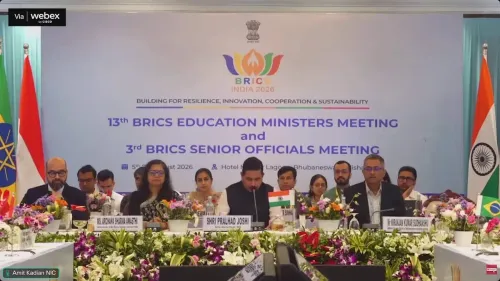
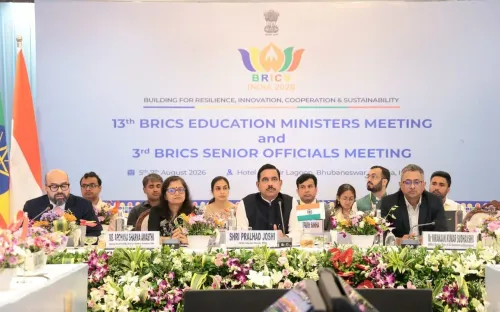
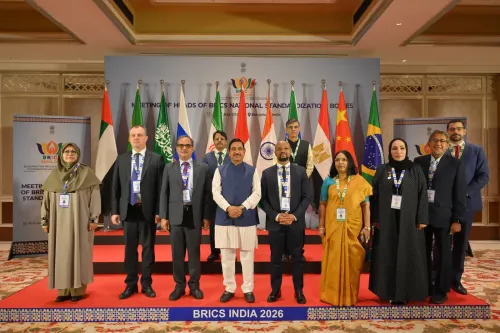
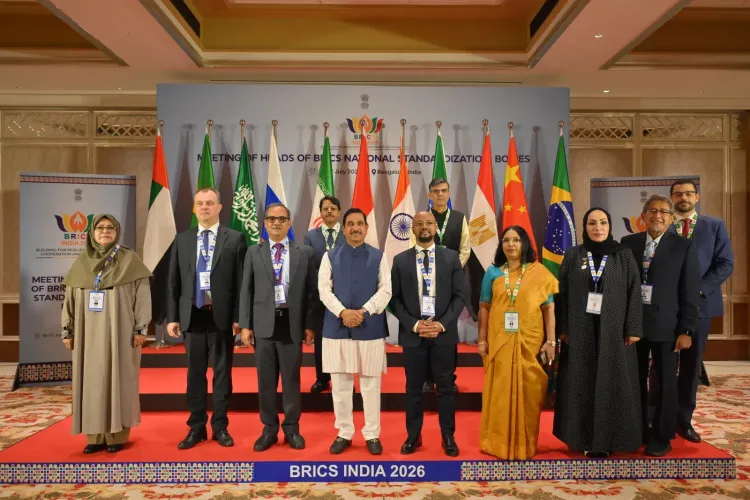
Union Consumer Affairs Minister Pralhad Joshi on Thursday, 16 July 2026, inaugurated the BRICS Heads of National Standards Bodies Meeting in Bengaluru, welcoming delegates from member nations as India exercises its BRICS Chairship 2026.
Context
The two-day gathering brings together the chiefs of national standards bodies from across the BRICS grouping — an alliance of major emerging economies — to deliberate on shared frameworks for trade, technology and sustainable development. Joshi, posting in both English and Kannada on X, described the occasion as a moment of pride: 'ಭಾರತದ 2026ರ ಬ್ರಿಕ್ಸ್ ಅಧ್ಯಕ್ಷತೆಯಡಿಯಲ್ಲಿ ಈ ಪ್ರಮುಖ ಸಭೆಯನ್ನು ಆತಿಥ್ಯ ವಹಿಸುತ್ತಿರುವುದು ಹೆಮ್ಮೆಯ ಕ್ಷಣ' [hosting this important meeting under India's 2026 BRICS Chairship is a moment of pride]. Bengaluru, Karnataka's technology capital, was selected as the venue, underscoring the city's growing role as India's hub for international standards and innovation events.
Policy Backdrop
The meeting is anchored to the theme 'Building for Resilience, Innovation, Cooperation and Sustainability' — an acronym that mirrors BRICS itself. Joshi reaffirmed a collective commitment to developing 'inclusive, transparent and globally relevant standards that facilitate trade, foster innovation, strengthen consumer confidence and support sustainable development.' BRICS members have over recent years steadily expanded technical cooperation on standards, metrology and conformity assessment, partly to reduce dependence on frameworks historically shaped by developed economies through bodies such as ISO and IEC. The push gains urgency as emerging technologies — artificial intelligence, 5G and green manufacturing — demand new rulebooks that reflect the interests of the Global South.
India previously held the BRICS chairmanship in 2021, using that platform to advance cooperation on trade and digital standards. Hosting the standards bodies' heads meeting in 2026 signals a continuation of that strategic thread, with New Delhi seeking to position Indian standards institutions as rule-shapers rather than rule-takers in the evolving global order.
Stakeholders and Impact
The deliberations directly concern exporters across BRICS economies who navigate divergent certification and conformity requirements that raise costs and slow market access. Aligning standards among member nations could lower non-tariff barriers and open smoother corridors for goods ranging from electronics to pharmaceuticals. Consumers stand to benefit from clearer, internationally benchmarked product safety norms, while national standards bodies — including India's Bureau of Indian Standards (BIS), which Joshi's ministry oversees — gain greater voice in shaping global technical norms. For India specifically, a stronger BRICS standards architecture complements broader ambitions around 'Make in India' and export competitiveness.
What's Next
The meeting is scheduled to run over two days in Bengaluru, with Joshi expressing confidence that deliberations will 'further strengthen our partnership and pave the way for meaningful outcomes that benefit our economies and our people.' Observers will watch for a possible joint statement or agreed work plan that could set the agenda for BRICS standards cooperation through the remainder of India's chairship year. Any framework emerging from Bengaluru is likely to feed into the broader BRICS ministerial and summit calendar for 2026, potentially shaping how member nations coordinate on technology standards in sectors critical to their economic futures.
Point of View
The government is linking domestic consumer-protection institutions directly to the global standards agenda, a move that elevates the Bureau of Indian Standards beyond its traditional domestic remit. The 'BRICS versus ISO' subtext is increasingly explicit: emerging economies are building parallel standard-setting architecture to gain rule-making leverage in AI, green tech and advanced manufacturing. For India, the 2026 chairship is a strategic window to embed its preferences into frameworks that will govern trade for decades.
NationPress
15 Oct 2026
Frequently Asked Questions
What is the BRICS Heads of National Standards Bodies Meeting?
It is a gathering of the chiefs of national standards bodies from BRICS member countries, convened to align technical standards, reduce trade barriers and coordinate on emerging technology regulations across member economies.
Why is India hosting the BRICS standards meeting in 2026?
India holds the BRICS Chairship in 2026, which gives it the responsibility and privilege of hosting key BRICS meetings, including the standards bodies summit in Bengaluru on 16 July 2026.
What is the theme of the BRICS 2026 standards meeting?
The theme is 'Building for Resilience, Innovation, Cooperation and Sustainability,' which reflects the collective commitment of BRICS nations to develop inclusive and globally relevant standards.
What role does Pralhad Joshi play in this meeting?
As Union Minister of Consumer Affairs, Food and Public Distribution, Pralhad Joshi oversees India's Bureau of Indian Standards and inaugurated the BRICS Heads of National Standards Bodies Meeting in Bengaluru on 16 July 2026.
How does BRICS standards cooperation affect Indian exporters and consumers?
Aligned BRICS standards can lower non-tariff trade barriers for Indian exporters and establish clearer product safety benchmarks for consumers, making Indian goods more competitive in member-country markets.