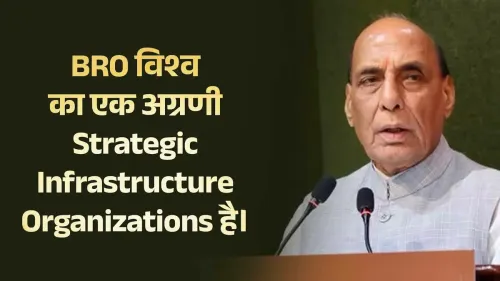
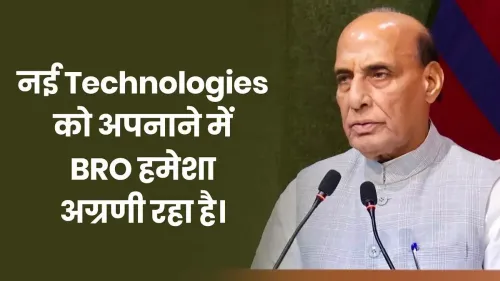
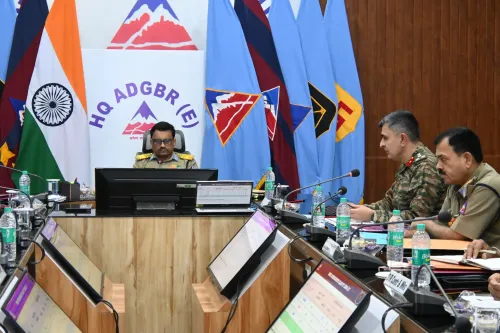
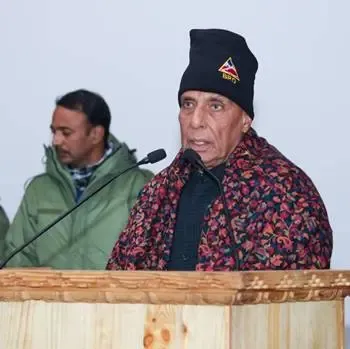
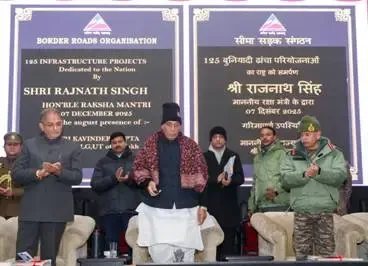
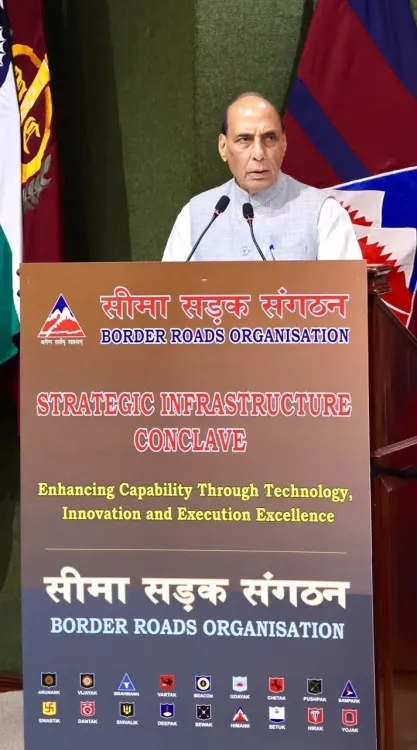
Rajnath Singh at BRO Strategic Infrastructure Conclave in Delhi
Synopsis
Union Defence Minister Rajnath Singh attended the BRO Strategic Infrastructure Conclave in New Delhi on July 16, 2026, calling for stronger border infrastructure through technology, innovation, and self-reliance, and congratulating BRO award winners for their contributions.
Key Takeaways
Rajnath Singh attended the BRO Strategic Infrastructure Conclave in New Delhi on July 16, 2026 .
The conclave focused on technology, innovation, digital transformation, and execution excellence in strategic infrastructure.
The minister expressed confidence that partnerships from the conclave will enhance India's national capabilities.
BRO , established in 1960 , has seen accelerated project activity since the 2017 Doklam and 2020 Galwan incidents.
The conclave aligns with the Atmanirbhar Bharat push for self-reliance in defence and strategic sectors.
Award winners were felicitated for exemplary dedication and outstanding contributions to border infrastructure.
Union Defence Minister Rajnath Singh attended the Strategic Infrastructure Conclave organised by the Border Roads Organisation (BRO) in New Delhi on Thursday, July 16, 2026, reaffirming the government's commitment to strengthening India's strategic border infrastructure through technology, innovation, and digital transformation.
Context
The conclave, organised by BRO — the Ministry of Defence's statutory body responsible for constructing and maintaining roads and infrastructure in India's border areas — brought together stakeholders to deliberate on accelerating strategic infrastructure development. Rajnath Singh described the event as a reaffirmation of 'collective resolve' to advance national capabilities through execution excellence and partnerships.
Addressing the gathering, the minister expressed confidence that 'the ideas and partnerships fostered during the conclave will further enhance our national capabilities.' He also congratulated award winners for their 'exemplary dedication and outstanding contributions,' extending best wishes to Team BRO as it works toward 'a stronger, safer and self-reliant India.'
Policy Backdrop
The Border Roads Organisation was established in 1960 in the aftermath of tensions on India's northern frontiers, with a mandate to build roads through difficult, high-altitude terrain along the border. Its role gained renewed urgency following the 2017 Doklam standoff and the 2020 Galwan Valley clash, after which the government significantly accelerated border road projects, including the strategically critical Darbuk-Shyok-DBO road in eastern Ladakh.
The conclave's emphasis on technology, digital transformation, and private partnerships aligns with the broader Atmanirbhar Bharat initiative — launched in 2020 — which seeks to build indigenous capabilities across defence production and strategic infrastructure. Integration of digital tools and innovation in BRO projects has been a consistent policy priority in recent budget cycles.
Stakeholders and Impact
The primary beneficiaries of enhanced border infrastructure include the Indian Army and other defence forces, which depend on all-weather roads for rapid troop movement and logistics in remote, high-altitude zones. Border-area civilian populations also benefit from improved connectivity, access to essential services, and economic integration with the rest of the country.
BRO engineers and private-sector partners working on strategic projects stand to gain from the technology and innovation frameworks discussed at the conclave. Recognition of award winners signals an institutional effort to incentivise high performance and dedication among the organisation's workforce.
What's Next
Attention will now turn to BRO's project completion timelines and the degree to which technology adoption translates into measurable acceleration of road-building in difficult terrain. The next Union Defence Budget cycle will be a key indicator of whether funding commitments match the ambitions articulated at the conclave.
Parliamentary scrutiny of border infrastructure spending and progress on pending projects along the Line of Actual Control (LAC) is also likely, as lawmakers and strategic analysts track the government's delivery on its infrastructure commitments in sensitive frontier zones.
Point of View
Private partnership, and digital tools — a transformation the government has been signalling since the post-Galwan infrastructure push. Rajnath Singh's personal attendance and public endorsement lend political weight to that agenda, reinforcing that border infrastructure remains a top-tier national security priority. The emphasis on 'self-reliance' is a deliberate echo of the Atmanirbhar Bharat framework, extending it explicitly into the strategic infrastructure domain. How quickly BRO translates conclave-level intent into completed kilometres of road will be the real measure of this policy commitment.
NationPress
16 Jul 2026
Frequently Asked Questions
What is the BRO Strategic Infrastructure Conclave?
The BRO Strategic Infrastructure Conclave is an event organised by the Border Roads Organisation to bring together stakeholders — including government, defence, and industry — to discuss advancing India's strategic border infrastructure through technology, innovation, and partnerships.
What did Rajnath Singh say at the BRO conclave?
Rajnath Singh said the conclave reaffirmed India's collective resolve to strengthen strategic infrastructure through technology, innovation, digital transformation, and execution excellence, and expressed confidence that partnerships from the event would enhance national capabilities.
What is the Border Roads Organisation (BRO)?
The Border Roads Organisation is a statutory body under India's Ministry of Defence, established in 1960, responsible for constructing and maintaining roads and strategic infrastructure in India's border and remote areas.
How does the BRO conclave relate to Atmanirbhar Bharat?
The conclave's focus on technology, digital transformation, and private partnerships directly aligns with the Atmanirbhar Bharat initiative launched in 2020, which promotes indigenous capabilities in defence production and strategic infrastructure.
Why has India accelerated border road construction in recent years?
India significantly accelerated border road projects following the 2017 Doklam standoff and the 2020 Galwan Valley clash, prioritising rapid military mobility and logistics along the Line of Actual Control, including projects such as the Darbuk-Shyok-DBO road in eastern Ladakh.