Is the BRO Targeting Infrastructure Projects Worth Rs 17,900 Crore in Border Areas?

Synopsis
The Border Roads Organisation is making significant strides in infrastructure development, targeting an ambitious Rs 17,900 crore for the next fiscal year. As they focus on connecting remote areas, BRO’s initiatives hold the promise of enhanced national security and socio-economic growth.
Key Takeaways
BRO's budget for FY 2025-26 is Rs 17,900 crore.
The organization has 18 active field projects across India.
Infrastructure includes roads, bridges, tunnels, and airfields.
Projects enhance both military and civilian infrastructure.
Strategic initiatives are vital for national security and development.
New Delhi, Jan 19 (NationPress) The Border Roads Organisation (BRO) has recorded its highest financial allocation, reaching Rs 16,690 crore for the financial year 2024-25, aimed at the construction and upkeep of vital roads, bridges, tunnels, and airfields across the nation. The organization is set to maintain this upward trend, establishing a target of Rs 17,900 crore for FY 2025-26, as stated in an official announcement released on Monday.
BRO is responsible for developing and maintaining infrastructure in both border and hard-to-reach areas to fulfill military and civilian requirements, operating 18 active field projects. These projects are distributed as follows: nine in North West India (including J&K, Ladakh, Himachal Pradesh, Uttarakhand, and Rajasthan), eight in North East and Eastern India (such as Sikkim, Arunachal Pradesh, Nagaland, Mizoram, and Meghalaya), and one in Bhutan.
The projects focus on engineering and executing strategic infrastructure across 11 States and 3 Union Territories. They encompass large-scale developments including roads, bridges, tunnels, and airfields, supported by tele-medicine nodes, all aimed at enhancing both national security and socio-economic advancement through initiatives like the Act East Policy and the Vibrant Villages Programme, the statement elaborated.
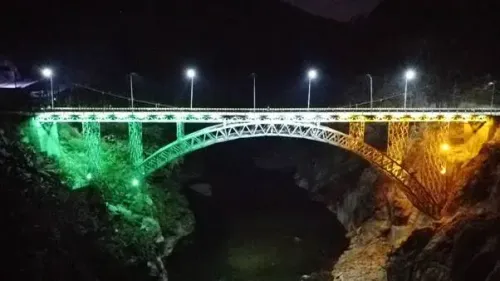
In Arunachal Pradesh, projects such as Vartak, Arunank, Udayak, and Brahmank address some of India’s most formidable frontiers, connecting remote villages to the Line of Actual Control (LAC) through essential infrastructure like the Sisseri Bridge, Siyom Bridge, Sela Tunnel, and Nechiphu Tunnel.
In Ladakh, initiatives including Himank, Beacon, Deepak, Vijayak, and Yojak maintain crucial links to Kargil, Leh, and the Karakoram region, traversing key routes such as the Srinagar–Leh highway, Darbuk–Shyok–DBO (DS‑DBO) Road, Atal Tunnel, and the ongoing Shinku La Tunnel, ensuring all-weather accessibility.
The Northeast region benefits from projects like Swastik in Sikkim, Pushpak in Mizoram, Setuk in Assam and Meghalaya, and Sewak in Nagaland and Manipur, which enhance regional connectivity. Along the western borders, projects like Sampark in Jammu and Chetak in Rajasthan improve strategic mobility.
Beyond the Himalayas, the Shivalik project guarantees dependable access to the Char Dham Yatra in Uttarakhand, while Hirak enhances connectivity in areas affected by Left-Wing Extremism in Chhattisgarh.
Lastly, Dantak, BRO’s operational branch in Bhutan, strengthens bilateral relations through extensive infrastructure projects involving roads and bridges. Collectively, these efforts demonstrate BRO’s steadfast dedication to national security, strategic readiness, and regional growth, the statement concluded.
Point of View
I acknowledge that the Border Roads Organisation’s initiatives represent a significant commitment to national security and regional development. This strategic enhancement of infrastructure in border areas is essential for both military readiness and improving the quality of life for residents in these regions. It is imperative that we continue to support such efforts to ensure a secure and connected nation.
NationPress
5 Oct 2026
Frequently Asked Questions
What is the total budget targeted by BRO for FY 2025-26?
The Border Roads Organisation (BRO) has set a target of Rs 17,900 crore for the financial year 2025-26.
How many field projects does BRO currently manage?
BRO currently oversees 18 active field projects across various regions.
What types of infrastructure does BRO focus on?
BRO focuses on the construction and maintenance of strategic roads, bridges, tunnels, and airfields .
Which regions are included in BRO's infrastructure projects?
BRO's projects span across 11 States and 3 Union Territories in India.