Pralhad Joshi Marks World Environment Day 2026
Synopsis
Union Minister Pralhad Joshi marked World Environment Day on 5 June 2026 with a bilingual English-Kannada appeal for tree planting, resource conservation, and forest protection, reinforcing India's Panchamrit climate pledges and the government's broader sustainability agenda.
Key Takeaways
Union Minister Pralhad Joshi posted a World Environment Day message on 5 June 2026 in English and Kannada.
He called for tree planting, resource conservation, and sustainable choices to secure a greener future for coming generations.
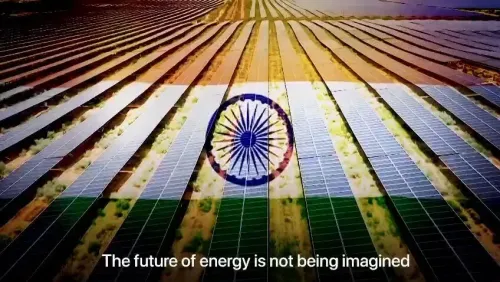
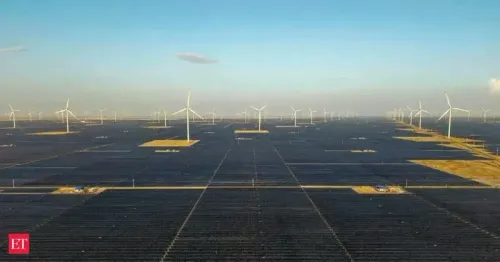
Joshi's renewable energy portfolio ties directly to India's Panchamrit pledge of 500 GW non-fossil fuel capacity by 2030 .
India's Mission LiFE (2022) and the National Action Plan on Climate Change (2008) form the policy backdrop for such environmental messaging.
The bilingual post signals outreach to both national and Karnataka -based audiences on environmental responsibility.
State afforestation targets for 2026-27 and possible amendments to the Environment Protection Act are the next policy milestones to watch.
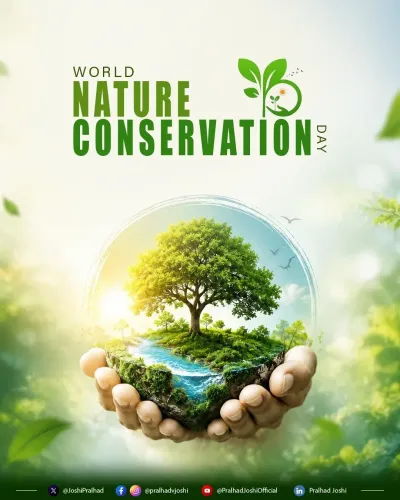
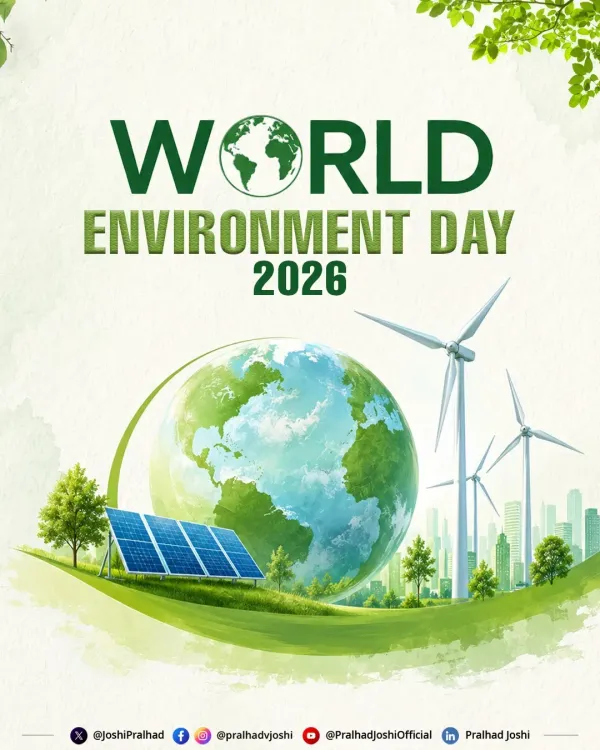
Union Consumer Affairs and New and Renewable Energy Minister Pralhad Joshi on Friday, 5 June 2026 marked World Environment Day by calling on citizens to renew their commitment to environmental protection, sustainable development, and forest conservation for future generations.
Posting on X in both English and Kannada, Joshi wrote: 'On #WorldEnvironmentDay, let us reaffirm our commitment to protecting and preserving our planet for future generations. Every tree planted, every resource conserved and every sustainable choice made today brings us closer to a greener, cleaner and healthier tomorrow.' In Kannada, he extended greetings to all — ಸರ್ವರಿಗೂ ವಿಶ್ವ ಪರಿಸರ ದಿನಾಚರಣೆಯ ಶುಭಾಶಯಗಳು ('World Environment Day greetings to all') — and underlined that protecting and growing forests is the responsibility of every individual.
Context
World Environment Day, observed every year on 5 June, is the United Nations' principal vehicle for encouraging global awareness and action for the protection of the environment. The day draws participation from governments, civil society, and individuals across more than 143 countries. For India, the occasion has consistently served as a platform to restate domestic and international environmental commitments. Joshi's message carries added institutional weight given his dual portfolio. As Minister of New and Renewable Energy, he oversees India's push toward 500 GW of non-fossil fuel power capacity by 2030 — a cornerstone pledge made at COP26 in Glasgow in 2021 under India's Panchamrit climate strategy. His consumer affairs mandate connects consumption behaviour directly to sustainability goals.Policy Backdrop
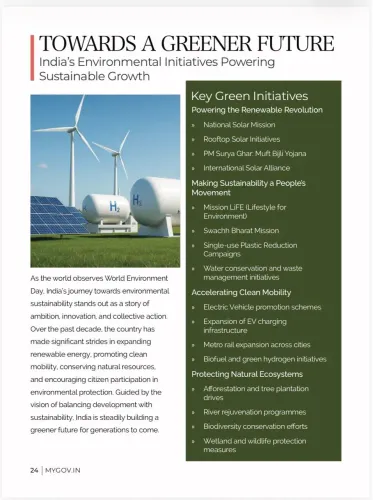
India's environmental policy architecture spans nearly two decades. The National Action Plan on Climate Change (2008) established eight national missions covering solar energy, sustainable agriculture, and forest conservation. The Swachh Bharat Mission (2014) incorporated waste management and cleanliness as environmental imperatives. More recently, Mission LiFE (2022), championed by Prime Minister Narendra Modi, promoted individual behavioural change for sustainable consumption — closely mirroring the spirit of Joshi's World Environment Day message. Afforestation has been a recurring theme in India's climate commitments. The Panchamrit pledges include increasing India's forest and tree cover to create an additional carbon sink of 2.5 to 3 billion tonnes of CO2 equivalent by 2030. Joshi's call to 'save and grow forests' aligns directly with this national target.Stakeholders and Impact
The minister's bilingual message — in English and Kannada, the language of his home state Karnataka — signals an effort to reach both a national audience and constituents in southern India. State forest departments, afforestation programme administrators, and citizen volunteer groups are among the direct stakeholders who typically mobilise around World Environment Day through tree-plantation drives and awareness campaigns. For ordinary citizens, the message reinforces the government's consistent framing that environmental responsibility is a shared individual and collective duty, not solely a state obligation. The renewable energy ministry's ongoing programmes — from rooftop solar to green hydrogen — provide the policy scaffolding behind such public messaging.What's Next
Attention will now turn to state-level afforestation targets for 2026-27 and whether the upcoming monsoon session of Parliament will take up proposed amendments to the Environment Protection Act. World Environment Day statements from senior ministers often precede or accompany the announcement of fresh green initiatives, making the weeks following 5 June a watch period for environment-linked policy moves from New Delhi. As India advances toward its 2070 net-zero deadline, annual observances such as this serve as public accountability moments — reminding both policymakers and citizens of the long arc of commitments made on the global stage.Point of View
While the substance maps neatly onto India's Panchamrit commitments at COP26. His unique position overseeing both consumer affairs and renewable energy allows the government to present environmental responsibility as a continuum — from individual consumption choices to grid-scale clean energy. The message also serves as a soft accountability marker, reminding domestic audiences of India's 2030 and 2070 climate targets ahead of what could be a significant monsoon session for environmental legislation. Annual observance posts of this kind, while ceremonial in tone, function as low-cost, high-visibility reinforcement of the BJP government's green-growth narrative.
NationPress
20 Oct 2026
Frequently Asked Questions
Why did Pralhad Joshi post a message on World Environment Day 2026?
As Union Minister for New and Renewable Energy, Joshi marked World Environment Day on 5 June 2026 to reaffirm India's environmental commitments and encourage citizens to plant trees, conserve resources, and protect forests.
What is World Environment Day and when is it observed?
World Environment Day is a United Nations global observance held every year on 5 June to promote awareness and action for environmental protection, with participation from over 143 countries including India.
What are India's Panchamrit climate pledges?
India's Panchamrit pledges, announced at COP26 in Glasgow in 2021, include achieving 500 GW of non-fossil fuel power capacity by 2030, reaching net-zero emissions by 2070, and expanding forest cover to create a carbon sink of 2.5 to 3 billion tonnes of CO2 equivalent.
What is Mission LiFE and how does it relate to environment protection?
Mission LiFE, launched in 2022, is a government initiative that promotes individual and community behavioural changes for sustainable consumption and resource conservation, directly supporting India's broader environmental and climate goals.
What environmental policy developments should be watched after World Environment Day 2026?
Key items to monitor include state-level afforestation targets for 2026-27 and any parliamentary discussion on amendments to the Environment Protection Act during the upcoming monsoon session of Parliament.