Pralhad Joshi Calls for Conservation, Clean Energy on Nature Day
Synopsis
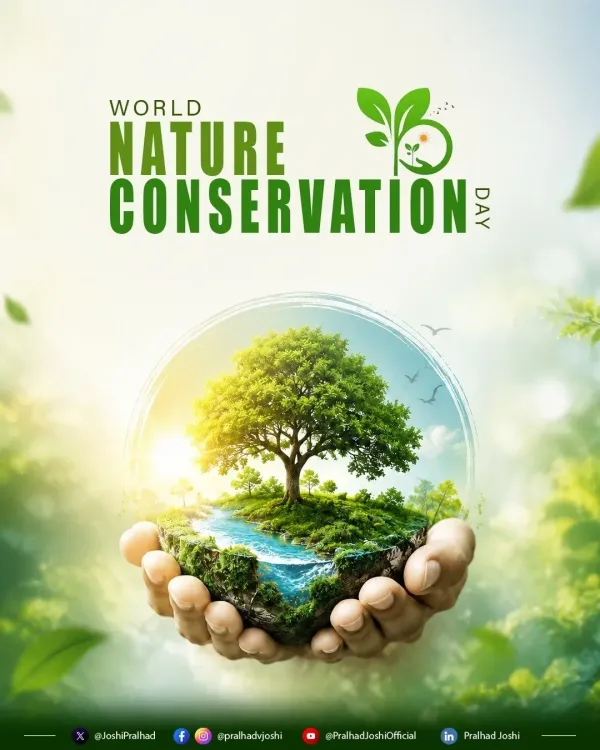
Union Minister Pralhad Joshi used World Nature Conservation Day on 28 July 2026 to call for protecting India's natural resources and championing clean energy, posting a bilingual English-Kannada message that links environmental conservation directly to the country's renewable energy ambitions.
Key Takeaways
Pralhad Joshi , Union Minister for New and Renewable Energy, posted a bilingual message on 28 July 2026 for World Nature Conservation Day .
He called for conservation of land, water, forests, and biodiversity, framing it as every citizen's responsibility.
The minister explicitly linked clean energy solutions to environmental preservation, reflecting India's Panchamrit climate commitments from COP26 (2021) .
India has a stated target of 500 GW non-fossil fuel energy capacity by 2030 and net-zero emissions by 2070 .
The post was written in both English and Kannada, signalling outreach to Joshi's home state of Karnataka alongside a national audience.
Union Consumer Affairs and New and Renewable Energy Minister Pralhad Joshi on Tuesday, 28 July 2026, marked World Nature Conservation Day by urging citizens to renew their commitment to protecting India's natural heritage and accelerating the shift to clean energy, posting his message in both English and Kannada on X.
Context
World Nature Conservation Day, observed every year on 28 July, is a global call to action on the sustainable use of natural resources, biodiversity protection, and climate-responsible living. Joshi's post tied the observance directly to India's renewable energy agenda, framing clean power not as a trade-off against development but as its enabler.
In English, the minister wrote: 'A thriving planet begins with responsible choices. Let us renew our pledge to conserve our natural heritage and champion clean energy solutions that power progress while preserving the environment.' In Kannada, he added — ಪ್ರಕೃತಿಯನ್ನು ಕಾಪಾಡುವುದು ನಮ್ಮ ಭವಿಷ್ಯವನ್ನು ಕಾಪಾಡಿದಂತೆಯೇ [Protecting nature is the same as protecting our future] — and called on all citizens to work in unity toward a 'green, clean and prosperous earth for coming generations.'
Policy Backdrop
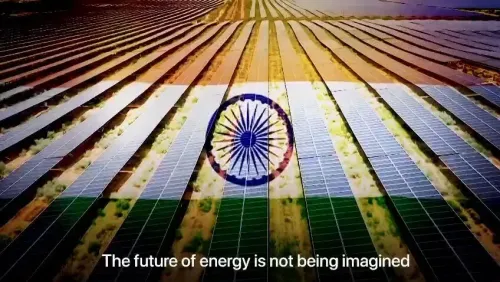
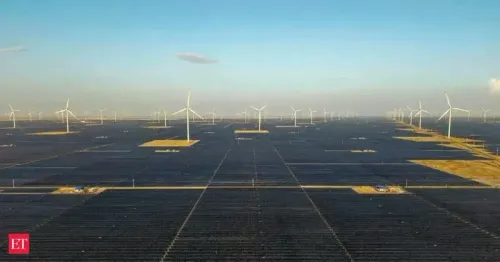
Joshi's emphasis on clean energy reflects India's broader Panchamrit climate commitments made at COP26 in 2021, which include achieving 500 GW of non-fossil fuel energy capacity by 2030 and reaching net-zero emissions by 2070. As the minister responsible for New and Renewable Energy, Joshi sits at the centre of efforts to meet those targets through solar, wind, and green hydrogen expansion.
India co-launched the International Solar Alliance with France in 2015 to drive solar deployment across sun-rich nations — an initiative that has since grown into a multilateral framework involving over 120 countries. Conservation policy has run in parallel, with successive governments expanding forest cover programmes and tightening environmental compliance frameworks alongside industrial growth.
Stakeholders and Impact
The message is directed at the general public, but its policy subtext speaks to the renewable energy sector, state governments managing forest and water resources, and India's international climate partners. By linking conservation with clean energy in a single statement, Joshi signals that the ministry views the two agendas as inseparable rather than competing priorities.
The Kannada-language portion of the post — stressing the conservation of ಭೂಮಿ, ಜಲ, ಅರಣ್ಯ, ಜೀವ ವೈವಿಧ್ಯತೆ [land, water, forests, and biodiversity] — also carries a regional resonance for Karnataka, a state with significant forest cover, river systems, and a rapidly expanding renewable energy footprint.
What's Next
Progress on India's 500 GW renewable capacity target and any new conservation schemes tabled in Parliament or announced at upcoming COP sessions will be watched closely as indicators of whether the rhetoric of this observance translates into policy action. Joshi's ministry is expected to remain a key driver of both clean energy rollout and the regulatory environment around natural resource use in the months ahead.
Point of View
But its framing is politically deliberate: by yoking nature conservation to clean energy in a single breath, the minister reinforces the BJP-led government's narrative that economic growth and environmental stewardship are complementary rather than contradictory. For a minister who oversees both renewable energy targets and consumer welfare, the statement serves as a soft reminder of India's COP26 commitments at a time when progress toward the 500 GW goal faces scrutiny. The Kannada-language addition also reflects the political calculus of a senior Karnataka leader maintaining regional identity while holding a national portfolio. Taken together, the post is less about the day itself and more about anchoring the ministry's identity within India's broader green-growth story.
NationPress
27 Oct 2026
Frequently Asked Questions
What is World Nature Conservation Day and when is it observed?
World Nature Conservation Day is observed every year on 28 July to promote awareness about protecting natural resources, biodiversity, and sustainable living practices.
What did Pralhad Joshi say on World Nature Conservation Day 2026?
Pralhad Joshi called on citizens to 'renew our pledge to conserve our natural heritage and champion clean energy solutions that power progress while preserving the environment,' posting in both English and Kannada.
What is India's renewable energy target by 2030?
India has committed to achieving 500 GW of non-fossil fuel energy capacity by 2030 as part of its Panchamrit climate goals announced at COP26 in 2021.
What ministry does Pralhad Joshi head?
Pralhad Joshi is the Union Minister of Consumer Affairs, Food and Public Distribution, and the Minister of New and Renewable Energy. He is a senior BJP leader from Karnataka.
What is the International Solar Alliance?
The International Solar Alliance is a multilateral initiative co-launched by India and France in 2015 to promote solar energy deployment among sun-rich countries, now involving over 120 member nations.