IIT Madras CeRAI White Paper: AI reshapes jobs, not replaces them, urges India-specific research
Synopsis
IIT Madras's responsible AI centre has released a White Paper dismantling the 'will AI take your job?' binary and replacing it with a four-level taxonomy of task, job, occupation, and labour-market outcome. Drawing on sectors from BPO to sanitation, it finds every job studied had to be reimagined — not eliminated — and warns that without India-specific research and structured transition support, the workers bearing the cost of that reimagining will be left without a safety net.
Key Takeaways
CeRAI-IITM released a White Paper on 26 October 2026 arguing AI reshapes jobs through task-level change, not wholesale replacement.
The paper proposes a four-level framework (task, job, occupation, labour-market outcome) and two broad impact regimes for Indian workers.
Evidence was drawn from seven sectors : BPO, manufacturing, MSMEs, sanitation, financial services, law, and software engineering.
Five reasons for AI adoption are identified — cost, capability, regulation, safety, and quality — each requiring a distinct policy response .
The paper calls for India-specific labour-market research , continued AI diffusion, and structured worker-transition pathways .
A pipeline risk is flagged: if AI absorbs entry-level work, organisations may struggle to develop the next generation of domain experts .
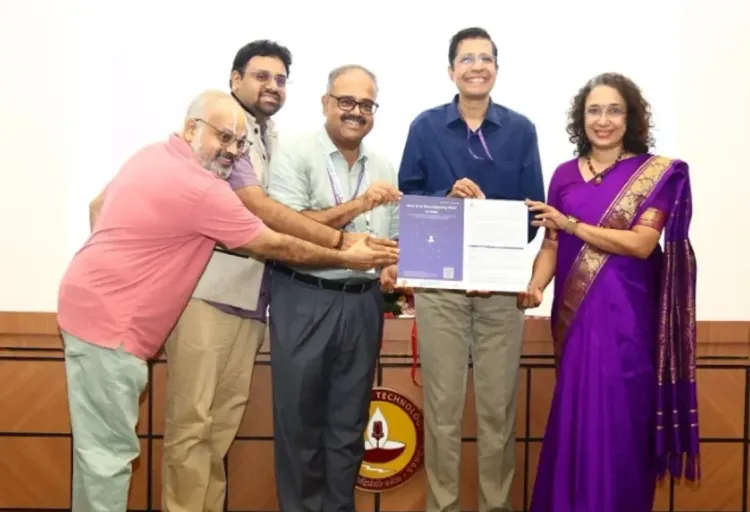
The Centre for Responsible AI at IIT Madras (CeRAI-IITM) has released a White Paper arguing that artificial intelligence is reshaping India's labour market through task-level transformation rather than wholesale job elimination — and calling on employers, workers, and policymakers to stop treating every instance of AI-driven change as a single, uniform story.
Key Argument: A Taxonomy, Not a Binary
The paper's central thesis challenges the dominant public narrative around AI and employment. 'Public debate on AI and Indian employment tends to compress a complicated phenomenon into a single binary: Will AI take a given job, or not?' the document states. 'This paper argues that the accurate picture is a taxonomy rather than a binary. AI rarely replaces a job wholesale; more often it automates a bundle of tasks within a job, and the size of that bundle varies with task structure, sector, regulatory setting, and, distinctively in India's case, the economics of AI access itself.'
To address this complexity, the researchers propose a four-level analytical framework spanning task, job, occupation, and labour-market outcome. Indian jobs are classified into two broad regimes: those where AI has automated most of the skill bundle — leaving the human largely as a validator — and those where the human remains the primary driver and AI functions as a productivity tool. Each regime is further broken down into policy-relevant sub-types.
Sectors Examined and What They Reveal
Drawing on evidence from business process outsourcing (BPO), manufacturing, MSMEs, sanitation, financial services, law, and software engineering, the researchers found that every job studied had to be reimagined — through task-level augmentation, task reallocation, or the creation of genuinely new roles built around operating AI systems — rather than simply eliminated or left unchanged.
The paper identifies five recurring reasons why organisations are adopting AI: cutting costs, reaching capabilities available only through frontier-grade AI, meeting regulatory requirements, improving safety by removing humans from hazardous work, and correcting service quality after earlier failed automation attempts. Notably, each reason, according to the researchers, demands a distinct policy response rather than a one-size-fits-all approach.
Policy Recommendations: Three-Pronged Approach
The paper closes with a distributional analysis of who bears the costs of workplace reimagining and outlines three policy priorities: continuing to encourage AI diffusion across the economy, investing in India-specific labour-market research, and pairing AI adoption with structured worker-transition pathways. 'Each reason calls for a different response. Cost-driven automation needs support for workers in transition, and vigilance against over-automation. Capability-driven automation needs investment to make frontier-grade AI more affordable, not just more available,' the document states.
The researchers further warn that regulation-driven automation needs clear liability rules set up in advance, safety-driven automation should not be contingent on cost savings, and quality-driven automation rollbacks need 'humility about how far automation can be pushed before it breaks.'
A Long-Term Warning on Expertise and the Pipeline Problem
One of the paper's more pointed observations concerns the reproduction of expertise. If AI absorbs much of the entry-level work through which people have historically acquired domain knowledge and judgment, the researchers ask, how will organisations develop the next generation of human reviewers, supervisors, and experts? This so-called 'pipeline problem' is flagged as a long-term structural risk that current policy frameworks have yet to address.
The paper also notes that as AI evolves from assisting on individual tasks to executing bounded decisions and entire workflows, the unit of change may itself shift from the task to the workflow level — making continuous reassessment essential.
What Comes Next
The White Paper is described as the first step in a broader research programme. Subsequent work under CeRAI-IITM will include systematic evidence reviews, sector- and work-profile analysis, and primary field research with employers and workers across areas such as education and healthcare. Future studies will also connect with CeRAI's ongoing research on AI governance, responsible AI principles, and a public perception study conducted with CMC. 'Multiple AI stories are unfolding across the Indian labour market at once, and the right response depends on knowing which one is in front of you,' the researchers concluded.
Point of View
Already stretched, has no ready answer to that. The three-pronged policy prescription is reasonable but carries an implicit tension — encouraging faster AI diffusion while simultaneously building worker-transition support demands coordination between industry, government, and academia that India has historically struggled to sustain.
NationPress
27 Oct 2026
Frequently Asked Questions
What does the IIT Madras White Paper on AI and jobs say?
The White Paper from CeRAI-IITM argues that AI does not replace jobs wholesale but instead automates specific task bundles within jobs, requiring roles to be reimagined rather than eliminated. It proposes a four-level framework and classifies Indian job impacts into two broad regimes based on how much of the skill bundle AI has absorbed.
Which sectors did the IIT Madras researchers study?
The paper draws on evidence from seven sectors: business process outsourcing, manufacturing, MSMEs, sanitation, financial services, law, and software engineering. In every case studied, the researchers found that jobs had to be reimagined through task-level augmentation, reallocation, or new roles built around operating AI systems.
What are the policy recommendations in the White Paper?
The paper recommends three actions: continuing to encourage AI diffusion across India's economy, investing in India-specific labour-market research, and pairing AI adoption with structured worker-transition pathways. It also calls for tailored responses to the five distinct reasons organisations adopt AI — cost, capability, regulation, safety, and quality.
What is the pipeline problem raised in the paper?
The pipeline problem refers to the risk that if AI absorbs most entry-level work — through which workers historically acquire domain knowledge and judgment — organisations may struggle to develop future human reviewers, supervisors, and experts. The paper flags this as a long-term structural challenge that current policy has not addressed.
Is the IIT Madras AI White Paper a completed study or the start of a larger project?
It is the first step in a broader research programme. Subsequent work will include systematic evidence reviews, sector-level analysis, and field research with employers and workers, including in education and healthcare. Future studies will also connect with CeRAI's ongoing AI governance and public perception research.