AI hasn't made hard work optional, says IIT Kharagpur professor

Synopsis
A senior IIT Kharagpur professor has issued a pointed corrective to students tempted to let AI do their thinking: the technology lowers friction but cannot manufacture understanding. Her remarks, paired with IIT Kharagpur's own AI-learning tool built with Fermi AI, capture the central tension in Indian higher education right now — embrace AI, but don't let it atrophy the intellectual muscle it is supposed to augment.
Key Takeaways
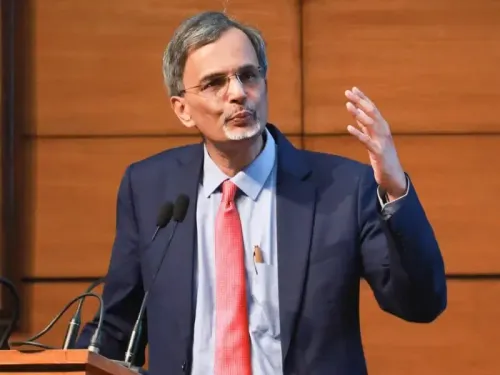
Prof Sudeshna Sarkar of IIT Kharagpur 's Computer Science and Engineering Department addressed three common myths about AI and learning.
She argued that AI can deliver explanations instantly but cannot replicate the understanding that comes from genuine struggle with a problem.
Prof Sarkar stated that 'getting stalled is failure' — but wrestling with a problem and solving it builds transferable knowledge.
She was clear that AI has reduced effort but has not made hard work optional , and that higher-order critical thinking remains essential.
IIT Kharagpur is developing an AI-enabled learning tool in collaboration with Fermi AI under the National Digital Library of India to provide personalised academic support at scale.
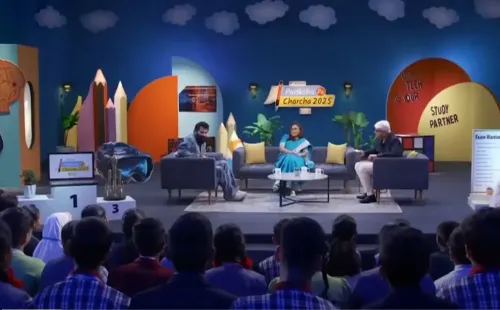
Prof Sudeshna Sarkar of the Computer Science and Engineering Department at the Indian Institute of Technology (IIT) Kharagpur has pushed back against three widely held myths about learning in the age of Artificial Intelligence (AI), arguing that technology performs best when it reinforces — rather than replaces — genuine intellectual effort. Her remarks, shared in a video on X by IIT Kharagpur, have drawn attention for their direct challenge to the growing assumption that AI tools can substitute for deep learning.
The Myth That AI Explanations Equal Understanding
Prof Sarkar drew a sharp distinction between receiving an explanation from an AI system and actually internalising knowledge. “AI can give you instantaneous explanations, and that is convenient,” she acknowledged, before adding: “But when students struggle with a problem, trying to solve it, failing, recalibrating, that produces true understanding. They can then internalise it, transfer it to new contexts, and that knowledge becomes much more valuable.”
Her argument centres on the cognitive value of productive struggle — a principle well-established in educational research. Convenience, she implied, is not the same as comprehension.
Struggle Is Not Failure
Addressing the tendency among students to treat difficulty as a sign of inadequacy, Prof Sarkar was categorical: struggling while learning is not the same as failing. “Getting stalled is failure. Wrestling with a solution and reaching it teaches much more than shortcuts. Students develop a sense they can transfer to new situations,” she said.
This is a significant framing at a time when AI tools such as large language models can generate step-by-step solutions to complex problems within seconds. Critics of over-reliance on such tools argue that bypassing the struggle phase deprives students of the metacognitive skills needed to handle genuinely novel challenges.
Hard Work Remains Non-Negotiable
On the broader question of whether AI has reduced the need for sustained effort, Prof Sarkar was unequivocal. “AI has reduced the effort but not made hard work optional. What is important today is constructing the ability to understand and apply knowledge to different situations,” she said. She stressed that higher-order learning skills and critical thinking remain beyond what current AI systems can replicate — and are precisely what students must cultivate to solve problems that have no established answers.
“Technology has been changing very fast, but what has not changed is the effort that you have to spend to learn. You have to keep up with technology and continue to learn,” she added.
IIT Kharagpur's AI-Enabled Learning Initiative
IIT Kharagpur also announced an ongoing project aimed at democratising academic support through the National Digital Library of India. The institute noted that while personalised, one-to-one guidance can be transformative for learners, delivering it at scale has remained a persistent challenge.
In response, IIT Kharagpur is developing a new AI-enabled learning experience in collaboration with Fermi AI, designed to guide, engage, and encourage students to think through problems independently rather than simply receive answers. “Stuck on a problem? You won’t be alone for long,” the institute said, signalling that the tool is intended as a thinking partner, not a shortcut.
Why This Matters Beyond the Classroom
Prof Sarkar’s remarks arrive at a critical inflection point for Indian higher education. As AI tools become standard in academic and professional settings, institutions are grappling with how to preserve the depth of learning that produces original thinkers and problem-solvers. IIT Kharagpur’s dual message — cautioning against over-reliance while simultaneously building AI-assisted tools — reflects the nuanced position that leading technical institutions must now navigate. How that balance is struck will shape the competencies of India’s next generation of engineers and researchers.
Point of View
But it also exposes a tension that IIT Kharagpur has not fully resolved: the institute simultaneously warns against AI dependency and announces its own AI-powered learning tool. The risk is that a well-intentioned 'thinking partner' becomes, in practice, another shortcut — especially if students are never assessed on the struggle process itself. India's premier technical institutions have long prided themselves on the rigour of their pedagogy; the real test is whether that rigour survives the convenience economy that generative AI is rapidly building around it.
NationPress
29 Sept 2026
Frequently Asked Questions
What did IIT Kharagpur's Prof Sudeshna Sarkar say about AI and learning?
Prof Sarkar argued that AI has made learning more convenient but has not made hard work optional. She said genuine understanding comes from struggling with problems, not from receiving instant AI-generated explanations, and that students must develop higher-order critical thinking skills that AI cannot replicate.
What are the three myths about AI and education that Prof Sarkar addressed?
Prof Sarkar addressed the beliefs that AI explanations equal genuine understanding, that struggling with a problem is the same as failing, and that AI has made sustained hard work unnecessary. She countered each, emphasising that productive struggle is central to deep and transferable learning.
What is IIT Kharagpur's new AI learning project?
IIT Kharagpur is developing an AI-enabled learning experience in collaboration with Fermi AI, linked to the National Digital Library of India. The tool is designed to guide and encourage students to think through problems themselves, rather than simply providing answers, addressing the challenge of personalised academic support at scale.
Why does Prof Sarkar say struggling with problems is valuable?
She argues that the process of attempting a problem, failing, and recalibrating produces true understanding that students can internalise and transfer to new contexts. Shortcuts, by contrast, do not build the cognitive skills needed to handle novel or complex situations.
How does this relate to broader concerns about AI in Indian higher education?
As AI tools become widely available, Indian institutions are debating how to preserve depth of learning and original thinking. IIT Kharagpur's stance — cautioning against over-reliance while building its own AI-assisted tool — reflects the broader challenge of integrating AI into education without undermining the intellectual rigour that produces capable engineers and researchers.