IISc Director at Adani University convocation: AI raises questions on truth and trust
Synopsis
At Adani University's third convocation in Ahmedabad, IISc Director Prof. Govindan Rangarajan issued a pointed warning: AI's power to generate convincing images, videos, and information is creating a crisis of truth and eroding human connection. As 374 graduates stepped into a world being reshaped by the technology, his message was less a celebration and more a call to vigilance.
Key Takeaways
Govindan Rangarajan , Director of IISc , delivered the convocation address at Adani University's third convocation in Ahmedabad on 31 October 2026 .
He warned that AI raises fundamental questions about truth, trust, and human relationships even as it accelerates scientific discovery.
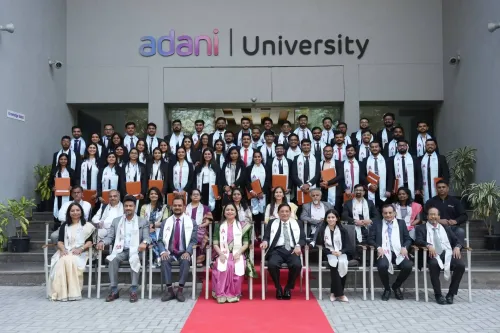
374 students of the Class of 2026 received degrees at the ceremony.
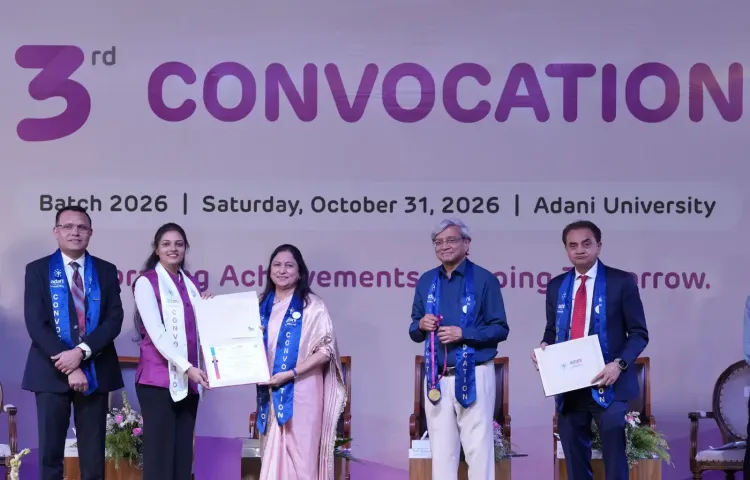
10 medals were awarded for academic excellence — five gold , three silver , and two bronze .
Dr Priti Adani , President of Adani University, called on graduates to drive innovation that reaches India's most marginalised communities.
Adani University, established in 2022 , aims to grow into a multidisciplinary research institution contributing to India's development.
Prof. Govindan Rangarajan, Director of the Indian Institute of Science (IISc), on Saturday, 31 October 2026, cautioned graduating students at Adani University's third convocation in Ahmedabad that while Artificial Intelligence (AI) opens transformative possibilities in education and research, it also poses profound questions about truth, trust, and human connection. The remarks came as 374 students of the Class of 2026 received their degrees at the ceremony.
Key Remarks by Prof. Rangarajan
Addressing the gathering as chief guest, Prof. Rangarajan said, 'AI offers tremendous possibilities in education and research. It can help us solve complex problems and accelerate scientific discovery. But we must also be mindful of its consequences.'
He pressed further on the epistemological challenge posed by generative AI: 'When images, videos and information can be generated so convincingly, how do we know what is true? And while technology is bringing us closer digitally, are we becoming more distant from one another? We must embrace what AI can do but also think carefully about what we stand to lose.'
The caution from one of India's foremost academic leaders reflects a growing global debate — one that has moved from research circles into mainstream policy — about the social costs of AI-generated content and its corrosive potential on public trust.
Degrees, Medals and Academic Honours
The Class of 2026 saw 374 degrees conferred at the ceremony. Of these, 10 students were recognised with medals for academic excellence — five gold, three silver, and two bronze. The convocation marks the university's third such ceremony since its establishment in 2022.
What University Leadership Said
Dr Priti Adani, President of Adani University, presided over the ceremony and delivered a pointed message on industry-academia collaboration. 'The promise is not that industry will simply tell a university what to study. It is that exposure to demanding real-world conditions can bring up questions — that neither industry nor academia would have framed alone,' she said.
Calling for innovation at scale, Dr Adani urged graduates to pursue breakthroughs that reach the most marginalised sections of society. 'India has built infrastructure on a remarkable scale. Now we must learn to innovate and incubate at scale,' she added.
Provost's Annual Report and Institutional Ambitions
Provost Prof. Dhaval Pujara presented the university's annual report, highlighting contributions from faculty, staff, students, and industry partners. He outlined efforts to strengthen academic foundations, develop the research ecosystem, and deepen industry and societal engagement.
Founded in 2022, Adani University is positioned around industry-relevant, practically oriented education and research. Its stated long-term goal is to grow into a multidisciplinary institution contributing to India's development and nation-building.
Broader Context
Prof. Rangarajan's address arrives at a moment when Indian universities are grappling with how to integrate AI responsibly into academic curricula — balancing the efficiency gains with concerns over academic integrity, misinformation, and the erosion of critical thinking. This is increasingly a live tension in higher education policy, with the University Grants Commission having flagged AI-related academic integrity risks in recent guidance. The convocation message, therefore, lands well beyond Adani University's campus.
Point of View
School boards, and courts are already navigating. What is notable here is the messenger: the head of India's most prestigious science institution choosing a private university's convocation to raise this concern signals that the debate has moved from tech conferences to the academic mainstream. The irony that the warning was delivered at a university funded by one of India's largest conglomerates — itself increasingly active in data and infrastructure — adds a layer that mainstream coverage is likely to miss. Whether India's higher education system develops the critical-thinking curricula needed to navigate AI-mediated information will matter far more than any single convocation speech.
NationPress
31 Oct 2026
Frequently Asked Questions
What did IISc Director Prof. Govindan Rangarajan say about AI at Adani University's convocation?
Prof. Rangarajan said AI offers tremendous possibilities in education and research but also raises serious questions about truth and trust. He specifically flagged the risk of AI-generated images, videos, and information making it difficult to distinguish fact from fabrication, and warned that digital closeness may come at the cost of genuine human connection.
How many degrees were awarded at Adani University's third convocation?
Adani University conferred 374 degrees on the Class of 2026 at its third convocation held in Ahmedabad on 31 October 2026. Ten students received medals for academic excellence — five gold, three silver, and two bronze.
What is Adani University and when was it established?
Adani University is a private university in Ahmedabad focused on industry-relevant education, practical learning, and research. It was established in 2022 and has a long-term ambition to grow into a multidisciplinary institution contributing to India's development and nation-building.
What did Dr Priti Adani say about the role of industry in university education?
Dr Priti Adani, President of Adani University, said the value of industry-academia collaboration is not that industry dictates what universities study, but that real-world exposure surfaces questions neither side would have framed alone. She also urged graduates to innovate at scale and ensure breakthroughs reach India's most marginalised communities.
Why is Prof. Rangarajan's warning about AI significant for Indian higher education?
As Director of the Indian Institute of Science, Prof. Rangarajan is one of India's most authoritative voices in science and academic leadership. His remarks come at a time when the University Grants Commission has flagged AI-related academic integrity risks, making the concern about truth and trust in AI-generated content directly relevant to how Indian universities shape curricula and policy going forward.