CM Dhami hits back at Congress over Ankita case 'politics'
Synopsis
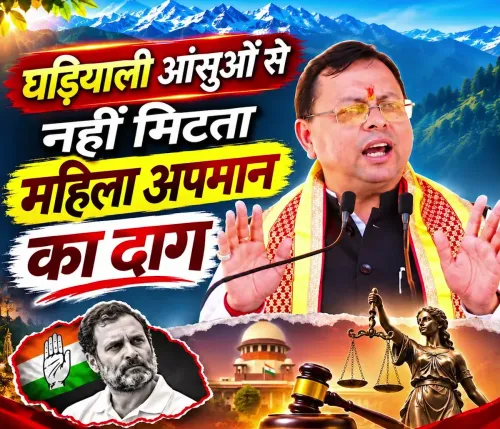
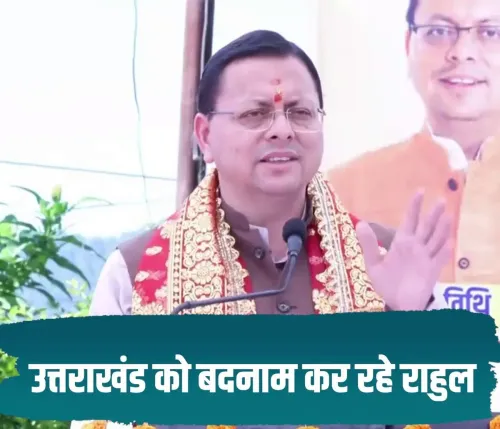
Uttarakhand CM Pushkar Singh Dhami on 31 October 2026 accused Congress of exploiting the Ankita Bhandari murder case for political gain, warning against spreading confusion over constitutional processes and comparing the opposition's agitation to Bangladesh-style disorder.
Key Takeaways
CM Pushkar Singh Dhami publicly rebuked Congress on 31 October 2026 over its handling of the Ankita Bhandari murder case.
Dhami accused Congress of using a victim family's grief as a 'vehicle for political self-interest.' He alleged the opposition was spreading 'baseless confusion' about a constitutional process to mislead the public.
The post drew a direct comparison between Congress's agitation and Bangladesh-style disorder — a notably charged rhetorical escalation.
Dhami reaffirmed his government's core message: Uttarakhand voters want development, employment, and good governance, not divisive politics.
The confrontation follows a pattern of BJP-Congress exchanges in Uttarakhand since the 2022 Bhandari murder first entered state politics.
A family's grief is not a political instrument — that is the sharpest line Uttarakhand Chief Minister Pushkar Singh Dhami drew on Saturday, 31 October 2026, firing back at the Congress party over what he called the cynical exploitation of the Ankita Bhandari murder case for electoral gain.
Posting in Hindi, Dhami wrote that Congress should not forget — 'किसी पीड़ित परिवार का दर्द, राजनीतिक स्वार्थ पूरा करने का माध्यम नहीं हो सकता' — 'the pain of a victim's family cannot become a vehicle for fulfilling political self-interest.' The rebuke was pointed, personal, and calibrated to land ahead of any fresh assembly session or local election cycle.
The Ankita case and the politics that never left it
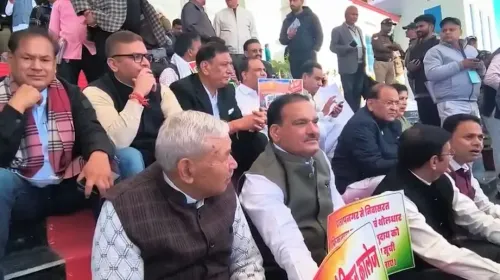
The shadow of Ankita Bhandari, the 19-year-old murdered at a resort in Uttarakhand in 2022, has never fully lifted from the state's political atmosphere. Congress has repeatedly returned to the case — protests, press conferences, demands for answers — framing it as evidence of a law-and-order failure under BJP rule. The ruling party's standard counter, sharpened again by Dhami today, is that the opposition converts victims into props.
It is a fierce cycle, and both sides know the terrain well. What made Saturday's post notable was the specific accusation that Congress is spreading 'baseless confusion' about a constitutional process and attempting to create — in Dhami's words — a Bangladesh-style atmosphere of disorder. 'बांगलादेश की तर्ज पर अव्यवस्था का माहौल बनाने की कोशिश' ('an attempt to create an atmosphere of disorder on the Bangladesh model') — the comparison is a charged one, invoking the spectre of protest-driven destabilisation to frame the opposition's agitation as something more dangerous than ordinary dissent.
Development vs. divisiveness — Dhami's core campaign frame
The Chief Minister closed with the counter-vision his government has consistently promoted since BJP first took Uttarakhand in 2017: that the people of the state want development, employment, good governance, and a bright future — not 'divisive thinking and anarchy.' It is a well-worn formulation, but strategically it does two things at once: it dismisses Congress's agitation as nihilistic, and it re-anchors Dhami on the terrain of delivery and aspiration where his government is most comfortable.
The mention of a 'constitutional process' — flagged in the post as 'SIR' — is worth watching. Any fresh legal or administrative move connected to the Bhandari case that becomes a flashpoint between the ruling party and opposition would sharpen this confrontation considerably in the weeks ahead.
Uttarakhand's electorate has heard this argument before. The question now is whether Congress's renewed push on the Ankita case finds enough traction to shift the frame — or whether Dhami's 'politicisation' charge sticks first.
Point of View
He attempts to flip the moral high ground on a case that has genuinely embarrassed his government. The Bangladesh comparison is a deliberate escalation — it reframes a domestic opposition campaign as a threat to public order, borrowing from a regional anxiety that resonates in the Himalayan belt. The emphasis on development and suशासन (good governance) signals the BJP's intent to fight any pre-election cycle on its preferred terrain of delivery, not on a law-and-order narrative where Congress holds the initiative. Whether the 'politicisation' charge neutralises the Bhandari case's emotional charge, or merely deepens it, will depend on what Congress does next.
NationPress
31 Oct 2026
Frequently Asked Questions
Why is CM Dhami criticising Congress over the Ankita Bhandari case?
Dhami accused Congress of exploiting the Ankita Bhandari murder case for political gain, arguing that a victim family's pain cannot be used as a tool for political self-interest. He also alleged Congress was spreading confusion about a constitutional process to mislead the public.
Who was Ankita Bhandari?
Ankita Bhandari was a 19-year-old from Uttarakhand who was murdered at a resort in 2022. Her case became a major political controversy, with opposition parties accusing the BJP state government of mishandling the investigation.
What did Dhami mean by comparing Congress to Bangladesh-style disorder?
Dhami accused Congress of trying to create an atmosphere of unrest similar to the political disorder seen in Bangladesh — framing the opposition's agitation as an attempt to destabilise the state rather than pursue legitimate political opposition.
What is the BJP's main political message in Uttarakhand?
Since 2017, BJP in Uttarakhand has consistently campaigned on a platform of development, employment, and good governance. Dhami reiterated this in his post, saying voters want progress and a bright future, not divisive politics.
Is the Ankita Bhandari case still a live political issue in Uttarakhand?
Yes. Congress has repeatedly raised the 2022 case to challenge the BJP government on law and order. Dhami's post on 31 October 2026 indicates the case remains a flashpoint, particularly ahead of any upcoming assembly session or local elections.