CM Dhami Hits Congress Over Caste Politics Ahead of 2027 Polls
Synopsis
On Independence Day 2026, Uttarakhand CM Pushkar Singh Dhami accused Congress of reviving interest in the state only at election time and using caste to divide voters, sharpening the BJP-Congress battle ahead of the 2027 assembly polls.
Key Takeaways
Uttarakhand CM Pushkar Singh Dhami attacked Congress on August 15, 2026 , accusing it of caste-based vote-bank politics.
He alleged Congress only remembers Uttarakhand when elections are near, calling its actions an 'electoral drama.' Uttarakhand has been under BJP rule since 2017 ; the next assembly elections are due in 2027 .
Dhami did not name a specific Congress statement or caste issue that triggered the post.
BJP's 'vote-bank politics' charge against Congress is a recurring line dating back to the Mandal Commission era and intensified after Bihar's 2023 caste survey .
The Independence Day timing signals BJP intends to frame the pre-election narrative early on its own terms.
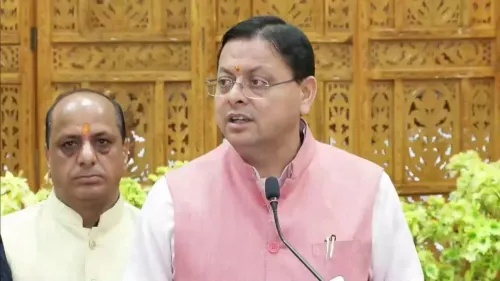
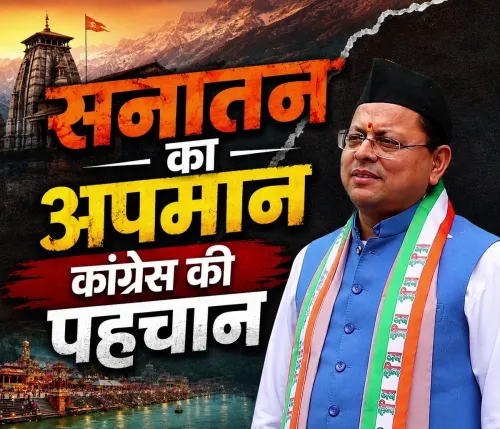
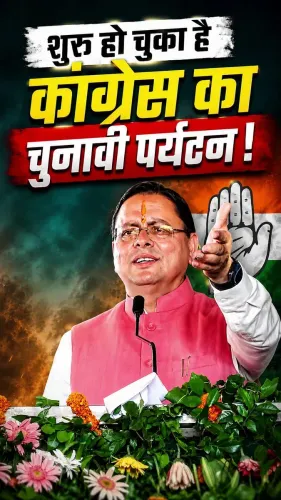
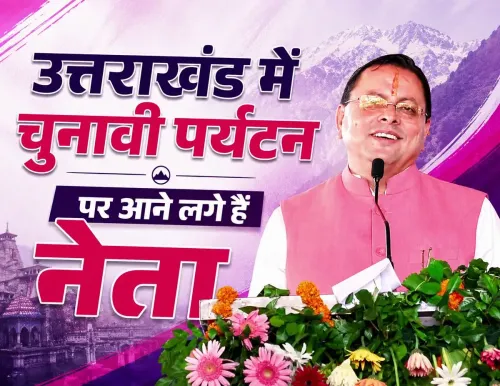
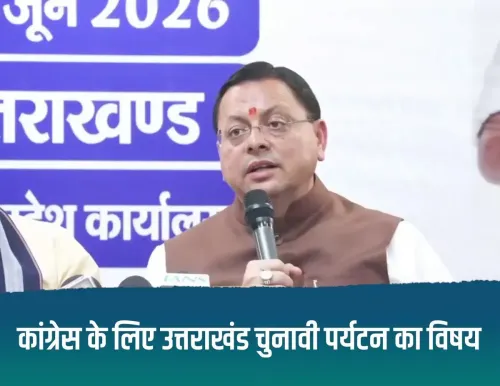
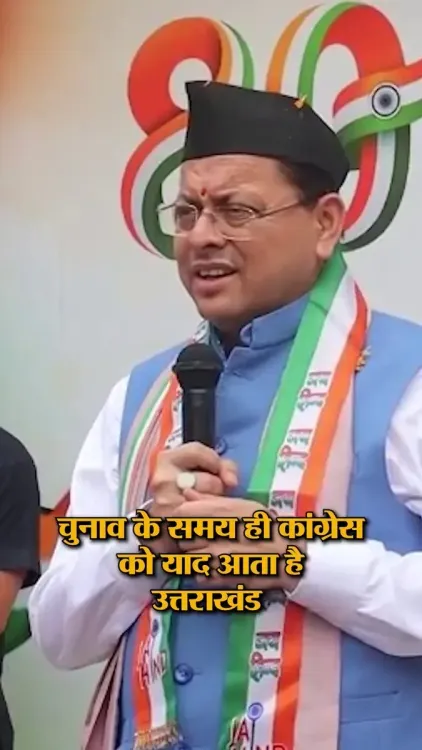
Every election cycle, Uttarakhand Chief Minister Pushkar Singh Dhami says, Congress rediscovers the state — and this time, he is not letting the moment pass quietly. On Independence Day, August 15, 2026, the BJP leader fired a sharp broadside at the Congress, accusing it of colouring every issue with caste to fracture Uttarakhand's social fabric ahead of the 2027 assembly elections.
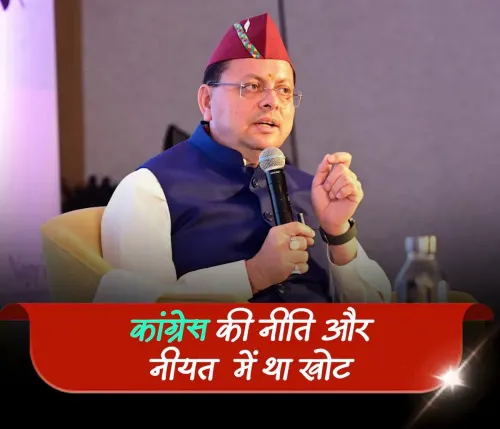
Posting in Hindi, Dhami did not mince words: 'चुनाव आते ही कांग्रेस को उत्तराखंड और उत्तराखंड की जनता याद आने लगती है' — 'The moment elections approach, Congress suddenly remembers Uttarakhand and its people.' He went further, calling the opposition 'blind in vote-bank politics' and accusing it of trying to divide society by casting every issue in a caste mould. 'The people of Uttarakhand,' he concluded, 'have seen through this electoral drama and divisive politics.'
BJP's Oldest Attack Line, Sharpened for Uttarakhand
The accusation is not new — BJP has deployed the 'vote-bank politics' charge against Congress since the convulsive debates triggered by the Mandal Commission in the early 1990s, and the argument found fresh ammunition after Bihar's 2023 caste survey reignited the national conversation on caste enumeration. What makes Dhami's salvo notable is the timing: fired on the national holiday, it signals that the ruling party intends to frame the pre-election period in Uttarakhand as a contest between governance and identity politics.
Uttarakhand has been under BJP rule continuously since 2017. Dhami, who took charge as Chief Minister in March 2021, has anchored his tenure on high-visibility moves — the Uniform Civil Code and anti-encroachment drives among them — that are explicitly pitched as cutting across caste lines. Accusing Congress of doing the opposite is, in that sense, an extension of his own governing brand.
What Congress Is Actually Doing — and What Dhami Did Not Say
Dhami's post does not name a specific Congress statement, demand, or leader that triggered the attack. The particular caste issue that prompted the broadside remains unspecified. That ambiguity is itself a political choice: a sweeping indictment lands harder than a rebuttal of a single claim, and it forces the opposition to defend its entire approach rather than one position.
Congress, which governed Uttarakhand before the 2017 BJP sweep, has historically raised representation and social-justice arguments in the hill state — a terrain where caste arithmetic, migration pressures, and regional identity intersect in complicated ways. Whether the party's current posture crosses into divisive mobilisation, or whether it constitutes legitimate advocacy for marginalised groups, is precisely the argument both sides will fight over as 2027 approaches.
The Clock Is Already Running
Assembly elections in Uttarakhand are still roughly a year away, but the political temperature on Independence Day 2026 suggests neither side is waiting for the formal campaign season. Dhami's choice of platform — a nationally watched holiday — and his combative register signal that BJP plans to define the terms of the coming contest early, leaving Congress to respond on ground the ruling party has already chosen.
The people of Uttarakhand, Dhami insists, have already made their judgment. Whether the ballot box agrees is the only verdict that will matter.
Point of View
BJP seeks to occupy the moral high ground of 'unity' and force the opposition into a defensive crouch. The attack fits a pattern visible across BJP-ruled states approaching polls: governance achievements are highlighted while the opposition is cast as identity-politics opportunists. With the specific Congress trigger left unnamed, the charge is designed to be unfalsifiable — and therefore stickier. The real test will be whether Congress can articulate a caste-equity argument that resonates in Uttarakhand's hill districts without walking into the 'divisive' frame Dhami has already set.
NationPress
30 Sept 2026
Frequently Asked Questions
Why did CM Dhami attack Congress on Independence Day 2026?
Dhami accused Congress of practising caste-based vote-bank politics to divide Uttarakhand voters, posting on August 15, 2026, ahead of the state's 2027 assembly elections. He did not name a specific Congress action that triggered the post.
When are the next Uttarakhand assembly elections?
The next Uttarakhand assembly elections are due in 2027 . The state has been governed by BJP continuously since 2017.
What did Pushkar Singh Dhami say about Congress in his post?
Dhami said Congress remembers Uttarakhand only when elections approach, is 'blind in vote-bank politics,' and is trying to divide society by casting every issue in a caste mould. He said Uttarakhand voters have already seen through this 'electoral drama.'
What is BJP's history of accusing Congress of caste politics?
BJP has used the 'vote-bank politics' charge against Congress since the Mandal Commission debates of the early 1990s. The argument gained fresh momentum after Bihar's 2023 caste survey reignited the national debate on caste enumeration.
Who is Pushkar Singh Dhami?
Pushkar Singh Dhami is the Chief Minister of Uttarakhand and a BJP leader. He has held the post since March 2021 and is known for initiatives such as the Uniform Civil Code and anti-encroachment drives in the state.