CM Dhami Slams Congress for 'Election Tourism' in Uttarakhand
Synopsis
Uttarakhand CM Pushkar Singh Dhami accused Congress and its allies of 'election tourism' — arriving in the state only during polls and ignoring its people afterward. The attack signals early BJP positioning ahead of the 2027 Uttarakhand assembly elections.
Key Takeaways
CM Pushkar Singh Dhami posted on August 3, 2026 , accusing Congress of engaging with Uttarakhand only during elections.
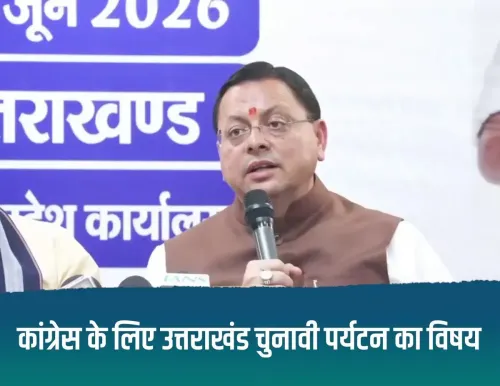
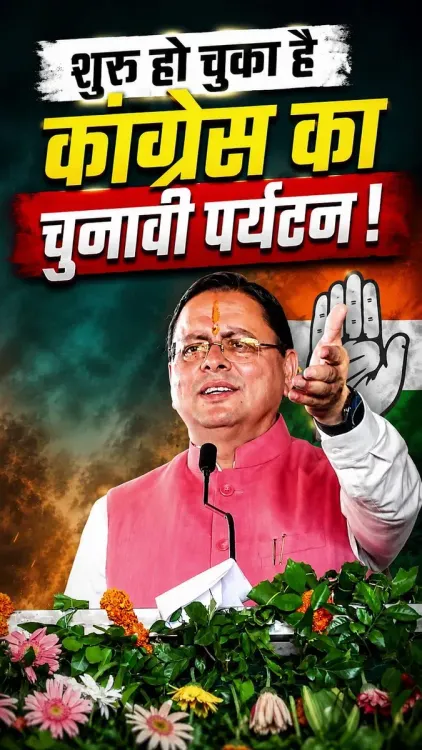
He coined the phrase 'chunavi paryatan' ('election tourism') to describe Congress's periodic visits to the state.
BJP retained power in Uttarakhand in the 2022 assembly elections with Dhami as Chief Minister.
Uttarakhand has historically alternated between BJP and Congress governments since its formation in 2000 .
The next Uttarakhand assembly elections are expected in 2027 , making this an early pre-campaign salvo.
With the 2027 Uttarakhand assembly elections drawing closer on the horizon, Uttarakhand Chief Minister Pushkar Singh Dhami has gone on the offensive — accusing the Indian National Congress and its allies of treating the hill state as a seasonal destination, showing up only when votes are at stake and vanishing the moment counting ends.
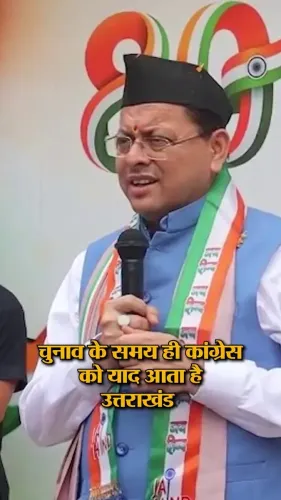
Posting on Monday, August 3, 2026, CM Dhami wrote in Hindi: 'Uttarakhand se Congress ka nata kewal chunavon tak seemit hai' — 'Congress's relationship with Uttarakhand is limited only to elections.' He charged that the party and its allies descend on the state for what he called 'chunavi paryatan' — 'election tourism' — only to lose all interest in the people and their concerns the moment polling concludes.
A Charge Rooted in Uttarakhand's Alternating Political History
Uttarakhand, carved out of Uttar Pradesh in 2000, has seen power alternate between BJP and Congress through much of its existence as a state. The BJP broke that pattern decisively in 2022, retaining government with Dhami at the helm — a result the party frames as a verdict against Congress's governance record. That win gives Dhami's attack its political edge: he is speaking from a position of incumbency, not opposition frustration.
The 'election tourism' framing is a recurring weapon in BJP's national playbook — deployed by ruling leaders across states to paint Congress as a party of photo-ops and promises rather than sustained grassroots presence. In Uttarakhand's case, the charge carries particular resonance in remote hill districts where consistent political attention — from any party — has historically been patchy.
The 2027 Clock Starts Now
Attacks of this kind rarely arrive in a vacuum. With roughly eighteen months before the next assembly election cycle, both BJP and Congress are already positioning. Dhami's post signals that his party intends to make Congress's perceived absence from day-to-day Uttarakhand politics a central campaign argument — well before a single candidate is announced.
For Congress, the challenge is familiar: demonstrate organisational depth in a state where the party's cadre network has weakened since its last government, and counter the narrative that its leaders only remember Uttarakhand when ballot papers are being printed.
The voters of Uttarakhand — many in high-altitude constituencies with acute concerns around migration, infrastructure, and disaster resilience — will ultimately decide whether the charge sticks or whether it is itself a form of political theatre. Dhami has fired the first salvo; the response, and the record, will follow.
Point of View
The challenge is structural: without a state government to anchor cadre activity, sustained grassroots visibility in a geographically difficult state like Uttarakhand is genuinely hard to demonstrate. The exchange sets the early terms of a contest that will ultimately turn on local governance delivery and migration-related anxieties in the hills.
NationPress
18 Sept 2026
Frequently Asked Questions
What did CM Dhami say about Congress and Uttarakhand?
CM Pushkar Singh Dhami accused Congress and its allies of practising 'election tourism' — visiting Uttarakhand only during elections and losing all interest in the state and its people once polling ends.
When are the next Uttarakhand assembly elections?
The next Uttarakhand assembly elections are expected in 2027 . The state holds elections every five years, and the last polls were held in 2022 .
Who won the 2022 Uttarakhand assembly elections?
The BJP won the 2022 Uttarakhand assembly elections, retaining power with Pushkar Singh Dhami continuing as Chief Minister.
What is 'chunavi paryatan' and why is Dhami using the term?
Chunavi paryatan means 'election tourism' in Hindi. CM Dhami used the term to argue that Congress leaders treat Uttarakhand as a destination to visit only when votes are needed, not as a state they genuinely engage with year-round.
What is the political history between BJP and Congress in Uttarakhand?
Since Uttarakhand's formation in 2000 , power has historically alternated between BJP and Congress . BJP broke that pattern by winning back-to-back in 2017 and 2022 .