Raghuram Rajan: AI's Impact on White-Collar Jobs May Be Overestimated

Synopsis
Raghuram Rajan, former Reserve Bank of India governor, argues that fears surrounding AI's potential to eliminate white-collar jobs are likely exaggerated. He emphasizes that technology adoption is influenced by various factors, including societal and political dynamics.
Key Takeaways
Concerns about AI eliminating jobs may be exaggerated.
Technology adoption is influenced by various factors.
Historical examples show that adoption can take time .
AI could lead to job displacement but also new opportunities.
Competition among AI systems may benefit the overall economy .
New Delhi, March 15 (NationPress) Concerns that artificial intelligence might eliminate a significant number of white-collar jobs in the near future could be exaggerated, according to former Reserve Bank of India governor Raghuram Rajan. In a recent article featured in Project Syndicate, he emphasized that the speed of technology adoption, market competition, and government regulations will dictate the extent of disruption.
“Typically, the adoption of new technologies across various sectors takes longer than many predict,” Rajan remarked.
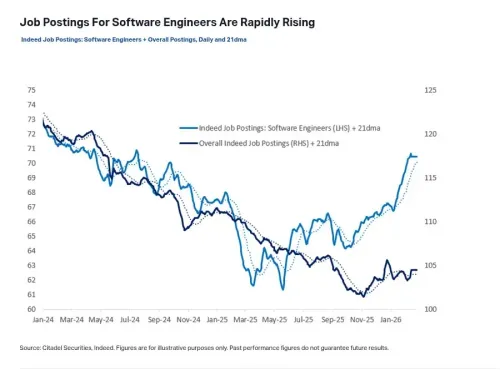
“Aside from a few domains like software, numerous challenges and resistance to change often hinder the swift incorporation of new technologies,” he noted.
To support his argument, Rajan cited the long transition period for automated telephone exchanges, which took decades to completely replace human operators.
He suggested that similar delays could arise in the broader implementation of AI across numerous industries.
In a follow-up on LinkedIn, Rajan reiterated that many forecasts about AI overlook the significant influence of societal dynamics and political factors.
“The reactions of the public and policymakers will also play a crucial role in determining how AI impacts employment and the wider economy,” he stated.
Rajan outlined various potential trajectories for an AI-driven economy, one of which involves a few dominant AI platforms established by firms like Anthropic and Meta Platforms gaining substantial technological advantages.
“These companies could impose high costs on businesses that depend on their AI solutions,” Rajan explained.
“Should that occur, enterprises across various fields might utilize AI to automate numerous cognitive tasks, leading to a reduction in white-collar employment,” he asserted.
Employees displaced from such positions might transition into service sectors such as retail or hospitality, potentially increasing competition and driving down wages in those fields.
Rajan also proposed another scenario in which multiple AI systems vie for market dominance.
“In this case, productivity improvements could be more evenly distributed throughout the economy instead of being concentrated in a handful of companies,” he concluded.
Point of View
It's essential to consider Raghuram Rajan's insights on AI and employment carefully. His analysis suggests that while technology will undoubtedly disrupt industries, the pace and extent of this change will be moderated by various social and political factors. Understanding this balanced viewpoint is crucial for stakeholders in the economy.
NationPress
24 Sept 2026
Frequently Asked Questions
Will AI really eliminate white-collar jobs?
While there are concerns about job losses due to AI, Raghuram Rajan suggests that the pace of technology adoption will dictate the actual impact, which may be slower than anticipated.
What factors affect the adoption of AI technologies?
The adoption of AI technologies is influenced by market competition, government policies, and societal resistance to change.
How might AI change the job market?
AI could lead to automation of many cognitive tasks, potentially resulting in a shift in workforce dynamics, with some workers moving to service sectors.
What example does Rajan use to illustrate technology adoption?
Rajan references the transition from human-operated telephone exchanges to automated systems, which took decades to complete.
Are there potential benefits to AI in the economy?
Yes, Rajan notes that if multiple AI systems compete effectively, productivity gains could be more widely distributed across the economy.