Is AI a Catalyst for Change in India? Insights from Rubrik CEO

Synopsis
With the upcoming AI Impact Summit in New Delhi, Rubrik CEO Bipul Sinha emphasizes the potential of AI to transform industries and society, shifting the narrative from fear to opportunity. This summit represents India's commitment to leading in applied artificial intelligence, aiming for inclusive progress and innovation.
Key Takeaways
AI is viewed as a solution-oriented technology that can enhance business processes.
India has significant potential to lead in the applied AI sector.
Focus on fair AI systems is crucial to prevent biased outcomes.
Employment concerns regarding AI are likely overstated, with new job categories emerging.
Collaboration in public-private partnerships is essential for AI development.
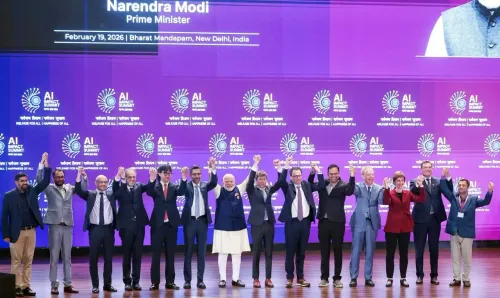
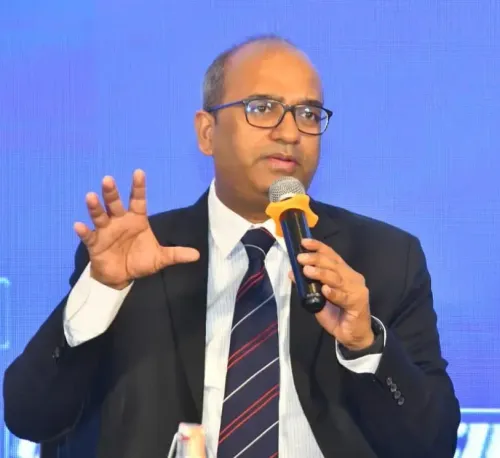
Washington, Feb 15 (NationPress) As India gears up to host the AI Impact Summit in New Delhi next week, Bipul Sinha, the Chairman and CEO of Rubrik, characterized the event as a crucial juncture for a nation aiming to steer the global conversation on artificial intelligence away from apprehension and towards tangible results that can transform governments, industries, and everyday experiences.
Sinha shared in an exclusive interview with IANS that the timing for the summit is “ideal,” asserting that India is currently exploring artificial intelligence across “various layers of the stack, from the energy layer to the deployment of agents.”
He emphasized that “AI is fundamentally about solutions, not merely the technology itself, as it must integrate into business processes and operational workflows.”
This focus on practical application, rather than theoretical capability, is central to India’s message at the summit, he remarked. “India truly has the chance to serve as the AI orchestration layer facilitating agent work for various businesses that Indian firms are already collaborating with,” Sinha noted, referencing the nation’s tech workforce and what he termed “around a hundred billion in investments” across infrastructure, energy, computing, and partnerships.
Following previous global AI summits in the UK, South Korea, and France, which Sinha described as largely centered on the risks associated with the technology, he stated, “Many early AI summits were focused on the dangers of AI. This Indian AI summit is centered on the opportunities and impacts of AI.”
In his perspective, this shift in narrative is overdue. “These technologies should be viewed as chances for progress, opportunities for upliftment, and avenues for abundance,” Sinha remarked, while recognizing that “AI presents a hundred times more opportunities, along with significant risks.” He added that managing these risks should come after serious efforts to deploy the technology at scale.
Sinha frequently referenced India’s track record with digital transformation as a model for what AI could accomplish. Over the past twenty years, he noted, the country has witnessed rapid growth in mobile phone use, internet services, digital payments, and identity systems.
“India has led the way in these domains,” he stated. If artificial intelligence follows a similar trajectory, “it can effectively bridge the knowledge gap for the Indian populace and empower them to utilize technology for their own advancement.”
He highlighted AI’s potential to reduce the cost of goods and services, creating what he described as “a potential deflationary effect” that could “help elevate the Indian masses.” However, he cautioned that these outcomes are not guaranteed.
“AI must not produce biased results,” he noted. “AI systems need to be equitable,” and the workforce should be trained to ensure that white-collar jobs “enhance productivity” instead of vanishing.
Regarding employment, Sinha dismissed exaggerated concerns. “I believe that fears surrounding AI-related job losses are somewhat overstated,” he asserted, claiming that new job categories will emerge, just as they have in previous technological revolutions.
He described the ongoing transition as a shift towards what he terms “intuition labor,” following earlier phases of agricultural, industrial, and knowledge work. “We will see entrepreneurship, job proliferation, and business creation occur at an unprecedented rate,” he stated.
Sinha made a clear distinction between developing AI models and implementing them. The former requires a limited number of highly specialized engineers, while the latter does not. “For every model engineer, I suspect there will be 10,000 applied AI engineering roles,” he said, highlighting opportunities in agent orchestration, business process transformation, and enterprise deployment.
Globally, he noted that the United States remains “the farthest ahead” in core model innovation, followed by China. In contrast, India is focusing on applied AI, a decision he believes aligns with its role in serving global businesses.
Nevertheless, he welcomed New Delhi’s initiatives in semiconductor manufacturing, GPUs, and data centers, calling government investments “very positive steps” that position India “to engage in the business of generating intelligence.”
When asked what policymakers should prioritize next, Sinha commended the government’s swift actions. “They have been quick to act,” he said, citing public-private partnerships, budget allocations, and tax incentives for data centers. Continued investment, global outreach, and summits like this one, he added, would help demonstrate “India supplying their applied AI to the global market.”
U.S. firms, he noted, are attracted by India’s scale and growth potential. “India is a vast market with the largest population, and everyone perceives India as the next significant economy,” Sinha remarked, framing recent investments as a strategy to develop products locally and deliver them “at the most competitive prices to the Indian market.”
The summit’s agenda will focus on “people, planet, and progress,” with discussions on retraining the workforce, energy requirements, and inclusive growth. “How do we ensure that AI fosters inclusive progress?” he questioned. “How do we guarantee that the global south is not left behind?”
Rubrik, a company specializing in data security and cyber resilience, plans no extravagant announcements but will “continue to invest heavily in India,” Sinha said, aiming to assist governments and businesses in “reaping the benefits of AI without the associated risks.” He succinctly summarized the company’s approach: “Unleash agents but mitigate risk.”
Looking beyond economic factors, Sinha emphasized healthcare and education as the most transformative applications of AI in the public sector. In a nation as expansive as India, he stated, AI could help provide consistent diagnostics, preventive care, and training “in a secure and trustworthy manner.” He cautioned that the worst-case scenario would be a breakdown of trust if biased outcomes erode public confidence.
He extended this argument to the media, suggesting that while AI may inundate the world with information, it cannot replace journalism’s role in providing context. “What it lacks is context,” he noted. “The media will provide insights into why these events are unfolding.”
The AI Impact Summit, scheduled to take place in New Delhi, is anticipated to unite governments, tech companies, and researchers globally at a time when India is positioning itself as a key player in applied artificial intelligence, amidst ongoing worldwide discussions regarding regulation, energy consumption, and the societal implications of rapid adoption.
Point of View
I believe that the AI Impact Summit is a critical platform for India to redefine its role in the global AI landscape. With leaders like Bipul Sinha at the forefront, the focus on practical solutions over fear-based narratives is essential for fostering innovation and inclusive growth. We must support this initiative to ensure that India emerges as a leader in applied AI.
NationPress
1 Oct 2026
Frequently Asked Questions
What is the primary focus of the AI Impact Summit?
The summit aims to shift the global narrative on AI from fear to practical applications that can reshape governments, businesses, and daily life.
Why is this summit significant for India?
The summit positions India as a central player in the applied AI space, promoting opportunities for innovation and inclusive growth.
What are the potential benefits of AI according to Sinha?
Sinha highlights AI's potential to lower costs, enhance productivity, and bridge the knowledge gap for the Indian population.
What is the expected outcome of the summit?
The summit is expected to foster discussions on how AI can create inclusive progress and not leave the global south behind.