How Should India Reinvent Its Approach to AI?
Synopsis
India stands at the brink of an AI revolution. Anupam Govil stresses the urgent need for the country to reimagine its approach to artificial intelligence, emphasizing its potential to transform sectors and enhance global competitiveness.
Key Takeaways
AI is a pressing strategic challenge for India.
Reinventing AI utilization is critical for socio-economic impact.
Investment in infrastructure and talent is essential.
Collaboration with the U.S. can enhance AI development.
Indian diaspora plays a pivotal role in driving innovation .
Washington, Feb 13 (NationPress) Artificial intelligence (AI) is no longer a distant prospect for India — it represents an urgent strategic challenge, according to Anupam Govil, Chief Technology and AI Evangelist as well as Managing Partner at the global consulting firm Avasant. He emphasized that the nation must spearhead efforts in AI and must "rethink the way AI is utilized."
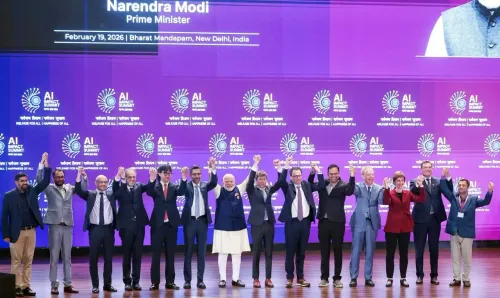
“India stands at a crucial juncture in its journey as a technology powerhouse,” Govil remarked in a conversation with IANS prior to the ‘India AI Impact Summit 2026’ scheduled in New Delhi next week.
“For nearly three decades, India was at the forefront of the tech services sector globally,” he pointed out. However, with the advent of automation and artificial intelligence, “the foundational concept behind the services industry, which relied on labor cost advantages, is diminishing.”
AI, he stated, acts as “a significant equalizer,” where “geographical location and labor expenses hold less importance than before.”
This moment is critical for the Indian government.
“For India, this is a pivotal time as it signals to the world that not only is it investing in AI, but it is likely to be the place where AI will yield its true socio-economic benefits,” Govil, who is also the Founding Chair of the US India Chamber of Commerce in Austin, Texas, added.
He contended that AI can “supercharge Indian enterprises” while assisting the nation in “overcoming challenges across various sectors,” such as education, healthcare, and energy.
Globally, the competition is heating up.
“An intense race is underway. It’s the modern equivalent of the arms race or the nuclear race. This is the AI race,” Govil remarked.
Nations are channeling “hundreds of billions of dollars into building the necessary infrastructure to empower AI,” he noted.
He stressed the necessity for sovereign capabilities, saying, “The development of sovereign AI and sovereign LLMs is crucial as it enables countries to protect their own interests.”
While much of the foundational model development has occurred in North America, he indicated that India must bolster its infrastructure, talent pool, and practical applications to remain competitive.
“India has always had a wealth of talent in technology,” he acknowledged. However, in AI, “the nature of the talent and skills needed has evolved.”
Engineers today “do not necessarily need to write software code,” he stated, but they must ensure that AI-generated outcomes “address real business challenges and are optimized and error-free.”
Govil believes that India’s true advantage lies in its scale.
“India serves as the ultimate testing ground for different technologies aimed at solving real-world issues at scale and at minimal cost,” he stated.
He emphasized that India must “rethink how AI is being utilized” to enhance “efficiency regarding power consumption and computing costs” while also benefiting “the broader population.”
Regarding collaboration with the United States, Govil noted that American companies are already playing a significant role.
“Many of the AI models being adopted in India” originate from U.S. firms like OpenAI, Google, Anthropic, and Microsoft, he observed.
However, deeper collaboration will be necessary, especially concerning standards and safeguards. “There will be a need for safeguards,” he cautioned, to ensure AI “cannot be exploited by malicious users.”
He highlighted the “exchange of knowledge, talent between the US and India” and investment in infrastructure and application development.
Simultaneously, he clarified that “India will not depend on the US or any other country for its AI future.”
Govil also underscored the significance of the Indian diaspora. “I’m witnessing a second wave of Indian Americans returning to India,” he noted, both to capitalize on market opportunities and “to give back to their homeland.”
This trend, he believes, “will only increase,” with more entrepreneurs and investors driving “the next growth phase.”
Point of View
It is crucial for India to take decisive steps in reimagining its approach to AI. With its vast talent pool and technological prowess, India has the opportunity to lead on the global stage. The insights from Anupam Govil highlight an urgent need for strategic investments and collaborations to ensure that India not only participates in the AI race but also sets the standards for its ethical usage and implementation.
NationPress
12 Oct 2026
Frequently Asked Questions
What is the current state of AI in India?
India is at a critical juncture in AI development, requiring a strategic approach to leverage its full potential.
Why is AI considered an urgent challenge for India?
The rapid advancements in automation and AI necessitate India to rethink its strategy to remain competitive.
What sectors can benefit from AI in India?
Key sectors like education, healthcare, and energy stand to gain significantly from the effective implementation of AI.
How can India strengthen its AI capabilities?
By investing in infrastructure, enhancing talent, and fostering international collaborations.
What role does the Indian diaspora play in AI development?
The Indian diaspora is increasingly returning to India to contribute to the market and innovation landscape.