Will India Achieve a Significant AI Milestone in 2026 Due to Government Initiatives?
Synopsis
As India aims for a major leap in AI by 2026, driven by government initiatives, this report explores the burgeoning AI talent landscape, its implications for job creation, and the country's evolving role in the global AI ecosystem.
Key Takeaways
India's AI talent has increased significantly since 2016.
Government initiatives are crucial for developing AI skills.
AI is expected to create numerous job opportunities in India.
India ranks highly in global AI project contributions.
The government emphasizes responsible AI governance.
New Delhi, Dec 27 (NationPress) India's strategy for artificial intelligence (AI), inspired by Prime Minister Narendra Modi's vision of democratizing technology, seeks to tackle challenges unique to India and foster job creation. The year 2026 is anticipated to be revolutionary for the nation, which now stands as the world’s third most competitive country in AI.
The growth of AI talent in India has surged over threefold since 2016, placing it among the top three countries in Stanford University’s Global AI Vibrancy Tool, a testament to its expanding AI talent and infrastructure.
Government initiatives, such as ‘IndiaAI FutureSkills’, aim to cultivate an AI talent pipeline, focusing on education and research.
This month, the government announced that AI could create job opportunities in fields like data science and data curation. Currently, 8.65 lakh candidates have engaged in various courses, with 3.20 lakh focusing on AI and Big Data Analytics.
The IT Ministry has launched ‘FutureSkills PRIME’, aimed at re-skilling/up-skilling IT professionals for new technologies, including AI.
To date, over 18.56 lakh candidates have registered on the Future Skills PRIME Portal, with more than 3.37 lakh completing their courses, according to Shobha Karandlaje, Minister of State for Micro, Small and Medium Enterprises.
A recent report by Nasscom, titled “Advancing India’s AI skills,” predicts that India's AI workforce will grow from 6 lakh–6.5 lakh professionals to over 12.50 lakh by 2027, achieving a 15% compound annual growth rate (CAGR).
India’s expanding AI talent pool is also evident in global developer engagement. According to GitHub data for AI projects, India was the second-largest contributor globally in 2024, making up 19.9% of all AI projects.
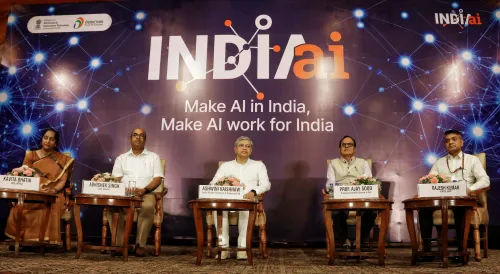
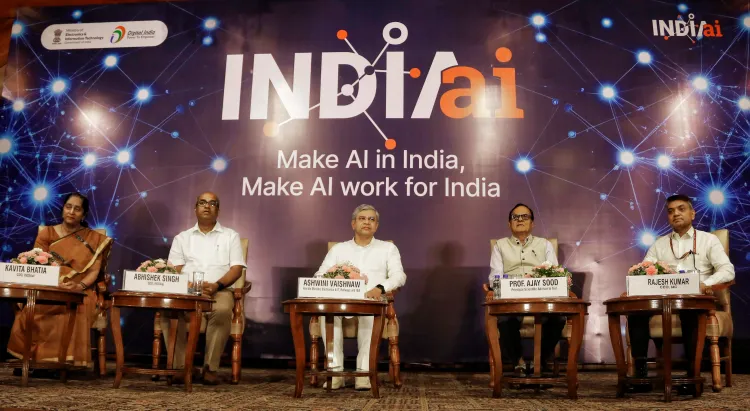
This highlights the strength of India’s AI developer ecosystem and validates the government's emphasis on extensive AI skilling, research, and innovation as part of the IndiaAI Mission, as noted by Union Minister for Electronics and IT, Ashwini Vaishnaw.
The government is also backing 500 PhD scholars, 5,000 postgraduates, and 8,000 undergraduates for AI-related research.
IndiaAI Data and AI Labs have been established in Tier-2 and Tier-3 cities through NIELIT to facilitate coursework in AI, data curation, annotation, cleaning, and applied data science. Additionally, 174 ITIs and Polytechnics across 27 states/UTs have been sanctioned to set up extra IndiaAI Data and AI Labs.
A recent ‘EY 2025 Work Reimagined Survey’ revealed that approximately 62% of Indians regularly use GenAI at work. Moreover, 90% of employers and 86% of employees believe that AI enhances productivity. Also, 75% of employees and 72% of employers agree that GenAI improves decision-making, while 82% of employees and 92% of employers feel it positively affects work quality.
Importantly, India’s AI governance guidelines ensure that high-risk AI systems are not deployed without restrictions, adopting a risk-based, evidence-driven, and proportional governance strategy.
These guidelines recognize AI as a significant catalyst for economic growth and social transformation while acknowledging the potential risks it poses, including bias, discrimination, and lack of transparency, as stated by Jitin Prasada, Union Minister of State for Electronics and IT.
In alignment with Prime Minister Modi's vision, the government is committed to democratizing technology development and use, focusing on leveraging AI to solve real-world issues and ultimately enhancing lives across diverse sectors. The government has adopted a balanced and pragmatic techno-legal approach in its regulations, informed by global legal frameworks and extensive stakeholder consultations.
Point of View
India's commitment to enhancing its AI capabilities underlines a strategic move towards technological leadership. The government's focus on skill development and job creation reflects a broader vision of sustainable growth and innovation, ensuring that the nation stays relevant in an increasingly competitive global landscape.
NationPress
19 Sept 2026
Frequently Asked Questions
What is the significance of India's AI strategy?
India's AI strategy aims to address local challenges and generate job opportunities, positioning the country as a global leader in AI technology.
How has AI talent in India evolved over the years?
Since 2016, the concentration of AI talent in India has increased over threefold, making it one of the top countries in AI development.
What government initiatives support AI talent development?
Initiatives like 'IndiaAI FutureSkills' and 'FutureSkills PRIME' are designed to enhance AI skills among professionals and students in the country.
What are the projected growth rates for AI professionals in India?
The AI workforce in India is expected to grow from 6 lakh–6.5 lakh to over 12.50 lakh by 2027, indicating a strong CAGR of 15%.
What role does the government play in AI governance?
The Indian government has established guidelines to ensure responsible AI deployment, emphasizing a risk-based approach to governance.