Is India’s AI Ascendancy Driven by Youth and Grassroots Innovation?

Synopsis
At the AI Impact Summit, filmmaker Shekhar Kapur and economist Steve Hanke champion India's burgeoning role in global AI. With youth at the forefront, they stress an indigenous approach to AI development, highlighting grassroots innovation as a key driver. The summit unites international delegates to shape the future of AI, positioning India as a collaborative leader.
Key Takeaways
India has potential to become a superpower in AI .
Grassroots innovation is crucial for AI development.
The summit attracted over 110 countries and numerous international organizations.
Collaboration and ethical considerations are central to AI discussions.
Prime Minister Modi is praised for his leadership in AI policy.
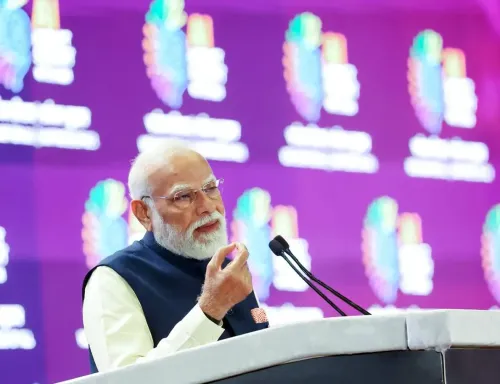
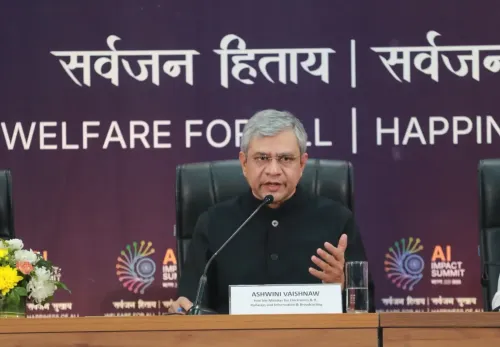
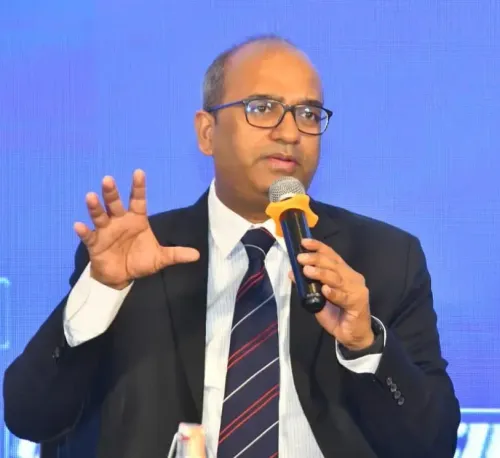
New Delhi, Feb 18 (NationPress) Filmmaker Shekhar Kapur and American economist Steve Hanke have expressed strong enthusiasm for India's increasing influence in the global artificial intelligence arena at the ongoing AI Impact Summit.
Kapur took to X to emphasize the remarkable turnout of young individuals, noting that the auditorium was filled to capacity with eager students excited to learn about AI. He remarked that the passion and inquisitiveness of the youth signal that India has the potential to become a superpower in artificial intelligence.
Nevertheless, Kapur stressed the importance of developing AI from an Indian standpoint. He drew comparisons to the nation’s digital evolution, asserting that India should tailor its AI journey to local contexts instead of solely depending on Western paradigms.
According to him, the growth of AI in India will emanate from the grassroots level, where technology is most essential and where innovation driven by necessity flourishes. He underscored that genuine, need-driven innovation originates from the grassroots and should underpin India's AI strategy.
In the meantime, Professor Hanke highlighted India's push for its Global AI Commons initiative during the summit this week. He mentioned that AI pioneer Yann LeCun has advocated for open and collaborative AI efforts, recognizing India's crucial role in shaping the global AI ecosystem.
Hanke commended Prime Minister Narendra Modi for directing the nation towards what he described as the correct path in AI policy and innovation.
The five-day summit has drawn participation from over 110 nations and 30 international organizations, including approximately 20 heads of state or government and around 45 ministers.
The AI Impact Summit has united policymakers, industry experts, researchers, and students globally to discuss the ethical, economic, and strategic aspects of artificial intelligence, with India positioning itself as a vital force in fostering inclusive and collaborative AI development.
The India-AI Impact Summit 2026 is the fourth in its series, succeeding gatherings in the UK (Bletchley Park, 2023), South Korea (2024), and France (2025). The summit serves as a platform for leaders to engage in discussions about the ethical, economic, and social implications of AI, while enhancing partnerships across digital technology, culture, tourism, and maritime cooperation.
Point of View
I believe this pivotal moment in India's AI journey showcases the potential of grassroots innovation. With youth engagement and an indigenous approach, India can redefine its role in global AI discourse. It's essential to support these initiatives that prioritize local needs while fostering international collaboration.
NationPress
20 Sept 2026
Frequently Asked Questions
What is the AI Impact Summit?
The AI Impact Summit is a global platform where policymakers, industry leaders, researchers, and students come together to discuss the implications of artificial intelligence across various sectors.
Who are the key speakers at the summit?
Notable speakers include filmmaker Shekhar Kapur and economist Steve Hanke, who advocate for India's role in the global AI landscape.
What is India's approach to AI development?
India emphasizes a grassroots-driven approach to AI development, focusing on local realities and necessity-driven innovation.
How many countries are participating in the summit?
The summit has attracted participation from over 110 countries and 30 international organizations.
What is the significance of the Global AI Commons initiative?
The Global AI Commons initiative aims to promote open and collaborative AI efforts, positioning India as a key player in the global AI ecosystem.