Amazon's CEO Andy Jassy: AI Will Transform Jobs, Not Eliminate Them
Synopsis
In a revealing interview, Amazon CEO Andy Jassy addresses the exaggerated fears surrounding AI-induced job losses. He emphasizes that instead of completely vanishing, jobs will evolve, leading to the emergence of new roles in the workforce.
Key Takeaways
AI is expected to transform job roles rather than eliminate them.
New job categories will emerge alongside technological advancements.
Historical patterns show technology creates opportunities.
Automation can lead to more complex and valuable work.
Reports indicate a less dramatic long-term impact on employment.
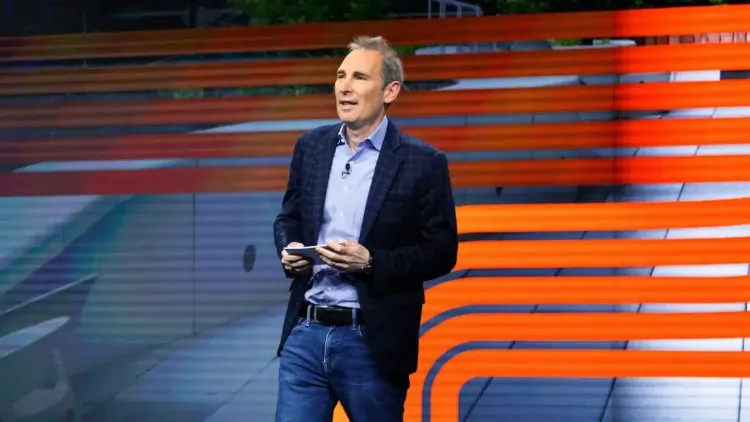
New Delhi, Feb 28 (NationPress) Concerns that artificial intelligence might trigger widespread job losses could be overstated, as stated by Amazon's CEO, Andy Jassy. In a recent media conversation, Jassy expressed that AI is more inclined to transform the work landscape rather than eradicate job opportunities altogether.
He recognized that many positions that have depended heavily on human input for the past two to three decades may see a reduction in the workforce in the future. However, he emphasized that this does not signify the total disappearance of jobs.
Instead, innovative job categories are likely to emerge, mirroring trends seen during significant technological advancements throughout history.
“I firmly believe that many of the roles we've assigned to humans over the last two or three decades will require fewer human resources. Yet, I also anticipate the creation of new jobs. This trend has consistently occurred with every major technological evolution,” he stated.
Additionally, various reports indicate that AI will transform jobs rather than obliterate them.
A report by Morgan Stanley highlighted that the long-term effects might be less dramatic than widely perceived.
“While some positions will be automated, most employees are expected to transition into new job types, including roles that currently do not exist,” the report noted.
To back this up, Morgan Stanley referenced significant technological changes over the last 150 years, such as electricity, mechanized agriculture, computers, and the internet.
These innovations have revolutionized sectors and changed job requirements, but they have not completely replaced human labor.
The Morgan Stanley report cited the introduction of spreadsheets in the 1980s as a relevant example.
While spreadsheets diminished the need for certain clerical duties, they also allowed finance professionals to concentrate on more intricate and valuable tasks. Over time, this evolution fostered new career paths within the financial sector rather than eliminating it.
Point of View
It's crucial to understand that while concerns about AI disrupting the job market are prevalent, the reality is more nuanced. Historical patterns suggest that technology creates new opportunities even as it automates existing roles. It's essential to remain optimistic about the evolution of the workforce.
NationPress
23 Sept 2026
Frequently Asked Questions
Will AI really lead to job losses?
While some jobs may be automated, AI is more likely to transform existing roles and create new job opportunities.
What does Andy Jassy say about the future of work?
Andy Jassy believes that AI will reshape jobs rather than eliminate them, leading to the creation of new roles.
How has technology historically affected jobs?
Historically, major technological advancements have transformed industries and created new job categories rather than completely replacing human labor.
What examples support Jassy's claims?
The rise of spreadsheets in the 1980s is a prime example, where automation led to new, higher-value roles in finance.
What does the Morgan Stanley report indicate?
The report suggests that the long-term impact of AI may be less severe than expected, with many workers transitioning to new job types.