Nadda tables bill to make Vande Mataram insult punishable
Synopsis
Union Health Minister J. P. Nadda has introduced the Prevention of Insults to National Honour (Amendment) Bill, 2026 in the Rajya Sabha, proposing to make insults to the national song 'Vande Mataram' a punishable offence — closing a 55-year-old gap in the 1971 law that protected the anthem, flag and Constitution but not the national song.
Key Takeaways
The Prevention of Insults to National Honour (Amendment) Bill, 2026 was introduced in the Rajya Sabha on 9 August 2026 .
The original 1971 Act protected the national anthem ( Jana Gana Mana ), the national flag and the Constitution — but not the national song Vande Mataram .
The amendment proposes to make public insults to all four — anthem, song, flag and Constitution — a punishable offence.
The bill was announced by Union Minister J.
Nadda , who is also BJP national president.
The announcement was tagged #HarGharTiranga , linking it to the government's Independence Day flag-hoisting campaign.
The bill must still pass both houses of Parliament before it becomes law.
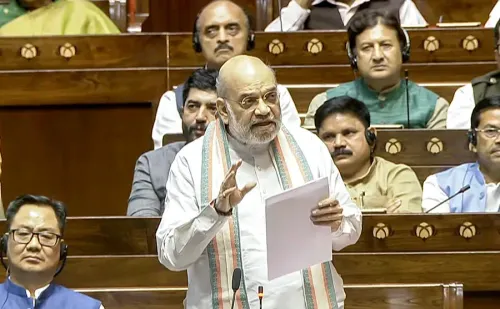
Fifty-five years after India first criminalised insults to the national flag, Constitution and national anthem, Union Health Minister J. P. Nadda has moved to close what the ruling party calls a glaring omission — the national song 'Vande Mataram' was never brought under the same legal shield. On Sunday, 9 August 2026, Nadda announced in the Rajya Sabha that the government has introduced the Prevention of Insults to National Honour (Amendment) Bill, 2026 to fix exactly that.
Posting in Hindi, Nadda stated: 'We have brought the Prevention of Insults to National Honour (Amendment) Act, 2026 in the Rajya Sabha. Fifty-five years ago, in 1971, the national anthem, national flag and Constitution were included in the law relating to national honour — but the national song 'Vande Mataram' was not given a place in it. Now, after this amendment, insults to the national anthem, national song, national flag and the Constitution have all been made punishable. These are all the pride and glory of our nation.' He tagged the post with #HarGharTiranga, linking the legislative move to the government's ongoing campaign to encourage citizens to fly the tricolour.
What the 1971 law covered — and what it missed
The Prevention of Insults to National Honour Act, 1971 was enacted to make it a criminal offence to desecrate or insult India's national flag, its Constitution, and the national anthem — Jana Gana Mana. The law set a clear legal floor for how the country's most sacred symbols must be treated in public. What it did not cover was Vande Mataram, the song composed by Bankim Chandra Chatterjee that served as a rallying cry during the independence movement and was adopted as India's national song after independence. The distinction between 'national anthem' and 'national song' has always carried legal weight — and for five-and-a-half decades, that gap meant 'Vande Mataram' had no statutory protection against public insult.Rajya Sabha as the stage, August 9 as the date
The timing is pointed. 9 August is observed as Quit India Movement Day, marking the anniversary of Mahatma Gandhi's call to the British in 1942 — a date freighted with nationalist memory. Introducing a bill to protect 'Vande Mataram' on this day, in the upper house of Parliament, is a deliberate act of political symbolism. The Rajya Sabha will now be the first chamber to scrutinise the bill, with committee review and a vote in both houses still ahead before it can become law.The 'Har Ghar Tiranga' thread
Nadda's use of the #HarGharTiranga hashtag places the amendment inside a wider cultural project the BJP-led government has championed since 2022 — urging every Indian household to hoist the national flag around Independence Day. By tying the legislative action to that campaign, the government frames the bill not merely as a legal update but as part of a broader assertion of national pride in the run-up to Independence Day on 15 August 2026. The bill now faces the full parliamentary gauntlet — debate, possible committee referral, and a vote in both houses. Whether 'Vande Mataram' gets statutory protection for the first time in independent India's history will be decided in the days ahead.Point of View
And giving it statutory parity with the national anthem addresses a genuine legal lacuna while simultaneously energising the party's nationalist base ahead of Independence Day. The choice of Rajya Sabha — where the ruling coalition has worked to consolidate its numbers — as the introductory chamber suggests confidence in passage. More broadly, the bill extends a pattern of the current government using parliamentary sessions to legislate on symbols of national identity, from the Har Ghar Tiranga campaign to flag-code revisions. The real test will be in the debate: opposition parties will need to decide whether to contest the bill on civil-liberties grounds or concede the political terrain of national symbols entirely.
NationPress
23 Sept 2026
Frequently Asked Questions
What is the Prevention of Insults to National Honour Amendment Bill 2026?
It is a bill introduced in the Rajya Sabha on 9 August 2026 that proposes to add 'Vande Mataram', India's national song, to the list of national symbols whose public insult is a punishable criminal offence under the original 1971 Act.
Why was Vande Mataram not protected under the 1971 law?
The Prevention of Insults to National Honour Act, 1971 was drafted to cover the national flag, the Constitution and the national anthem (Jana Gana Mana). Vande Mataram, while designated the national song, was simply not included in the legislation at the time — a gap that has remained for 55 years.
What is the difference between the national anthem and the national song of India?
India's national anthem is 'Jana Gana Mana', composed by Rabindranath Tagore and adopted in 1950. The national song is 'Vande Mataram', composed by Bankim Chandra Chatterjee; it played a central role in the independence movement but holds a distinct, separate constitutional status from the anthem.
What is the Har Ghar Tiranga campaign?
Har Ghar Tiranga is a government initiative launched in 2022 that encourages every Indian household to display the national tricolour around Independence Day (15 August) as an act of patriotism and national pride.
What happens next with the Vande Mataram protection bill?
After its introduction in the Rajya Sabha, the bill will go through parliamentary debate and possible committee scrutiny before being put to a vote. It must then pass the Lok Sabha as well before it can receive Presidential assent and become law.