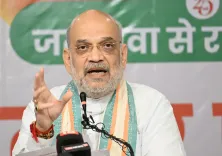
Chirag Paswan hails Lok Sabha passing Vande Mataram protection bill

Synopsis
The Lok Sabha on 30 July 2026 passed an amendment to the Prevention of Insults to National Honour Act, 1971, bringing Vande Mataram under legal protection. Union Minister Chirag Paswan called it a historic step honouring crores of Indians for whom the national song embodies devotion to the motherland.
Key Takeaways
The Lok Sabha passed the Prevention of Insults to National Honour (Amendment) Bill, 2026 on 30 July 2026 .
The bill extends legal protection to Vande Mataram , India's national song adopted in 1950 , which was not explicitly covered by the parent 1971 Act .
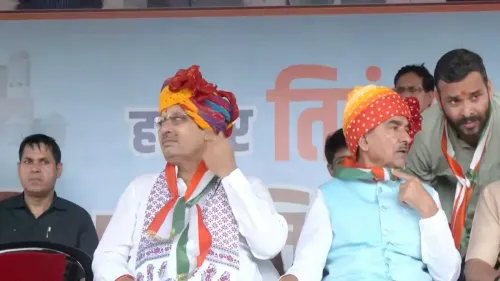
Union Food Processing Minister Chirag Paswan , national president of the Lok Janshakti Party (Ram Vilas) , welcomed the passage as a historic moment for India's cultural heritage.
The parent law, the Prevention of Insults to National Honour Act, 1971 , already protects the national flag, anthem, and Constitution from deliberate disrespect.
The bill must now clear the Rajya Sabha and receive presidential assent before it becomes enforceable law.
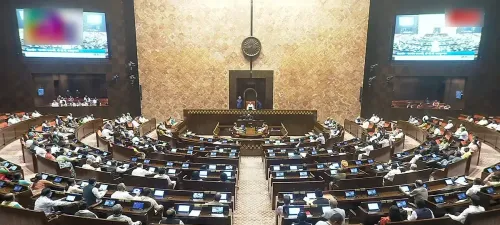
A Parliament that has long shielded the tricolour and the national anthem took a significant new step on Thursday, 30 July 2026, when the Lok Sabha passed the Prevention of Insults to National Honour (Amendment) Bill, 2026 — extending legal protection to Vande Mataram, India's national song. Union Food Processing Minister Chirag Paswan welcomed the move as a historic moment for the nation's cultural conscience.
Posting on X, Paswan called the legislation an acknowledgement of the feelings of 'karoron deshvasiyon' (crores of fellow citizens) for whom 'Vande Mataram' is not merely a song but a symbol of devotion to the motherland and national awakening. 'This decision will further strengthen our commitment to cultural heritage, national pride, and constitutionally enshrined values,' he wrote.
What the 1971 law protected — and what it left out
The parent statute, the Prevention of Insults to National Honour Act, 1971, was enacted to penalise disrespect to the national flag, the national anthem, and the Constitution. Vande Mataram — adopted as the national song in 1950 — occupied a place of deep emotional resonance but sat outside the Act's explicit protective cover, a gap that critics had flagged for decades.
The amendment, if it follows the pattern of earlier updates to the Act, would bring the national song within the same legal framework — making its deliberate public disrespect a punishable offence. The bill now awaits passage in the Rajya Sabha before it can be notified into law.
Vande Mataram's long road from poem to protected symbol
Vande Mataram was composed by Bankim Chandra Chattopadhyay in his novel Anandamath and became a rallying cry of the independence movement. Its adoption as the national song in 1950 placed it alongside the national anthem, Jana Gana Mana, though the two have always carried distinct constitutional and legal weights. The amendment is framed as correcting that asymmetry.
Parliamentary action on national-honour legislation has historically followed moments of heightened public sensitivity around cultural and constitutional icons — and this bill arrives at a time when debates over the song's status have periodically resurfaced in public discourse.
The Rajya Sabha test ahead
The bill's passage in the lower house is the first hurdle cleared. For it to become enforceable law, the Rajya Sabha must also approve it — and the government will then need to notify rules or enforcement guidelines that define the scope of 'insult' with sufficient legal precision. That definition will be the clause most closely watched by constitutional scholars and civil-liberties advocates alike.
For Chirag Paswan and the ruling alliance, the vote is a signal — that protecting India's cultural and constitutional symbols will remain a legislative priority in the current session of Parliament.
The song that once moved a nation to march against colonial rule now moves Parliament to write its name into the statute books. Whether the Rajya Sabha follows through will determine whether that symbolism becomes enforceable law.
Point of View
Legislating cultural symbols is a consistent strand of political identity, and the bill's Lok Sabha passage consolidates that narrative ahead of any Rajya Sabha arithmetic test. The real policy question, however, lies in how 'insult' will be defined in the enforcement rules — too broad a definition risks chilling legitimate artistic or political expression, a tension Indian courts have navigated before with national-symbol legislation.
NationPress
14 Sept 2026
Frequently Asked Questions
What is the Prevention of Insults to National Honour Amendment Bill 2026?
It is a bill passed by the Lok Sabha on 30 July 2026 that amends the Prevention of Insults to National Honour Act, 1971, to bring Vande Mataram — India's national song — under legal protection, making its deliberate public disrespect a punishable offence.
What did Chirag Paswan say about the Vande Mataram bill?
Union Food Processing Minister Chirag Paswan called it a historic step and said it honours the feelings of crores of Indians for whom Vande Mataram is not merely a song but a symbol of devotion to the motherland and national awakening.
Is Vande Mataram the same as the national anthem?
No. Jana Gana Mana is India's national anthem, while Vande Mataram is the national song — both adopted in 1950. The anthem has long carried explicit legal protection; the national song's status under law has historically been less defined.
What does the Prevention of Insults to National Honour Act 1971 cover?
The 1971 Act penalises deliberate disrespect to the national flag, the national anthem, and the Constitution of India. The 2026 amendment is intended to add Vande Mataram to this list of protected national symbols.
What happens next after the Lok Sabha passed the Vande Mataram protection bill?
The bill must be passed by the Rajya Sabha, the upper house of Parliament, and then receive presidential assent before it becomes law. The government will also need to notify enforcement rules defining the scope of 'insult' under the amended Act.