Is 16% of the World’s AI Talent Really of Indian Origin?
Synopsis
A recent white paper reveals that India is home to 16% of the world's AI talent, highlighting its potential in the global AI landscape. With projections of contributing 20% to global GDP growth in the next 15 years, India's role in the digital economy is set to expand significantly.
Key Takeaways
16% of global AI talent is Indian.
India will contribute 20% to global GDP growth over 15 years .
Focus is on productivity and equitable digital participation.
AI should be institutionalized across various sectors.
India is a model for the Global South.
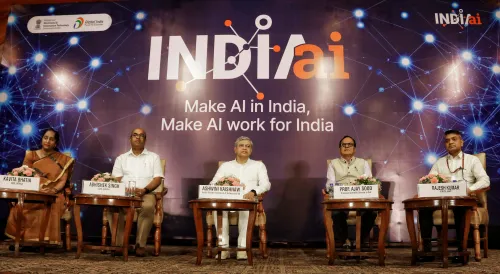
New Delhi, Feb 17 (NationPress) Approximately 16 percent of the global AI workforce originates from India, providing the country with a competitive edge in AI capabilities, as indicated in a recent white paper released on Tuesday. The report also forecasts that India is set to account for nearly 20 percent of the incremental global GDP growth over the next 15 years.
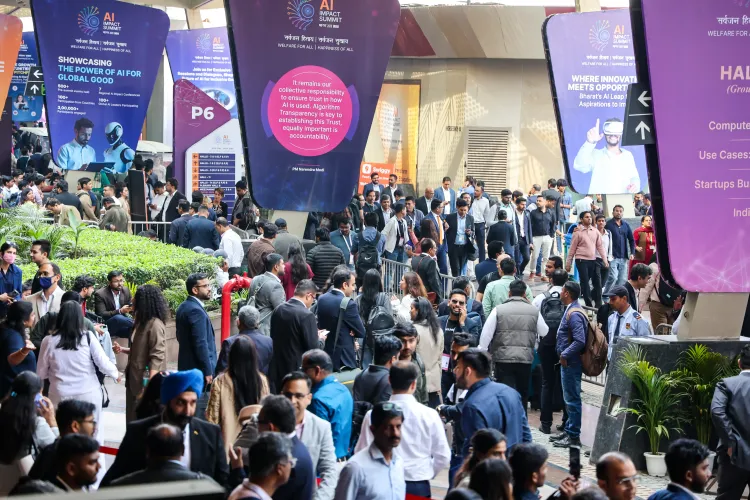
This white paper, unveiled during the ‘India AI Impact Summit 2026’, represents a strategic initiative to transition the national AI discourse from a limited focus on automation and job displacement to a broader narrative centered on productivity enhancement, institutional development, and equitable engagement in the digital economy.
The central premise of the white paper emphasizes that the forthcoming phase of growth will be characterized not merely by access to AI but rather by systematic execution and extensive institutional adoption. Derived from a series of pre-summit multi-sector consultations with policymakers and influential stakeholders, it provides a roadmap to fuel the next phase of job creation, productivity, and inclusive development, positioning India as a leading model for the Global South.
Titled “AI for All: Catalysing Jobs, Growth, and Opportunity,” the white paper was introduced by Prosus, a global tech company, in collaboration with knowledge partner BCG and MeitY.
“India has established robust digital public infrastructure and developed one of the world’s largest reservoirs of AI talent. Our next journey involves converting these strengths into institutional capabilities and measurable results,” stated Abhishek Singh, Additional Secretary, MeitY, and CEO of the IndiaAI Mission.
The document reviews India's Digital Public Infrastructure, which includes Jan Dhan, Aadhaar, UPI, Account Aggregator, and ONDC, illustrating how AI can be responsibly institutionalized and scaled across emerging markets, further establishing India as a model for the Global South.
“AI must be integrated into agricultural markets, educational institutions, healthcare facilities, manufacturing sectors, and financial systems. When implemented responsibly, AI has the potential to create net employment while enhancing trust, governance, and long-term productivity,” remarked Rentala Chandrashekhar, Chief Mentor of the AI for All Project, and Chairman of the Centre for the Digital Future.
Sehraj Singh, Managing Director of Prosus India, emphasized that the next growth phase will rely on large-scale execution of AI. Vipin V, MD and Partner at BCG, highlighted that the key challenge ahead is the institutionalization of AI, which must be regarded as a strategic asset directly linked to outcomes, economics, and long-term systemic performance.
Point of View
It’s clear that India is poised to become a powerhouse in AI. The findings of this white paper underscore the importance of institutionalizing AI within various sectors, ensuring equitable growth and participation in the digital economy. With strong digital infrastructure and vast talent pools, India is not just keeping pace with global advancements but is also setting standards for emerging economies.
NationPress
5 Oct 2026
Frequently Asked Questions
What percentage of AI talent is from India?
Approximately 16% of the world's AI talent is of Indian origin.
How much will India contribute to global GDP growth?
India is projected to contribute nearly 20% of incremental global GDP growth over the next 15 years.
What is the focus of the white paper?
The white paper focuses on expanding productivity, strengthening institutions, and ensuring equitable participation in the digital economy.
Who launched the white paper?
The white paper was launched by Prosus in partnership with BCG and MeitY.
What sectors should AI be integrated into?
AI should be integrated into agriculture, education, healthcare, manufacturing, and finance.