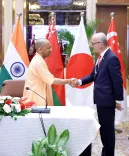
Pralhad Joshi: Macron stayed an hour at India deep-tech pavilion
Synopsis
Union Minister Pralhad Joshi revealed that French President Emmanuel Macron spent over an hour — far beyond his scheduled 20 minutes — at a pavilion showcasing 120 deep-tech start-ups from Indian higher education institutions, underscoring India's growing academic innovation clout.
Key Takeaways
120 deep-tech start-ups from Indian higher education institutions were showcased at the #SevaFirstInnovationChallenge pavilion.
French President Emmanuel Macron was scheduled to spend 20 minutes at the pavilion but stayed for over an hour .
Minister Pralhad Joshi cited the extended visit as evidence of the quality and impressiveness of the innovations on display.
India and France share a strategic partnership since 1998 , covering defence, space, and emerging technology.
The showcase aligns with the Startup India initiative (launched 2016 ) and its focus on surfacing campus-origin deep-tech ventures onto global platforms.
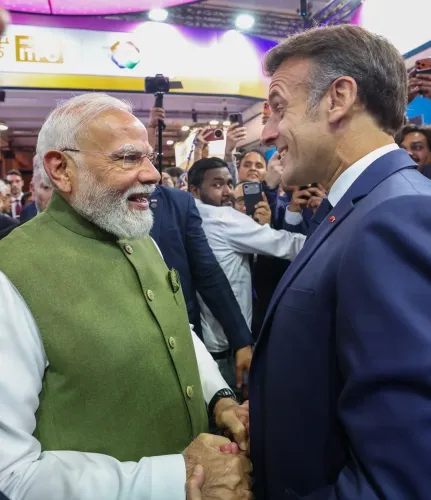
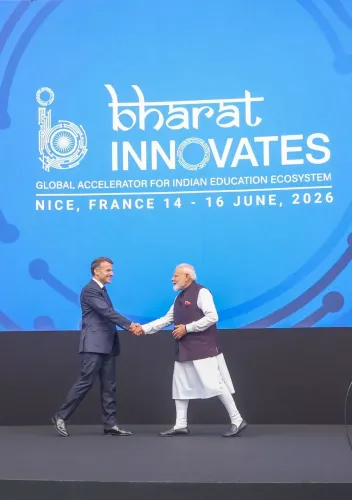
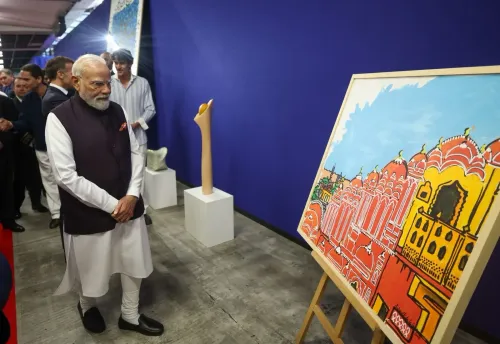
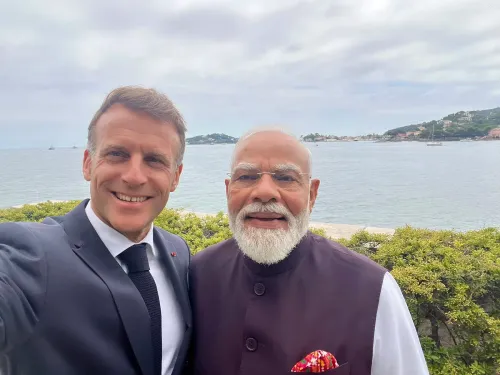
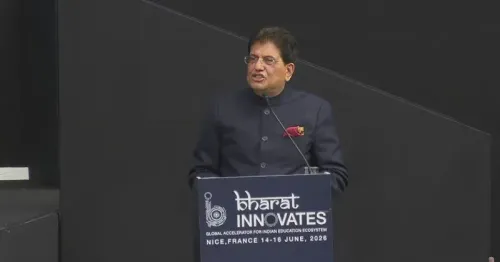
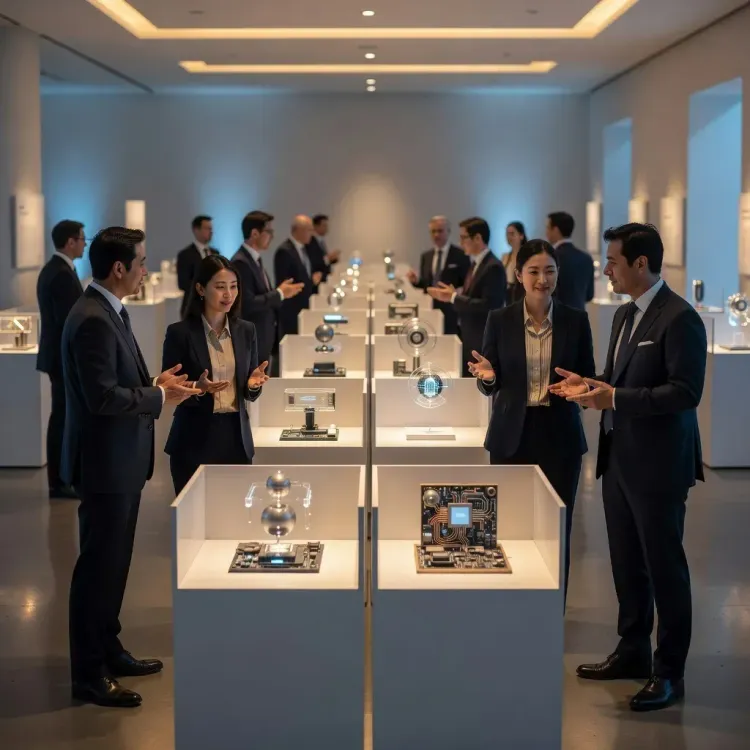
When French President Emmanuel Macron walked into India's deep-tech pavilion, he had 20 minutes on his schedule. He left more than an hour later. That detail — shared by Union Consumer Affairs and New and Renewable Energy Minister Pralhad Joshi on Friday, September 25, 2026 — is the sharpest measure of what 120 deep-tech start-ups drawn from Indian higher education institutions had on display.
120 start-ups, one pavilion, one unplanned hour
Minister Joshi described how India assembled 120 deep-tech start-ups — each one emerging from the country's higher education ecosystem — at a showcase linked to the #SevaFirstInnovationChallenge. The start-ups carried innovations impressive enough to pull the French Head of State well past his allocated slot. 'He was scheduled to spend just 20 minutes, but he stayed for more than an hour because the innovations and start-ups were so impressive,' Joshi said.
That is not a diplomatic courtesy visit. An unscheduled extra 40-plus minutes from a sitting Head of State is a signal — one that Indian deep-tech founders and their university incubators will not miss.
Why France, and why deep-tech from campuses
France is not an incidental audience. Under a strategic partnership dating to 1998, India and France have built some of the most durable bilateral ties in defence, space, and now emerging technology. President Macron has repeatedly engaged with Indian innovation initiatives, positioning France as a preferred technology partner in an era when supply-chain diversification and trusted partnerships dominate global policy conversations.
The start-ups on display were not market-ready consumer apps — they were deep-tech ventures, the kind that emerge from research labs and engineering departments and take years to reach a prototype. India's push to surface these from academic institutions and onto international stages fits a deliberate pattern: build the global legitimacy of campus-origin innovation, then convert attention into partnership, investment, and export opportunity.
Startup India's academic pipeline comes into view
The Startup India initiative, launched in 2016, seeded the policy environment that now allows university incubators to produce start-ups that can hold a world leader's attention for an hour. The #SevaFirstInnovationChallenge appears to be a more recent, focused channel within this broader architecture — one designed to push innovation from campuses into competitive, high-visibility arenas.
One hundred and twenty start-ups. One pavilion. One French president who decided he had more to learn. The next India-France bilateral summit will be worth watching for whether that hour translates into something concrete.
Point of View
High-value diplomatic validation — the kind no press release can manufacture. For Minister Joshi and the BJP government, it is a tangible proof-point that India's innovation narrative, built over a decade of Startup India policy, is landing at the highest levels of global leadership. The deeper strategic read is that India is deliberately using deep-tech showcases to cement France as a preferred technology partner at a time when trusted supply chains and dual-use technology partnerships are at the centre of geopolitical competition. Whether this moment converts into formal France-India deep-tech investment or R&D agreements will be the real measure of its significance.
NationPress
25 Sept 2026
Frequently Asked Questions
What is the SevaFirst Innovation Challenge?
The #SevaFirstInnovationChallenge is an innovation competition that brought together 120 deep-tech start-ups from Indian higher education institutions for an international showcase. Specific programme details have not been independently verified.
Why did Emmanuel Macron visit the India deep-tech pavilion?
French President Emmanuel Macron visited the India deep-tech pavilion as part of a broader bilateral engagement. He was originally scheduled for a 20-minute visit but stayed over an hour, according to Minister Pralhad Joshi, due to the quality of innovations on display.
How many Indian startups were showcased at the event?
120 deep-tech start-ups emerging from Indian higher education institutions were showcased at the pavilion highlighted by Minister Joshi.
What is India's relationship with France on technology?
India and France have maintained a strategic partnership since 1998 , covering defence, space, and emerging technology sectors. French President Macron has engaged with Indian innovation initiatives as part of efforts to deepen bilateral technology cooperation.
What is the Startup India initiative?
Startup India was launched in 2016 by the Indian government to promote entrepreneurship and support deep-tech ventures, including those originating from academic and research institutions.