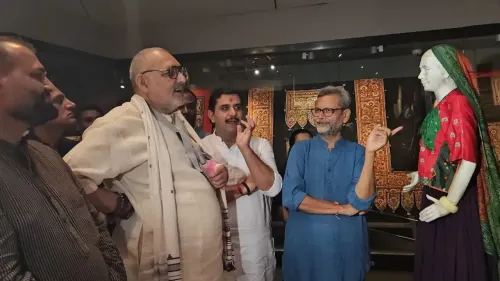
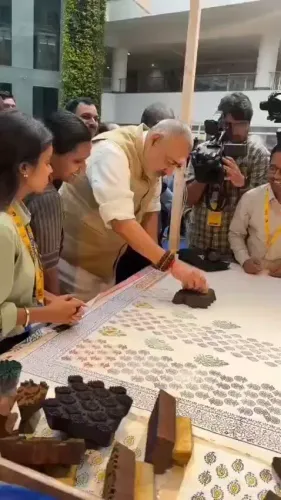
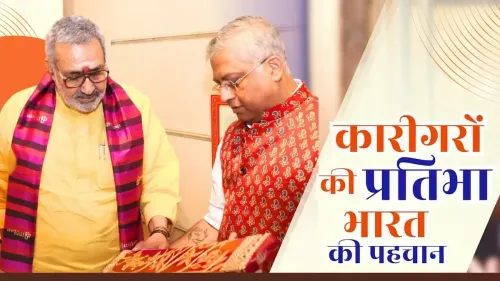
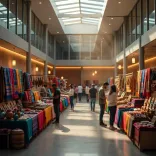
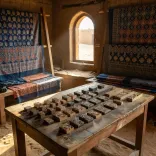
Giriraj Singh holds Shilp Samvad with Kutch artisans in Bhuj
Synopsis
Union Textiles Minister Giriraj Singh met artisans, weavers, and entrepreneurs in Bhuj, Kutch on 15 November 2026 for a 'Shilp Samvad', focusing on connecting traditional Ajrakh block printing and handloom industries with global export markets.
Key Takeaways
Union Textiles Minister Giriraj Singh conducted a 'Shilp Samvad' engagement in Bhuj, Kutch on 15 November 2026 .
Discussions centred on expanding export channels and market access for Kutch's traditional handicrafts, Ajrakh block printing, and handloom products.
Kutch, Gujarat is one of India's most prominent artisanal districts, with Ajrakh block printing recognised under the Geographical Indications of Goods Act, 1999 .
The central government's approach links GI protection, skill programmes, and buyer-seller meets to integrate craft clusters into global trade.
Reducing dependence on domestic markets for handcrafted textiles remains a key policy objective of the Ministry of Textiles .
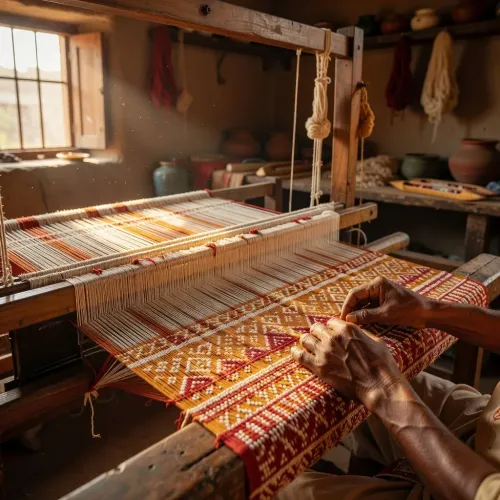
India's centuries-old Ajrakh block-printing tradition and the handloom clusters of Kutch are getting a fresh push toward global markets — and Union Textiles Minister Giriraj Singh took that effort directly to the craftspeople on Sunday, 15 November 2026, meeting weavers, artisans, and entrepreneurs in Bhuj for what he called a 'Shilp Samvad' — a dialogue of craft.
Singh said the central government is 'continuously working' to link Kutch's traditional handicrafts, Ajrakh block printing, and handloom industry with global markets. The 'Shilp Samvad' format brought officials face to face with the artisans themselves — a deliberate ground-level consultation on expanding export channels and broadening market access for their products.
Why Kutch sits at the centre of India's craft-export push
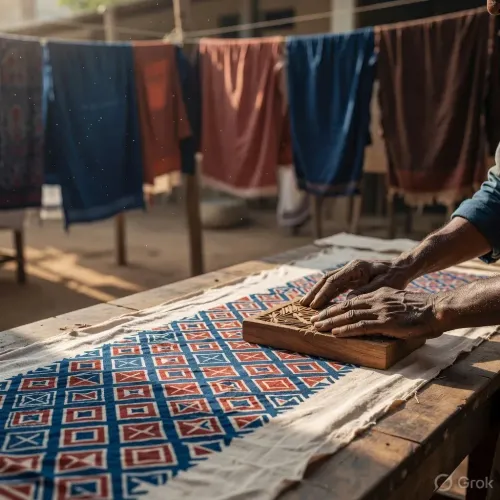
Kutch, Gujarat is one of India's most concentrated artisanal districts, home to dozens of distinct craft traditions. Among them, Ajrakh block printing — a resist-dye technique with roots stretching back centuries — has emerged as a flagship product with strong international appeal. The craft's distinctiveness has also made it a candidate for Geographical Indication (GI) protection under the Geographical Indications of Goods (Registration and Protection) Act, 1999, a legal shield designed to protect traditional knowledge and sharpen market positioning.
GI tagging matters enormously for artisans: it prevents imitation goods from eroding the brand, and it gives buyers — domestic and international — a verifiable authenticity signal. For Kutch weavers and block printers, that credibility is the difference between a craft sold cheaply in a local market and one commanding a premium in Paris, London, or Tokyo.
A pattern bigger than one visit
Sunday's Shilp Samvad fits into a longer arc of central government policy that has aimed to wire regional craft clusters into export ecosystems — through GI protection, skill-upgrade programmes, and structured buyer-seller meets. The Ministry of Textiles has consistently framed this integration as a twin-track goal: growing India's share in global textile trade while anchoring rural employment in craft-intensive belts like Kutch.
The dependence of block-printed and handwoven goods on domestic demand alone remains a vulnerability. Export diversification reduces that exposure — which is precisely what the discussions in Bhuj were designed to accelerate. The next tangible signals to watch: revisions to export incentive frameworks and any follow-up participation of Kutch clusters in international trade fairs announced by the ministry.
Kutch artisans have survived earthquake, drought, and economic upheaval. The question the ministry is now pressing is whether their craft can survive — and thrive — on a stage that spans continents.
Point of View
Not just departmental paperwork — a move that plays well both as textile policy and as political optics in a Gujarat context. The 'Shilp Samvad' format, which brings the minister to artisans rather than summoning artisans to Delhi, reflects a broader BJP effort to show hands-on governance in heritage-economy sectors. For the Ministry of Textiles, the real test will be whether such dialogues translate into measurable export upticks or new international fair participations for Kutch clusters. The GI framework already provides the legal scaffolding; the missing link remains consistent market-linkage infrastructure.
NationPress
15 Nov 2026
Frequently Asked Questions
What is a Shilp Samvad?
A 'Shilp Samvad' is a government-organised dialogue session where officials — in this case the Union Textiles Minister — meet directly with artisans, weavers, and craft entrepreneurs to discuss challenges, market access, and policy support for traditional crafts.
What is Ajrakh block printing and why is it significant?
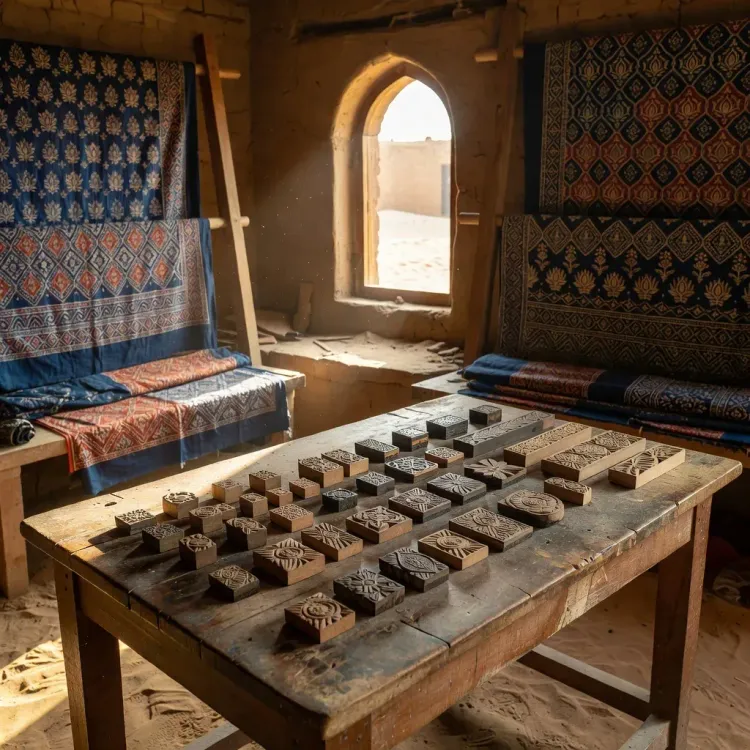
Ajrakh is a centuries-old resist-dye block-printing technique originating in Kutch, Gujarat . It uses hand-carved wooden blocks and natural dyes to create intricate geometric patterns. It carries Geographical Indication (GI) protection under Indian law, which helps authenticate the craft and position it in premium domestic and international markets.
What is the central government doing to promote Kutch handicrafts?
The Ministry of Textiles is pursuing a multi-pronged approach: GI protection for traditional crafts, skill-upgrade programmes for weavers and artisans, and structured buyer-seller meets aimed at connecting Kutch clusters to export markets and reducing dependence on domestic-only sales.
What is a GI tag and how does it help Kutch artisans?
A Geographical Indication (GI) tag , granted under the Geographical Indications of Goods (Registration and Protection) Act, 1999, legally certifies that a product originates from a specific region with qualities attributable to that origin. For Kutch artisans, it prevents imitation goods from undercutting authentic products and helps command premium pricing in global markets.
Where is Bhuj and why was it chosen for this event?
Bhuj is the principal town of Kutch district in Gujarat , the heartland of India's traditional handicraft economy. It was chosen because it sits at the centre of the artisan and weaver communities the Ministry of Textiles is targeting for export promotion.