Kutch crafts get Centre's push: Giriraj Singh visits Bhuj to boost Ajrakh exports
Synopsis
Union Textiles Minister Giriraj Singh travelled to Bhuj on 14 November to meet Kutch's Ajrakh artisans, handloom weavers, and exporters — signalling the Centre's intent to open new global markets for a craft cluster that survived the 2001 earthquake and is now eyeing international scale. The real test is whether field visits translate into structural market linkages.
Key Takeaways
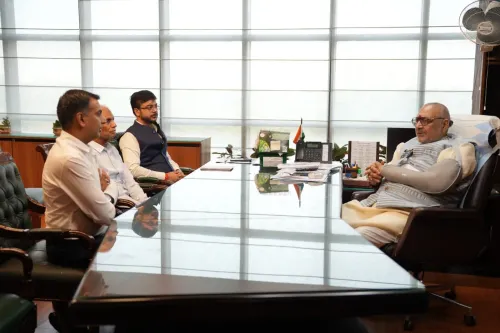
Union Textiles Minister Giriraj Singh undertook a two-day visit to Bhuj, Kutch on 14 November 2026 to assess challenges facing artisans.
The visit focused on expanding global market access for Ajrakh block printing and the handloom industry.
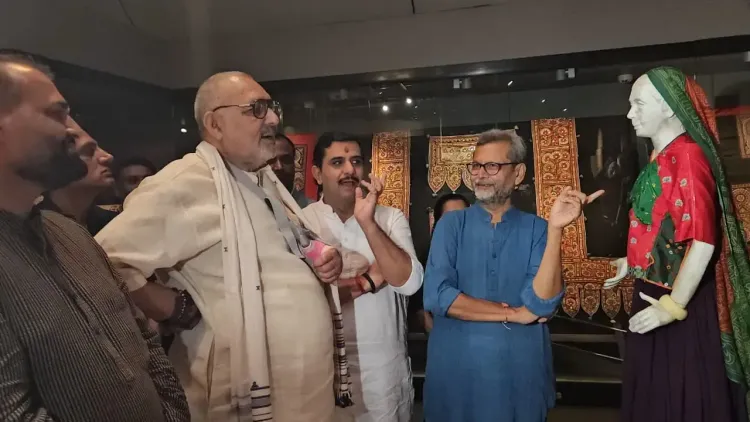
Singh attended the 'Shilp Samvad' programme, interacting with exporters, designers, NGOs, and master craft persons at the LLDC Craft Museum in Ajrakhpur.
He visited the workshop of renowned Ajrakh artisan Dr Ismail Khatri and inspected the Effluent Treatment Plant under the 'Chalo Ajrakhpur' initiative.
At Bhujodi handloom village, the minister met award-winning weavers Dayal Kudeja , Chaman Premji , and senior weaver Vishram Valji .
Singh stressed the need to blend traditional craftsmanship with contemporary designs to meet international consumer preferences.
Union Textiles Minister Giriraj Singh visited Bhuj in Kutch, Gujarat on 14 November 2026 to assess on-ground challenges facing artisans and chart a roadmap for expanding global market access for the district's celebrated traditional handicrafts, including Ajrakh block printing and the handloom industry. The two-day visit is part of the Centre's broader effort to position India's craft heritage as a driver of export growth.
Key Interactions and Visits
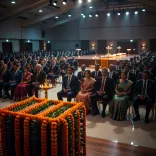
Singh began at the Living and Learning Design Centre (LLDC) Craft Museum in Ajrakhpur, Bhuj taluka, where he examined exhibits on Kutch's traditional techniques and cultural heritage. He subsequently attended the 'Shilp Samvad' programme at the LLDC auditorium, engaging with representatives of producer companies, non-governmental organisations, entrepreneurs, exporters, buyers, designers, award winners, and master craft persons.
The discussions covered the overall development of the handicrafts sector, the difficulties faced by artisans, better marketing opportunities, and the pressing need to scale up exports. Participants stressed the importance of blending traditional craftsmanship with contemporary designs to suit shifting consumer preferences in global markets.
At the Workshop of a Master Artisan
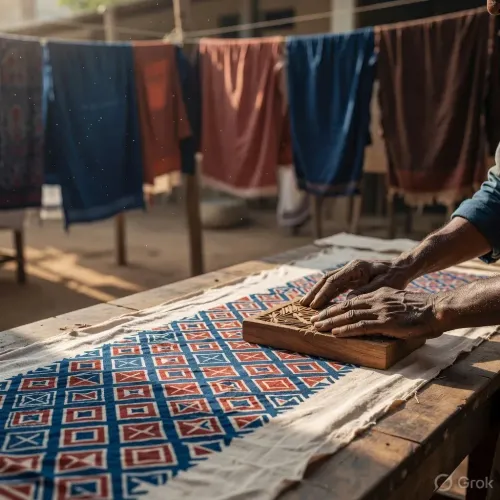
The minister visited the workplace and residence of renowned Ajrakh artisan Dr Ismail Khatri, where he inspected a hand block-printing unit and learned about the intricate techniques behind Ajrakh textile production. He also toured the Effluent Treatment Plant (ETP) operating under the 'Chalo Ajrakhpur' initiative, receiving a briefing on its role in environmental conservation — a critical concern for natural-dye-based craft clusters.
Bhujodi and the Handloom Heritage
At Bhujodi, a well-known handloom village in Bhuj taluka, Singh met award-winning handloom personalities Dayal Kudeja and Chaman Premji, along with senior weaver Vishram Valji. He was briefed on traditional weaving techniques and the contribution of local weavers to keeping the handloom tradition alive — a tradition that has faced mounting pressure from power-loom competition and fluctuating raw-material costs.
What the Minister Said
Singh underscored that artisans are the custodians of India's cultural heritage, and that providing wider market access to their skills, innovations, and products remains a priority for the government. He also stressed the need to connect traditional crafts with contemporary designs and the requirements of international markets — signalling a likely push through platforms such as the Craftmark certification and government e-marketplace channels.
Smritivan Visit and Broader Context
Singh also toured the Smritivan Earthquake Memorial and Museum in Bhuj, which preserves the memories of the 2001 earthquake — a disaster that devastated the craft community but also catalysed its remarkable revival through NGO-led and government-backed rehabilitation programmes. The visit comes at a time when Kutch handicrafts have gained significant international recognition, yet artisans continue to cite limited direct access to global buyers and design support as persistent bottlenecks. How the Centre translates these field-level conversations into concrete policy action will determine whether this visit marks a turning point for the sector.
Point of View
Economic neglect, and pandemic disruption largely through community resilience and NGO support, not government market architecture. Singh's emphasis on connecting traditional design with international buyer preferences is the right diagnosis, but past textile ministry visits have produced goodwill without durable export pipelines. The sector needs direct-to-buyer digital infrastructure, GI tag enforcement, and design co-creation programmes — not just another round of Shilp Samvad photos.
NationPress
14 Nov 2026
Frequently Asked Questions
Why did Union Textiles Minister Giriraj Singh visit Bhuj in November 2026?
Singh visited Bhuj on 14 November 2026 to assess the challenges facing Kutch's traditional handicraft and handloom artisans and to explore ways to expand their global market access and export opportunities. The two-day visit included meetings with craftspeople, exporters, designers, and NGO representatives.
What is Ajrakh block printing and why is it significant?
Ajrakh is a centuries-old hand block-printing tradition from Kutch, Gujarat, known for its geometric patterns and natural dyes. It holds a Geographical Indication (GI) tag and is considered one of India's most distinctive textile art forms, with the artisan community centred in Ajrakhpur near Bhuj.
What was the 'Shilp Samvad' programme during the minister's visit?
'Shilp Samvad' was a structured dialogue held at the LLDC auditorium in Ajrakhpur, where Singh engaged with producer companies, NGOs, entrepreneurs, exporters, buyers, and master craft persons. Discussions covered handicraft sector development, artisan hardships, marketing improvements, and ways to blend traditional design with contemporary international market demands.
Who is Dr Ismail Khatri and why did the minister visit him?
Dr Ismail Khatri is a renowned Ajrakh artisan based in Ajrakhpur, Kutch, widely recognised for his contribution to preserving and promoting the Ajrakh block-printing tradition. Singh visited his workplace to understand the hand block-printing process and the work undertaken by local artisans.
What is the 'Chalo Ajrakhpur' initiative mentioned during the visit?
'Chalo Ajrakhpur' is an initiative associated with Kutch's Ajrakh craft cluster that includes, among other elements, an Effluent Treatment Plant (ETP) to manage the environmental impact of natural-dye-based textile production. Singh was briefed on the ETP's role in sustainable craft manufacturing during his visit.