Miami Airport plane collision injures 2 amid US aviation crisis
Synopsis
A Copa Airlines Boeing 737 and a UPS cargo plane collided on the Miami International Airport taxiway on Saturday night, injuring two people — adding a dramatic incident-level twist to an already catastrophic week for US aviation. With more than 6,150 flights cancelled on Saturday alone and the FAA tracing the root cause to a contractor-installed router, America's busiest airports remain in recovery mode heading into Sunday.
Key Takeaways
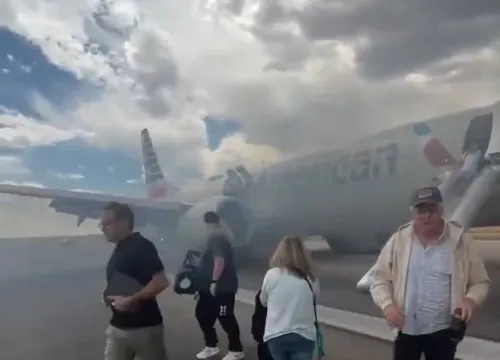
A Copa Airlines Boeing 737 and a UPS Boeing 767 collided on the taxiway at Miami International Airport on 15 November 2025 at approximately 9:15 pm local time .
Two passengers received attention from airport paramedics; injuries are described, preliminarily, as minor.
All 166 passengers and 6 crew members disembarked safely.
The collision came a day after the FAA issued a nationwide ground stop, cancelling roughly 9,200 flights on Friday alone.
By 6:45 pm ET Saturday , more than 6,150 flights had been cancelled and over 7,300 delayed across the US.
The technical fault was traced to a router installed by FAA contractor L3Harris at a remote facility, according to Transportation Secretary Sean Duffy .
FAA chief Bryan Bedford said normal schedules are unlikely to resume before late Sunday ; an emergency White House Situation Room meeting was held.
Two people were injured on Saturday, 15 November 2025, after a Copa Airlines Boeing 737 and a UPS Boeing 767 cargo plane collided on the taxiway at Miami International Airport, compounding an already severe aviation crisis gripping the United States. The incident occurred just one day after a nationwide ground stop paralysed air travel across the country, leaving hundreds of thousands of passengers stranded.
How the collision happened
The wingtip of the Copa Airlines Boeing 737 — which was operating a service from Panama City carrying 166 passengers and six crew members — struck the nose of the UPS Boeing 767 as both aircraft moved along the airport taxiways at approximately 9:15 pm local time on Saturday.
Copa Airlines confirmed in an official statement that two individuals received attention from airport paramedics for what the airline described, preliminarily, as minor injuries. The statement read: 'The aircraft is at the terminal and all passengers have disembarked. Two of them received attention from airport paramedics for what, preliminarily, appear to be minor injuries.' The Panama-based carrier added that the remaining passengers and crew are in 'good condition.'
Copa Airlines also said: 'We regret the inconvenience and concern this situation may have caused. We reiterate that the safety of passengers and crews is our priority. We will cooperate with the authorities in this investigation.'
The wider US aviation meltdown
The Miami tarmac collision occurred against the backdrop of an unprecedented nationwide aviation disruption that began on Friday, 14 November, when the Federal Aviation Administration (FAA) issued a ground stop that halted nearly all departing flights across the country for close to five hours. The root cause, according to Transportation Secretary Sean Duffy, was traced to the installation of at least one new router by FAA contractor L3Harris at a remote facility — an operational failure that cascaded into system-wide communications breakdowns.
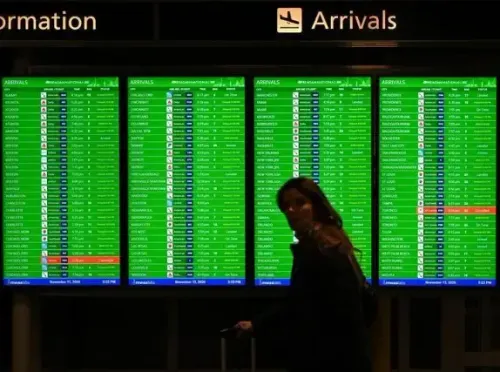
On Friday alone, approximately 9,200 flights were cancelled and a further 7,500 faced delays. By 6:45 pm ET on Saturday, aviation tracking platform FlightAware reported that airlines had cancelled more than 6,150 flights and delayed over 7,300 others. By Saturday evening, more than 530 flights scheduled for Sunday had also been cancelled.
FAA response and White House involvement
FAA chief Bryan Bedford said on Saturday that flight schedules were unlikely to return to normal until late Sunday, even as the agency worked to stabilise operations and resolve the underlying technical faults. Bedford apologised to affected passengers, asserting that the country's aviation system remained structurally stable.
The scale of the crisis prompted an emergency meeting at the White House Situation Room, where officials gathered to assess the situation and examine its possible causes. Authorities initially considered whether a cyberattack could have triggered the breakdown, but that line of inquiry was set aside after the L3Harris router installation was identified as the likely fault point.
The recovery challenge ahead
Restoring normal operations is expected to take considerable time, as airlines face the complex logistical task of repositioning aircraft, pilots, and cabin crew to resume regular schedules. Thousands of passengers remain stranded at airports across the country. This is widely regarded as one of the most disruptive single-event failures in US civil aviation in recent years, with the two-day cancellation and delay toll running into the tens of thousands of flights.
Investigators are expected to examine both the technical failure at the FAA facility and Saturday's tarmac collision at Miami as separate but concurrent threads of the same crisis week. With full recovery projected for late Sunday at the earliest, the coming hours will be a critical test of the FAA's ability to manage simultaneous systemic and incident-level challenges.
Point of View
Not the story — the story is a systemic failure at the FAA that a single router installation by a contractor was apparently able to trigger. That a facility-level hardware change could cascade into a five-hour nationwide ground stop, an emergency White House meeting, and tens of thousands of cancelled flights raises serious questions about redundancy design in US air traffic control infrastructure. The pivot away from the cyberattack hypothesis toward a mundane contractor error is, in some ways, more alarming: it suggests the system's vulnerability is not exotic but operational. India's own aviation regulator, the DGCA, should be watching — as Indian carriers expand US routes, travellers on both ends bear the downstream risk of such failures.
NationPress
15 Nov 2026
Frequently Asked Questions
What happened at Miami International Airport on 15 November 2025?
The wingtip of a Copa Airlines Boeing 737, arriving from Panama City with 166 passengers and 6 crew members, struck the nose of a UPS Boeing 767 cargo plane while both aircraft were taxiing at Miami International Airport at around 9:15 pm local time on Saturday. Two passengers sustained what the airline described, preliminarily, as minor injuries; all others disembarked safely.
What caused the widespread US flight cancellations this weekend?
The Federal Aviation Administration issued a nationwide ground stop on Friday, 14 November, after its air traffic control communications system suffered a technical failure. Transportation Secretary Sean Duffy said the fault was traced to the installation of at least one new router by FAA contractor L3Harris at a remote facility. The disruption led to roughly 9,200 cancellations and 7,500 delays on Friday alone.
When will US flights return to normal?
FAA chief Bryan Bedford said on Saturday that flight schedules were unlikely to fully normalise before late Sunday, 16 November. Airlines face the added challenge of repositioning aircraft and crew members, which typically extends recovery timelines beyond the technical fix itself.
How many flights have been cancelled or delayed in total?
By 6:45 pm ET on Saturday, FlightAware reported more than 6,150 cancellations and over 7,300 delays in the US. That follows approximately 9,200 cancellations and 7,500 delays on Friday. More than 530 Sunday flights had also been pre-cancelled by Saturday evening.
Was the FAA system failure a cyberattack?
Authorities initially considered whether a cyberattack could have caused the breakdown. However, Transportation Secretary Sean Duffy later confirmed that the problem was traced to the installation of at least one new router by FAA contractor L3Harris at a remote facility — ruling out a cyberattack as the primary cause.