FAA system failure: 13,000+ US flights hit, chaos to last through Sunday
Synopsis
A single faulty router installed by FAA contractor L3Harris brought US aviation to its knees — triggering the longest nationwide ground stop since 9/11, cancelling over 9,200 flights on Friday and 6,150 more on Saturday. With thousands still stranded and crews out of position, the FAA says normalcy won't return until late Sunday at the earliest — and the questions about America's ageing air traffic infrastructure are only getting louder.
Key Takeaways
The FAA issued a nationwide ground stop on Friday, 15 November , halting nearly all US departures for almost five hours — the longest such halt since 11 September 2001 .
More than 9,200 flights were cancelled on Friday; a further 6,150 cancellations and 7,300 delays were recorded by Saturday evening.
Over 530 Sunday flights had already been cancelled by Saturday evening, per FlightAware .
FAA chief Bryan Bedford said normal operations are not expected to resume until late Sunday, 16 November .
The failure has been traced to the installation of at least one new router by FAA contractor L3Harris at a remote facility, ruling out a cyberattack.
An emergency meeting was convened at the White House Situation Room to assess the crisis.
A catastrophic failure in the Federal Aviation Administration's (FAA) air traffic control communications system has thrown United States aviation into prolonged chaos, with thousands of flights cancelled or delayed and disruptions expected to persist well into Sunday, 16 November. FAA chief Bryan Bedford confirmed on Saturday that flight schedules were unlikely to normalise until late Sunday, even as the agency worked around the clock to stabilise its systems.
Scale of the Disruption
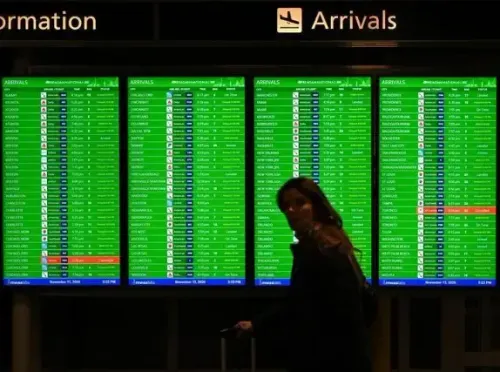
According to aviation tracking platform FlightAware, airlines had cancelled more than 6,150 flights and delayed over 7,300 others across the country by 6:45 pm ET (2345 GMT) on Saturday. The day before was even more severe — approximately 9,200 flights were cancelled on Friday alone, with a further 7,500 facing delays. By Saturday evening, more than 530 flights scheduled for Sunday had already been cancelled.
The cumulative toll — exceeding 13,000 cancellations and delays across two days — places this among the worst aviation disruptions in recent US history.
What Triggered the Crisis
The crisis began on Friday when the FAA issued a nationwide ground stop, halting almost all departing flights across the country for nearly five hours. The suspension is reported to be the longest nationwide interruption of US air travel since the September 11, 2001 attacks, and resulted in one of the worst single days for aviation in the country's history.
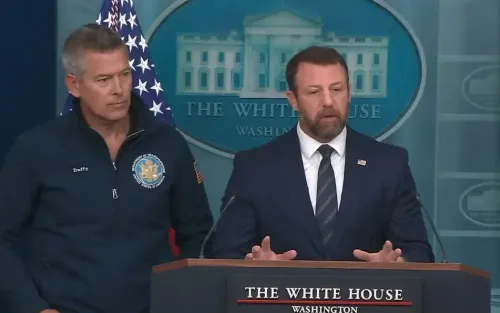
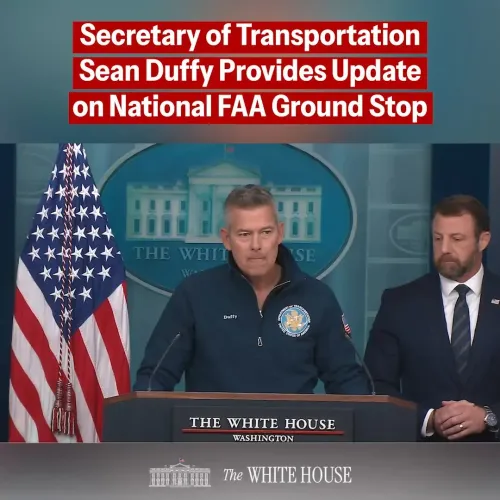
Initial concerns centred on whether a cyberattack had triggered the breakdown. However, Transportation Secretary Sean Duffy subsequently said the technical problem had been traced to the installation of at least one new router by FAA contractor L3Harris at a remote facility — pointing to an infrastructure misstep rather than a hostile act.
Government Response
The scale of the disruption prompted an emergency meeting at the White House Situation Room, where officials gathered to assess the crisis and examine its possible causes. Bedford apologised to affected passengers, assuring them that the country's aviation system remained structurally stable, and pledged that the FAA was working to restore normal operations.
Impact on Passengers and Airlines
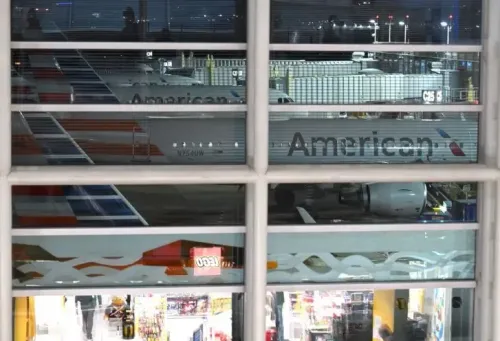
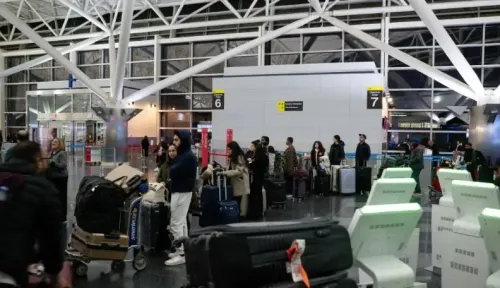
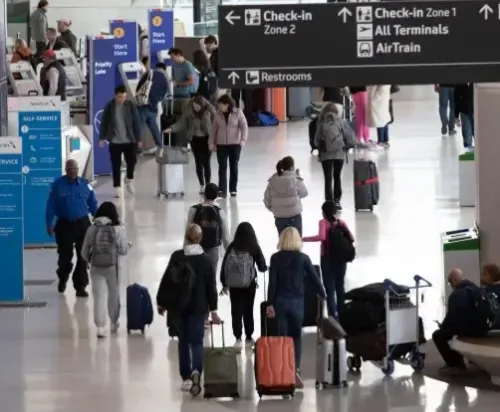
Thousands of passengers have been left stranded at airports across the United States, with airlines facing the compounding challenge of repositioning aircraft, pilots, and cabin crew to rebuild their regular schedules. The ripple effect of crew and aircraft being out of position typically extends disruptions well beyond the initial technical fix — a pattern seen in past large-scale aviation failures.
Notably, this is not the first time FAA system reliability has come under scrutiny; a NOTAM (Notice to Air Missions) system outage in early 2023 had similarly grounded flights nationwide, raising persistent questions about the agency's ageing infrastructure.
What Comes Next
The FAA has said it expects flight services to largely recover by late Sunday, though full normalisation — including repositioned crew and aircraft — may take longer. Investigators are expected to conduct a detailed review of the L3Harris router installation process and broader contractor oversight protocols. With the holiday travel season approaching, pressure on the FAA to demonstrate systemic fixes will be considerable.
Point of View
In one sense, reassuring — this was not a cyberattack. But it should not be. A single contractor-installed router at a remote facility should not have the power to ground the world's busiest aviation network for five hours. This is the second major FAA systems failure in under two years, and the pattern points to a structural problem: the agency's air traffic infrastructure is ageing, its contractor oversight is inadequate, and the redundancy architecture is clearly insufficient. The White House Situation Room meeting signals political alarm, but alarm is not a fix. The real question is whether Congress will now fund the infrastructure overhaul the FAA has long requested — or whether the next crisis will again be explained away as an isolated technical misstep.
NationPress
15 Nov 2026
Frequently Asked Questions
What caused the FAA system failure and US flight cancellations?
The FAA failure has been traced to the installation of at least one new router by FAA contractor L3Harris at a remote facility, according to Transportation Secretary Sean Duffy. The malfunction disrupted the FAA's air traffic control communications system, triggering a nationwide ground stop on Friday that halted nearly all US departures for close to five hours.
How many flights were cancelled or delayed due to the FAA outage?
More than 9,200 flights were cancelled and 7,500 delayed on Friday alone. By 6:45 pm ET on Saturday, a further 6,150 cancellations and 7,300 delays had been recorded, with over 530 Sunday flights already cancelled, according to FlightAware.
When will US flights return to normal after the FAA disruption?
FAA chief Bryan Bedford said on Saturday that flight schedules were unlikely to return to normal until late Sunday, 16 November. Full recovery — including repositioning of aircraft and crew — may take additional time beyond the technical fix.
Is the FAA outage the worst aviation disruption in US history?
The Friday ground stop is reportedly the longest nationwide interruption of US air travel since the September 11, 2001 attacks, and Friday itself is described as one of the worst single days for air travel in US history. A comparable FAA system outage — involving the NOTAM system — had also grounded flights nationwide in early 2023.
Was the FAA failure caused by a cyberattack?
No. While a cyberattack was initially considered, Transportation Secretary Sean Duffy subsequently confirmed the disruption was caused by the installation of a new router by FAA contractor L3Harris at a remote facility — a technical infrastructure failure, not a hostile act.