Dharmendra Pradhan extends Chhath Sandhya Arghya greetings
Synopsis
Union Education Minister Dharmendra Pradhan extended heartfelt Chhath Mahapaarv greetings on the Sandhya Arghya, invoking blessings of Chhathi Maiya and Surya Dev for health, prosperity, and happiness for all devotees and citizens across India.
Key Takeaways
Dharmendra Pradhan , Union Education Minister and senior BJP leader, posted Chhath Puja greetings on 15 November 2026 .
His message specifically marked the Sandhya Arghya , the evening oblation to the setting sun — one of the festival's most sacred rituals.
Pradhan invoked blessings of Chhathi Maiya and Surya Dev for happiness, prosperity, and good health for all.
Chhath Puja is primarily observed in Bihar, eastern Uttar Pradesh, and Jharkhand , and by diaspora communities across India.
The festival carries significant cultural and political weight among Bihari and Purvanchali communities nationwide.
As millions of devotees stood at riverbanks across the country to offer the evening arghya (oblation) to the setting sun, Union Education Minister Dharmendra Pradhan extended warm wishes to all vratiyon (fasting devotees) and fellow citizens on the occasion of Chhath Mahapaarv on Sunday, 15 November 2026.
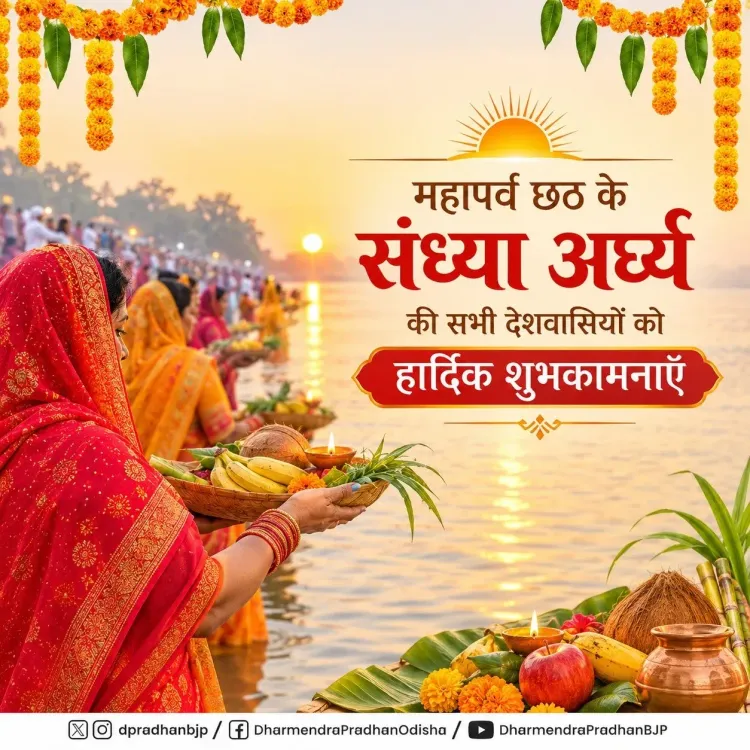
Posting on X, Pradhan wrote: 'Chhath Mahapaarv ke Sandhya Arghya ki sabhi vratiyon aur deshwasiyon ko haardik shubhkaamnaaen' — 'Heartfelt greetings to all fasting devotees and fellow countrymen on the occasion of the evening Arghya of Chhath Mahapaarv.' He prayed that the blessings of Chhathi Maiya and Surya Dev bring happiness, prosperity, good health, and well-being to all, signing off with the devotional call 'Jai Chhathi Maiya!'
What Sandhya Arghya means in the Chhath calendar
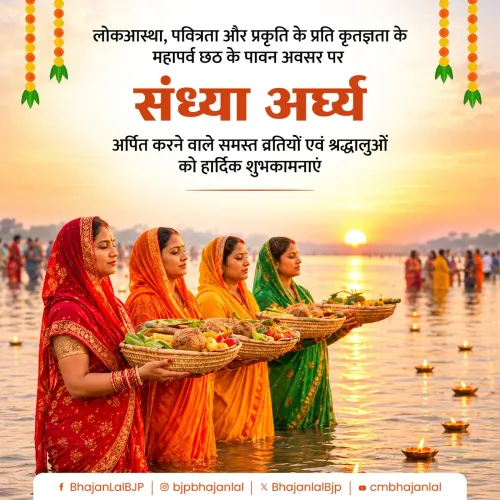
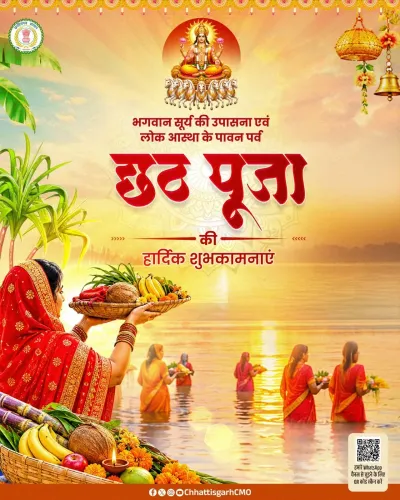
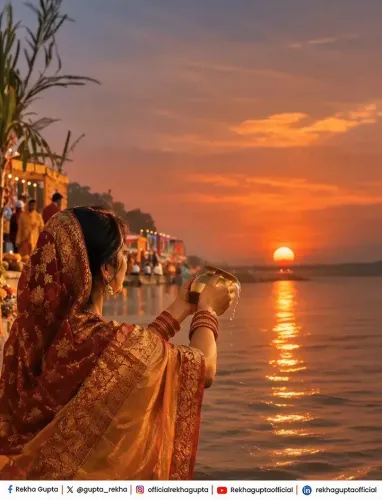
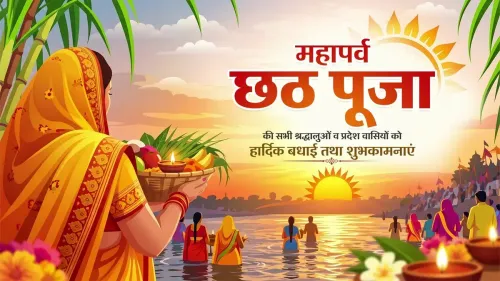
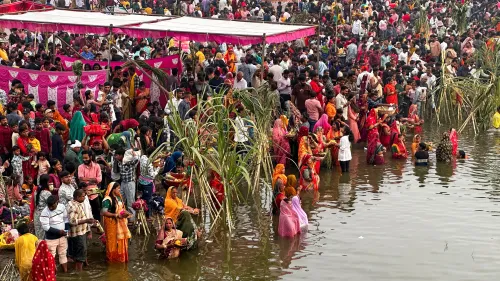
Chhath Puja is a four-day festival dedicated to Surya Dev (the Sun God) and Chhathi Maiya, the folk deity believed to be the goddess of life and longevity. The Sandhya Arghya — the evening oblation offered to the setting sun — is one of the festival's most visually striking and spiritually significant rituals. Devotees wade into rivers, ponds, or any water body, standing waist-deep as the sun dips below the horizon, offering water and seasonal fruits in handwoven baskets.
Chhath's reach: from Bihar's ghats to every Indian city
Though rooted in Bihar, eastern Uttar Pradesh, and Jharkhand, Chhath Puja has travelled with the Bihari diaspora to virtually every major Indian city — from Delhi's Yamuna ghats to Mumbai's Juhu beach. Its observance is entirely community-driven, requiring no temple and no priest, making it one of India's most democratically practised festivals. That grassroots character has also given it formidable political weight: Bihari and Purvanchali communities form a significant vote bloc in states like Delhi, Maharashtra, and Haryana.
For a senior BJP leader like Pradhan, whose party has deep organisational roots in Bihar and among Purvanchali communities, the gesture is both culturally sincere and politically attentive. The timing — a Cabinet minister posting at the precise ritual hour of Sandhya Arghya — reflects how social media has made political engagement with religious moments more granular and immediate.
Point of View
But Chhath Puja occupies a unique political register — its devout, community-organised character gives it outsized cultural authority among Bihari and Purvanchali voters, a demographic that matters in several swing states. For the BJP, maintaining visible warmth toward Chhath is consistent with its broader strategy of anchoring electoral appeal in folk-religious traditions that transcend class. Pradhan's Odia roots make the gesture cross-regional, signalling the party's intent to present Chhath as a pan-Indian festival rather than a regional one. The timing — a Cabinet minister posting at the precise ritual hour of Sandhya Arghya — also reflects how social media has made political engagement with religious moments more granular and immediate.
NationPress
15 Nov 2026
Frequently Asked Questions
What is Sandhya Arghya in Chhath Puja?
Sandhya Arghya is the evening oblation offered to the setting sun on the third day of Chhath Puja. Devotees stand in water and offer fruits, sugarcane, and water to Surya Dev as the sun dips below the horizon — it is one of the most visually iconic rituals of the festival.
What did Dharmendra Pradhan say on Chhath Puja 2026?
Union Education Minister Dharmendra Pradhan posted heartfelt greetings on X, wishing all Chhath devotees and citizens happiness, prosperity, good health, and well-being through the blessings of Chhathi Maiya and Surya Dev on the Sandhya Arghya.
Which states celebrate Chhath Puja the most?
Chhath Puja is most prominently celebrated in Bihar, eastern Uttar Pradesh, and Jharkhand. It is also widely observed in Delhi, Mumbai, and other cities with large Bihari and Purvanchali migrant communities.
Who is Chhathi Maiya?
Chhathi Maiya is a folk deity worshipped during Chhath Puja, believed to be the goddess who protects children and grants longevity and well-being. The festival combines her veneration with worship of Surya Dev, the Sun God.
Why do politicians post Chhath Puja greetings?
Chhath Puja holds deep cultural significance for millions of Bihari and Purvanchali communities across India, making it politically important. Leaders across parties publicly acknowledge the festival to connect with these communities, who form a significant demographic in several Indian states.